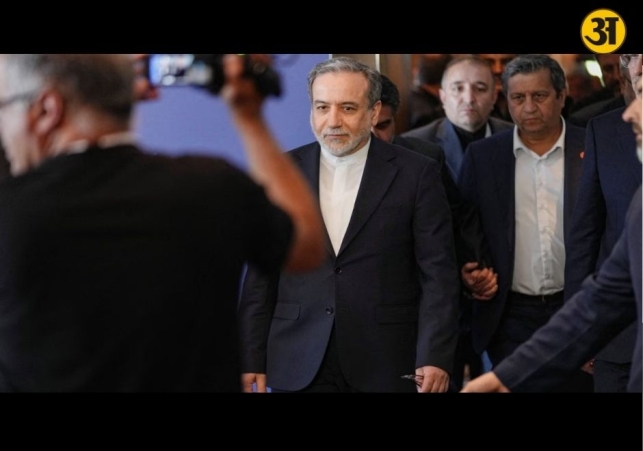
America allows 60-day waiver for Iranian oil trade
US gives temporary relief on Iranian oil sanctions amid fresh talks
- By Gurmehar --
- Monday, 22 Jun, 2026
In an important move that could affect global oil markets and Middle East politics, the United States has announced a temporary easing of sanctions on Iranian oil exports. The US Treasury Department has issued a 60-day general licence that allows the production, transport and sale of Iranian crude oil, petroleum products and petrochemicals.
This decision comes at a time when tensions in the Middle East remain high and the world is closely watching the Strait of Hormuz, one of the most important oil routes in the world.
The new licence means companies can now legally carry out activities related to Iranian oil for the next 60 days. This includes extracting oil, moving it by ship or pipeline, selling it to buyers and handling related financial services. The permission will stay active until August 21, 2026.
Officials say this step is part of ongoing diplomatic talks between the US and Iran. These talks are taking place in Switzerland and are focused on reducing tensions and improving regional stability.
US Treasury Secretary Scott Bessent said the move was linked to progress in these discussions. He explained that Iran has agreed to keep the Strait of Hormuz open for safe international travel and also allow inspectors from the International Atomic Energy Agency (IAEA) to enter the country.
This is seen as a major development because the Strait of Hormuz is one of the busiest oil transport routes in the world. A large amount of global oil passes through it every day. Any disruption there can cause oil prices to rise sharply.
By easing sanctions, the US is trying to create space for negotiations while also helping stabilise energy supplies.
Under this temporary waiver, not only can Iranian oil be sold, but related services such as insurance, shipping and payment processing are also allowed. This is important because these services are necessary for global oil trade.
The licence also allows the import of Iranian oil into the United States, but only if it is needed to complete deals already made under the waiver.
However, the US government made it clear that this relaxation does not apply to countries like North Korea or Cuba. Those sanctions remain fully active.
This decision is being watched closely by energy markets around the world. Iran has some of the world’s largest oil reserves, and allowing even limited exports can increase supply and affect global prices.
Experts say this may help lower pressure on oil prices, especially at a time when many countries are dealing with high fuel costs.
Fresh US-Iran talks raise hopes for bigger deal
The decision on sanctions comes alongside a new round of talks between the United States and Iran. According to mediators from Qatar and Pakistan, both countries have agreed on a roadmap to try to reach a final agreement within the next 60 days.
These talks were held at the Swiss resort town of Burgenstock near Lake Lucerne. Officials described the meetings as positive and constructive.
The discussions lasted for several hours and focused on regional security, nuclear monitoring and trade-related issues.
The talks are being held under the Islamabad Memorandum of Understanding, signed just a few days earlier. This agreement created the framework for further dialogue between the two sides.
ALSO READ: Trump faces growing criticism over Iran as new poll shows rising disapproval
ALSO READ: India-EU free trade deal to boost trade, technology and tourism, says PM Modi
The US team in the talks was led by Vice President JD Vance, while Iran was represented by Parliament Speaker Mohammad Bagher Ghalibaf.
This shows that both countries are taking the discussions seriously at a high political level.
Relations between the US and Iran have remained tense for many years. The two countries have disagreed over Iran’s nuclear programme, regional influence and sanctions. Many earlier talks had failed or ended without clear results.
But this latest round has created some hope.
Mediators say a system has now been created for technical talks, which means experts from both sides will continue working on details before leaders make final decisions.
If these talks succeed, it could lead to a larger agreement that may include wider sanction relief, stronger nuclear inspections and improved regional security.
Such an agreement would have major effects not only for the US and Iran but also for countries across the Middle East.
For oil-importing countries like India, this development is also important. More Iranian oil in the market could help improve supply and possibly reduce fuel costs.
At the same time, the next 60 days will be crucial. If talks fail, sanctions may return fully and tensions could rise again.
For now, the temporary waiver is being seen as both an economic and diplomatic step. It gives Iran some breathing space and gives both sides time to work toward a bigger deal.
The world will now be watching closely to see whether this short-term move can turn into a long-term breakthrough.
Related News