Is the US action against Venezuela legal under international law?
US strikes Venezuela, captures Nicolas Maduro, but is it legal under international law?
- By Gurmehar --
- Sunday, 04 Jan, 2026
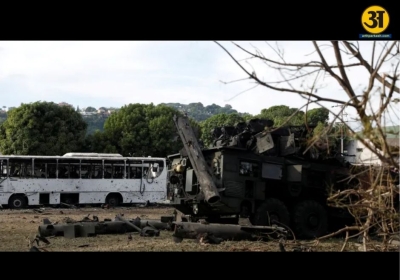
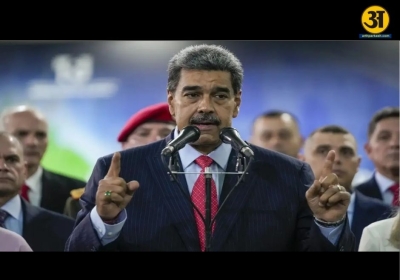
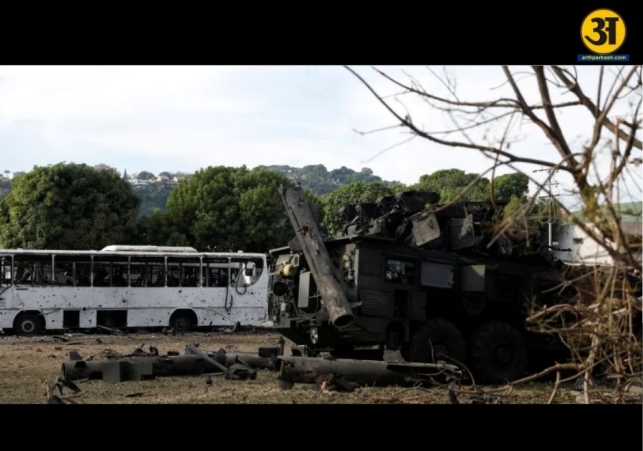
Tensions between the United States and Venezuela reached a historic high when US forces launched a large military operation in Caracas, the Venezuelan capital, on Saturday. During the strikes, at least 40 people were killed, and Venezuelan President Nicolas Maduro was captured. Maduro, who has led Venezuela since 2013, was taken to the Drug Enforcement Administration (DEA) office in New York. US President Donald Trump said Maduro will face trial in the United States.
The US justified the attacks by accusing Maduro of supporting narco-terrorism and criminal networks that traffic drugs into the US. President Trump said that Venezuela has become a center for illegal drug operations and that Maduro’s government has destabilized the region, including neighbouring Colombia, through support for armed groups such as the National Liberation Army and FARC. Trump added that Venezuelan oil, which is the largest proven reserve in the world, must be returned to the United States.
At a press conference in Florida, Trump stated, “We will run the country until such time as we can do a safe, proper and judicious transition. We can’t take a chance that someone else takes over Venezuela who doesn’t have the interests of Venezuelans in mind.” Vice President JD Vance explained that the US had attempted to reach a settlement with Maduro, but the Venezuelan government ignored multiple offers. Vance emphasized that drug trafficking must stop and that those involved cannot avoid justice by hiding in Caracas.
The US operation also announced that American companies will move into Venezuela to manage the oil sector until a new government is in place. This step highlights the strategic importance of Venezuelan oil for the United States and its energy interests. Experts say that the strike is the most significant US intervention in Latin America in decades and has thrown Venezuela into political chaos.
Is the US operation legal under international law?
Despite US justifications, the legality of the military strike is highly questionable. A memo obtained by the Associated Press revealed that the Trump administration declared the US is in an “armed conflict” with Venezuela. However, under US law, the president needs the approval of Congress to carry out military operations in foreign countries, especially when these involve large-scale hostilities. In this case, Congress was reportedly not informed prior to the strikes.
ALSO READ: Explained: Why China’s contraceptive tax shows the limits of pro-natalist policies
Michael Schmitt, a former US Air Force lawyer and professor at the US Naval War College, stated, “Lawyers call it international armed conflict. Lay people call it war. As a matter of law, we are now at war with Venezuela because the use of hostilities between two states clearly triggers an international armed conflict.” Experts say that such actions could violate international law because Venezuela is a sovereign nation, and foreign intervention without consent is prohibited.
The United Nations has strongly criticized the US operation, calling it a “dangerous precedent” that could destabilize the entire region. In a statement, the UN urged both the United States and Venezuela to engage in dialogue to resolve the conflict. The UN also referenced Article 2(4) of the UN Charter, which prohibits all member states from using force against the territorial integrity or political independence of another country. In simple terms, this means that Venezuela has the right to govern itself without foreign military interference, making the US strikes illegal under international law.
Historically, US presidents have sometimes justified limited military interventions in foreign countries as protecting national interests. These have included short operations or actions against terrorist groups. However, the Venezuelan strike involved the capture of a sitting head of state, which is unprecedented in modern times. Legal experts argue that such an act cannot be justified even under the claim of self-defense or national security because Maduro’s capture was not directly related to an immediate threat against the US.
The strikes also raise serious questions about regional stability. Latin America has seen little direct US military intervention in recent years, and this operation may provoke resistance from neighboring countries. Countries like Cuba, Mexico, and Colombia are closely monitoring the situation, fearing economic and political spillovers. Analysts warn that the strike could lead to longer-term conflicts in the region if not handled carefully.
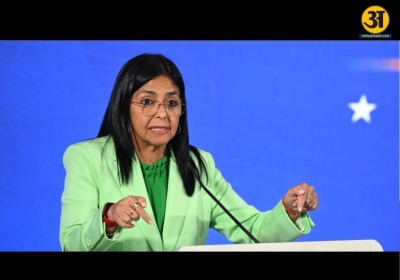
For Venezuela, the immediate impact is political chaos. The country’s Supreme Court appointed Vice President Delcy Rodriguez as the interim president, but her ability to govern amid foreign military presence and internal instability is uncertain. The military and civil institutions of Venezuela may face severe disruption, and public confidence in the government could decline further. Economically, the US takeover of oil operations may temporarily stabilize production, but it is unlikely to solve deeper issues like inflation, poverty, and political unrest.
In conclusion, while the United States claims that the operation targets drug trafficking and narco-terrorism, the legality of capturing a sitting president under international law is highly doubtful. UN rules and global norms clearly state that one country cannot invade another or remove its leaders without consent. Meanwhile, Venezuela remains in crisis, its leadership uncertain, and the international community is watching closely. How the US and Venezuela handle the aftermath will have significant consequences for regional security, international law, and the future of Latin America.
Related News