Who will support Nicolas Maduro if Venezuela-US conflict escalates?
Oil, drugs and infiltrators fuel Venezuela-US feud – who will back Nicolas Maduro if war erupts?
- By Gurmehar --
- Sunday, 04 Jan, 2026
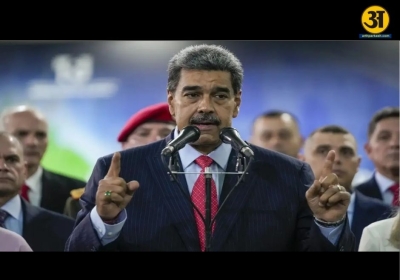
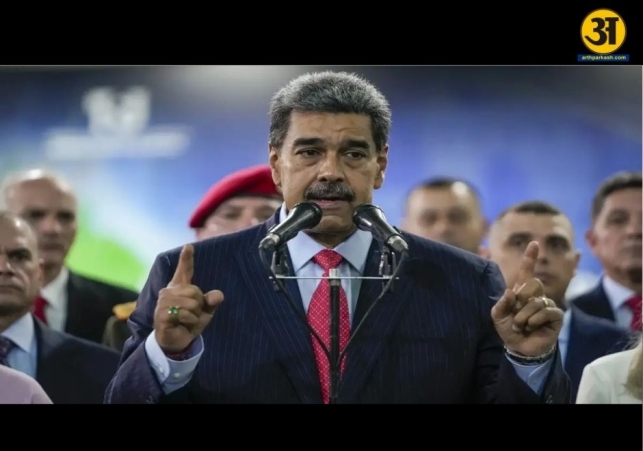
Tensions between Venezuela and the United States are rising, bringing fears of a potential conflict similar to the Ukraine-Russia war. At the center of this crisis is Venezuelan President Nicolas Maduro and US President Donald Trump. Experts say the conflict is driven by ideology, oil, drugs, and illegal immigration, not just politics.
Maduro leads a leftist socialist government, while Trump represents right-wing conservatism. This ideological clash has shaped Venezuela’s foreign policy for decades. Under Hugo Chávez (1999–2013) and Maduro (2013–present), Venezuela has often resisted the US, calling it an imperialist power. American companies were expelled, though Chevron still operates in Venezuelan oil. Latin America has traditionally been seen as America’s “backyard,” and Trump’s administration is unwilling to tolerate leftist governments or Chinese influence in the region.
Oil is a major factor in the tensions. Venezuela has the largest proven oil reserves in the world, even surpassing Russia, Saudi Arabia, and the US. However, its oil production remains low due to economic challenges and mismanagement. The United States sees Venezuela’s oil as vital to global influence and wants a friendly government in Caracas to exploit these resources. Analysts point out that US interest in foreign regimes often follows oil and economic interests. Past examples include the 1953 Iran coup, the 2003 Iraq invasion, support for Saudi leadership, and Libya’s Gaddafi removal. Maduro’s refusal to cooperate with the US makes oil a key reason for the current feud.
Another layer of tension comes from drug trafficking and illegal immigration. Trump has accused Maduro of allowing drug cartels to smuggle cocaine and fentanyl into the US. While Venezuela handles only a small portion of the total drugs entering America, the US uses this as part of its case against the Maduro government. Additionally, Venezuelan migrants have fled the country due to economic collapse, and some illegal immigrants are blamed for bringing crime into neighboring nations. Maduro, however, sees US demands for crackdowns as interference in Venezuela’s sovereignty.
ALSO READ: Explained: Why China’s contraceptive tax shows the limits of pro-natalist policies
Maduro’s allies and potential conflict
The possibility of a war in Venezuela raises the question of who would support Maduro if the US intervened. Experts say Maduro would largely fight alone. Russia might provide some weapons or diplomatic support but is unlikely to send troops. China, Venezuela’s economic partner, may offer financial aid but would avoid direct military involvement. Cuba sympathizes with Venezuela but lacks the resources to provide serious help. Without a strong military alliance, Venezuela would face most challenges on its own.
Even with these risks, open conflict may be limited. The ongoing Russia-Ukraine war already consumes significant global attention, and a new conflict in Latin America could strain international resources. The US might prefer to pressure Venezuela and Cuba economically and diplomatically rather than engage in direct military action. Maduro’s isolation and the lack of foreign military support may act as a deterrent against a full-scale war.
Historically, Venezuela-US relations were not always hostile. From the 1980s to around 2000, there was a period of relative calm and cooperation. Chávez’s rise in 1998 and subsequent policies marked a sharp turn toward anti-US rhetoric and actions, which Maduro has continued. Today’s feud combines ideology, control over natural resources, security concerns, and the threat of migration. Oil remains a central prize, with both countries seeing control over Venezuela’s reserves as crucial to influence in the Americas.
The stakes extend beyond Venezuela. Any escalation could affect neighboring countries, especially Cuba, which relies on Venezuelan oil. A conflict could disrupt trade, energy supplies, and regional stability, creating ripple effects across Latin America and beyond. While the US continues to push for regime change in Caracas, Maduro’s firm stance and relative isolation may prevent a direct military confrontation for now.
In conclusion, the feud between Venezuela and the US is complex, involving more than just politics. Ideology, oil, drugs, and migration all contribute to the tension. Maduro’s socialist policies and anti-US stance clash with Trump’s objectives, while Venezuela’s oil reserves remain a central point of interest. The risk of war exists, but Maduro may face the challenge largely alone, with limited support from global allies. Economic and diplomatic pressures, combined with Maduro’s resistance, define the current standoff and shape the delicate balance of power in Latin America.
Related News