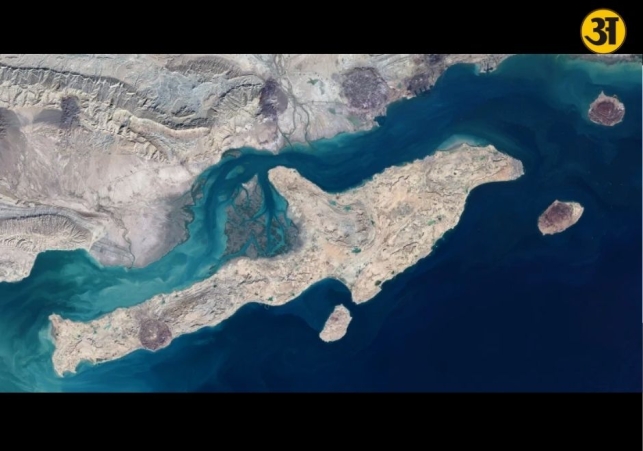
Qeshm Island’s location and military importance made it a key target
Why the US targeted Iran’s Qeshm Island as tensions rise again
The fragile ceasefire between the United States and Iran has come under fresh pressure after the US carried out strikes on Iran’s Qeshm Island. The attack was followed by Iranian missile and drone strikes targeting American interests in the Gulf region, raising fears that the conflict could escalate once again.
According to the US Central Command (CENTCOM), American forces conducted what they described as “self-defence strikes” against military targets on Qeshm Island. The US said the operation targeted radar systems, drone control facilities, air-defence positions, and other military assets that were considered threats to regional security and international shipping.
The latest exchange of attacks comes at a time when both countries are still engaged in diplomatic efforts aimed at reaching a broader agreement to end hostilities. However, repeated military actions from both sides have made the situation increasingly unstable.
Qeshm Island has become the focus of global attention because of its strategic location and its importance to Iran’s military operations in the Persian Gulf.
Why Qeshm Island matters
Qeshm Island is located near the entrance of the Strait of Hormuz, one of the most important waterways in the world. The Strait of Hormuz connects the Persian Gulf to international sea routes and serves as a major route for global energy supplies.
A large portion of the world’s oil and liquefied natural gas (LNG) shipments pass through this narrow waterway every day. Energy exports from countries such as Saudi Arabia, Iraq, Kuwait, Qatar, Bahrain, and the United Arab Emirates rely heavily on the strait. Any disruption in this area can affect global energy prices and international trade.
Because Qeshm Island sits directly beside this critical maritime route, it gives Iran a strong strategic advantage. Military equipment stationed on the island can monitor and potentially influence shipping traffic moving through the Strait of Hormuz.
For many years, military experts have considered Qeshm one of Iran’s most important defence locations. The island allows Iran to project military power across the Gulf and maintain surveillance over one of the busiest shipping corridors in the world.
US officials have argued that military systems based on Qeshm Island have posed threats to commercial vessels and regional security. CENTCOM stated that some of the targets struck were linked to drone operations and missile threats against shipping in the region.
ALSO READ: Trump says Israel and Hezbollah may stop attacks after talks
ALSO READ: Trump says he will headline America’s 250th Independence Day event after artists pull out
Iran’s military stronghold
Qeshm Island is not only important because of its location. It is also one of Iran’s most heavily militarised areas.
The Islamic Revolutionary Guard Corps (IRGC) has spent years building military infrastructure across the island. Defence analysts often refer to Qeshm as Iran’s “unsinkable aircraft carrier” because it functions as a permanent military base that cannot be destroyed as easily as a naval vessel.
The island is believed to contain extensive underground facilities, missile storage areas, and tunnel networks. These underground complexes have often been described as part of Iran’s “missile city” programme, which is designed to protect strategic weapons from enemy attacks.
Military experts believe the island houses anti-ship missiles, cruise missiles, radar installations, drone command centres, and other defence systems. These capabilities allow Iran to monitor activities in the Gulf and respond quickly to perceived threats.
According to reports, the recent US strikes focused on radar systems and drone-control facilities. The operation was reportedly intended to reduce Iran’s ability to track and target ships moving through regional waters.
The US also said that some of the strikes were carried out after Iran allegedly shot down an American MQ-1 drone operating over international waters. American officials described the action as a response to what they called aggressive Iranian activities in the region.
Following the attack, Iran strongly criticised the US operation and accused Washington of escalating tensions.
Iranian officials later claimed responsibility for missile and drone attacks targeting American military assets and facilities linked to the US in Bahrain and Kuwait. While some of these claims have been disputed, both sides acknowledged that new military exchanges had taken place.
The latest developments highlight how important Qeshm Island has become in the ongoing US-Iran confrontation. Its location near the Strait of Hormuz, combined with its extensive military infrastructure, makes it one of the most strategically valuable pieces of territory in the Middle East.
Beyond its military significance, Qeshm is also home to civilian communities. Earlier stages of the conflict reportedly damaged important infrastructure on the island, including facilities connected to water supplies. Such incidents have raised concerns about the humanitarian impact of military operations in populated areas.
For now, diplomatic efforts between the United States and Iran continue. However, the recent strikes on Qeshm Island and the subsequent retaliatory attacks show that the ceasefire remains fragile. As long as both sides continue military operations around the Strait of Hormuz, the risk of a wider regional conflict remains a major concern for governments and energy markets around the world.
Related News