Trump says new strikes honour fallen American troops
US launches fresh airstrikes on Iran as tensions escalate in the Middle East
- By Gurmehar --
- Monday, 20 Jul, 2026
The United States carried out another round of airstrikes on Iran early Monday, marking the ninth consecutive night of military operations as tensions between the two countries continue to rise. The latest strikes came after a US service member was killed and another was injured during an operation involving a downed Iranian drone in northern Iraq.
According to the US military’s Central Command (CENTCOM), the new strikes are part of an ongoing effort to weaken Iran’s military capabilities, particularly those believed to be linked to attacks on commercial ships and civilian vessels travelling through the strategically important Strait of Hormuz.
The latest developments highlight the growing instability in the Middle East, where military confrontations between the United States, Iran and their allies have intensified in recent months. The situation has raised concerns among global leaders and international observers about the possibility of a wider regional conflict.
CENTCOM announced that the latest wave of strikes began on Sunday evening US time and targeted military assets believed to be connected to Iran’s operations in the Gulf region. Officials said the objective was to reduce threats to international shipping routes and protect civilian maritime traffic passing through the Strait of Hormuz.
The Strait of Hormuz is one of the world’s most important waterways, carrying a significant portion of global oil and natural gas supplies. Any disruption in the region can affect international energy markets and increase concerns about global economic stability.
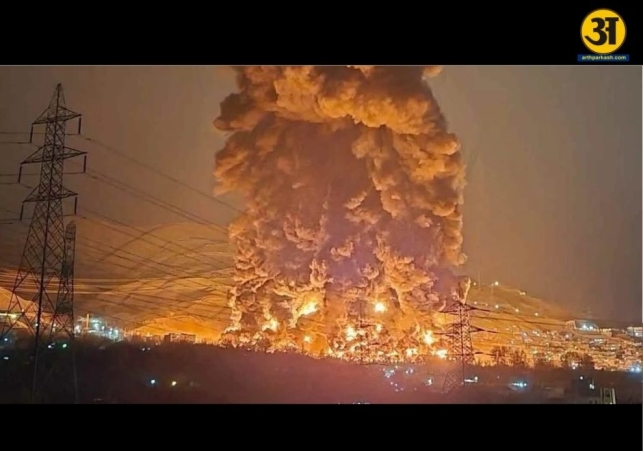
As the airstrikes unfolded, reports emerged of a ship catching fire near the coast of Oman in the Strait of Hormuz. The British military confirmed the incident but said the cause of the fire was not immediately known. Authorities are continuing to monitor the situation while investigating what may have triggered the blaze.
The area where the incident occurred has become increasingly sensitive due to ongoing tensions involving Iran and international naval forces. In recent months, shipping companies have been advised to follow specific routes through the region to reduce security risks.
US President Donald Trump defended the latest military action, describing it as a response to the deaths of American service members. Speaking to reporters after returning to Washington following the World Cup final, Trump said the strikes were carried out in honour of the soldiers who lost their lives.
He stated that the United States had struck Iranian targets “very hard” and expressed sympathy for the families of the fallen troops. Trump also repeated his administration’s position that preventing Iran from developing nuclear weapons remains a key objective of US policy.
The President linked the military campaign to broader security concerns, arguing that American forces were acting to protect both US interests and regional stability. His remarks underscored Washington’s determination to continue military operations despite growing international concern over the escalating conflict.
ALSO READ: Trump threatens tariffs on Canada as wildfire smoke worsens air quality across the US
ALSO READ: Iran claims it destroyed US aircraft in Jordan after deadly American strikes in Iran
Rising casualties and regional concerns
The latest round of strikes followed the death of another American soldier in northern Iraq. According to CENTCOM, the service member was killed during a controlled detonation of unexploded ordnance recovered from a downed Iranian drone. A second soldier suffered minor injuries during the same operation.
The military did not immediately release the identity of the deceased soldier. Officials described the incident as part of ongoing efforts to secure areas affected by drone activity and military operations linked to the broader conflict.
The death increased the reported number of US service members killed since the conflict between the US, Israel and Iran intensified earlier this year. The growing casualty count has drawn attention to the risks faced by military personnel deployed across the region.
Meanwhile, Iran has continued to respond to military pressure with its own actions. Reports indicate that Tehran launched another wave of missiles toward what it described as enemy targets. Iranian state media said the missiles were fired from the western province of Lorestan as part of ongoing military operations.
The missile launches prompted several US-allied countries in the Middle East to activate air defence systems. Bahrain, Jordan and Kuwait reportedly responded to incoming drones and missiles by increasing security measures and monitoring potential threats.
The US Embassy in Bahrain also issued a warning indicating that Iran could potentially target locations in central Manama, the country’s capital. Although officials did not provide specific details, the alert reflected growing concerns about possible attacks against regional allies.
The continuing exchange of military actions has heightened fears of a broader conflict involving multiple countries in the region. Analysts warn that further escalation could affect not only security but also global trade, energy supplies and diplomatic relations.
International shipping companies and governments are closely watching developments in the Strait of Hormuz, where any disruption could have significant economic consequences. The waterway remains a critical route for oil exports from Gulf nations, making stability in the region a global concern.
Diplomatic efforts to reduce tensions have so far struggled to produce meaningful breakthroughs. While some countries continue to call for restraint and dialogue, military actions on both sides have continued.
Experts believe the coming days will be crucial in determining whether the conflict remains limited or expands further. Any additional attacks on military personnel, commercial vessels or civilian infrastructure could trigger stronger responses and deepen the crisis.
For now, the United States appears committed to maintaining pressure on Iran through continued military operations, while Tehran has shown no sign of backing down. The situation remains highly volatile, with regional governments, international organisations and global markets all watching closely.
As tensions continue to rise, concerns are growing about the human cost of the conflict. Military personnel, civilians and communities across the region remain vulnerable to the consequences of ongoing hostilities.
The latest airstrikes and missile launches serve as a reminder of how quickly geopolitical disputes can escalate into larger confrontations. Whether diplomatic channels can eventually ease tensions remains uncertain, but the current situation underscores the fragile security environment in the Middle East and its importance to global stability.
Related News