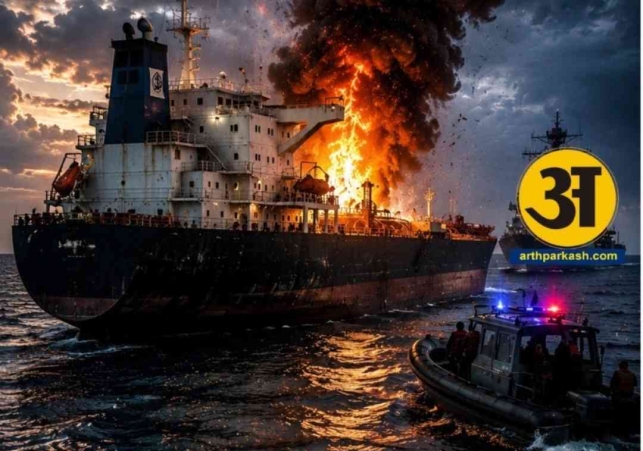
3 Indian civilians killed at sea: India on high alert
Dead of Night, Out in the Gulf: The Chilling Global Crisis Involving Indian Sailors
Right now, as you read this in the safety of your home, thousands of Indian sailors are trapped in a living nightmare halfway across the world. They are floating in metal boxes on pitch-black waters, completely blind, staring at the radar, and praying that the next sound they hear isn’t the roar of an American fighter jet.
What was supposed to be a routine commercial voyage has turned into a terrifying reality. The marine world was shaken to its core when the Indian government went on the "highest alert" possible, ordering all naval and sea agencies to be ready to respond to an emergency at any second.
The reason?
The global shipping lanes have officially turned into a hunting ground. And innocent Indian blood has already been spilled.
This isn't a shadow war anymore; the horror is out in the open. Three commercial vessels carrying Indian crews were ruthlessly hunted down and struck in the Gulf of Oman. While the US claims these ships were trying to breach a naval blockade to reach Iran, the terrifying truth is that ordinary merchant sailors are paying the ultimate price.
In a chilling statement that sounds straight out of a dystopian film, US President Donald Trump openly boasted about the terrifying stealth of these operations:
"We've been taking out many ships that nobody knew... over the last month, we've been taking out big ships, quietly at night... We bombed their radar and everything so they couldn't see what was going on."
Imagine being thousands of miles away from home, trapped on an unladen oil tanker in the middle of the ocean, knowing that the world's most powerful military is actively targeting ships “quietly at night”—while disabling the very radars meant to warn you of an incoming strike.
The Midnight Nightmare of MT Settebello
For three Indian seafarers, the nightmare became permanent. When a US jet locked its targets onto the MT Settebello, there was nowhere to run, nowhere to hide. The missile strike tore through the vessel, leaving behind twisted metal, fire, and death.
They weren't soldiers. They weren't politicians. They were ordinary citizens working grueling shifts at sea to send money back to their families in India. Now, they are coming home in body bags.
Two other ships—the Marivex and the Jalveer—were also struck in the same blood-soaked week. While those 44 Indian crew members survived, they did look directly into the face of death.
The Strait of Death: Are We on the Brink?
The Strait of Hormuz is a choke point through which a massive chunk of the world's trade passes. Today, it is a ticking time bomb.
The Indian government is frantically coordinating with friendly foreign navies, keeping an anxious eye on the waters as US CENTCOM admits to already disabling 9 vessels and redirecting 135 more.
Vessel operators and shipping managers have been handed immediate orders to enforce maximum safety protocols. But how do you protect a civilian cargo ship against a supersonic military jet?
As the Indian Navy stands on a knife's edge, waiting to deploy at a moment's notice, a haunting fear grips the families of every Indian sailor out at sea: Who is going to be targeted next in the dark?
Related News