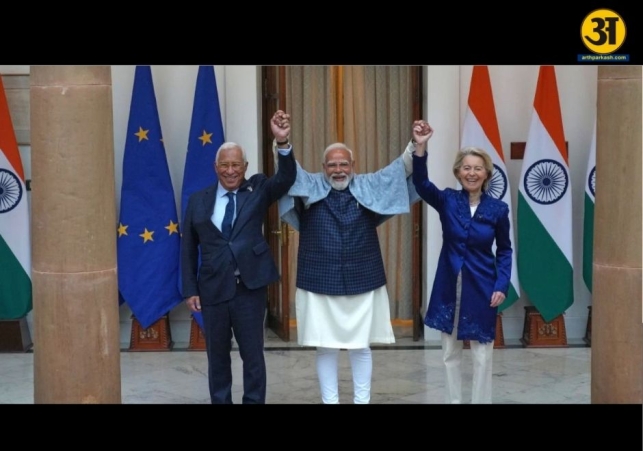
What the India-EU deal means for consumers
India-EU trade deal set to cut costs for Indian buyers
India and the European Union (EU) have finalized a historic free trade agreement (FTA), called the largest trade deal ever between the two partners. This agreement is expected to bring big benefits for Indian consumers and businesses. Prime Minister Narendra Modi described it as the “mother of all deals,” highlighting that India and the EU together represent nearly 25 percent of global GDP and one-third of world trade.
The FTA will reduce or remove import duties on a wide range of European products, making many items cheaper for Indian buyers. One major area is industrial and technology products:
-
Chemicals: Import duties of up to 22 percent will mostly be removed, lowering costs for Indian industries that use these chemicals.
-
Machinery: Tariffs as high as 44 percent on European machinery will be reduced or eliminated, making industrial equipment more affordable.
-
Pharmaceuticals: Duties of up to 11 percent on European medicines will be nearly eliminated, helping reduce costs for hospitals, clinics, and patients.
-
Medical and surgical equipment: Around 90 percent of optical, medical, and surgical devices will become duty-free, potentially lowering healthcare costs for consumers.
-
Aircraft and spacecraft: Tariffs on almost all products in this category will be removed, benefiting aviation, defense, and space sectors.
The automobile sector will also get relief under this deal:
-
European cars: Import duties will gradually reduce to 10 percent under a yearly quota of 250,000 vehicles. This will make premium European cars more affordable in India.
-
Auto parts: Tariffs will be completely removed over 5–10 years, helping Indian car manufacturers and suppliers by lowering input costs.
Food and beverages are another area where Indian consumers will benefit:
-
Olive oil, margarine, and select vegetable oils: Import duties will be reduced or removed.
-
Fruit juices and processed foods: Tariffs will be eliminated, making these products cheaper for consumers.
-
Beer: Tariffs will be cut by 50 percent.
-
Wine: Duties will gradually reduce to 20–30 percent over time.
Overall, the agreement will cover more than 90 percent of EU products exported to India, reducing or removing tariffs. This is expected to save European exporters about 4 billion Euros annually. These savings will likely benefit Indian consumers and businesses through lower prices and cheaper inputs.
ALSO READ: Maduro’s US custody case begins as he faces drug and narco‑terrorism charges
ALSO READ: India’s airport expansion is reshaping the country’s real estate landscape
Why the deal matters for India and Europe
Trade between India and the EU is already significant, exceeding 180 billion Euros each year. The trade supports around 800,000 jobs in the EU. Under this new agreement, tariffs on 96.6 percent of EU products in India will be reduced or removed. Experts expect this will double EU exports to India by 2032. The tariff cuts are projected to save about 4 billion Euros every year on European products.
This deal is also the largest trade concession India has ever given to any partner. It allows EU companies, both industrial and agricultural, to access the Indian market of 1.45 billion people, with a GDP of roughly 3.4 trillion Euros. For European companies, the agreement provides:
-
Cars: Tariffs will reduce from 110 percent to 10 percent gradually.
-
Auto parts: Duties will be fully removed over 5–10 years.
-
Machinery, chemicals, and pharmaceuticals: Most tariffs on these products will be eliminated.
-
Support for small and medium-sized enterprises (SMEs): The deal includes helpdesks and contact points to help European SMEs take advantage of new export opportunities.
Agricultural and food products from the EU will also benefit. Currently, Indian tariffs on these goods average over 36 percent:
-
Wine: Duties will fall from 150 percent to 75 percent initially, and then gradually to 20 percent.
-
Olive oil: Tariffs will reduce from 45 percent to zero over five years.
-
Processed foods like bread and confectionery: Duties will be cut by up to 50 percent.
However, some EU sectors are fully protected, including beef, chicken, rice, and sugar. EU regulations for health and food safety will also continue to apply to Indian imports.
For Indian consumers, the agreement will mean lower prices on many imported products, from chemicals and machinery to medicines, cars, and food items. Businesses in India will also benefit from cheaper inputs, improved access to technology, and stronger industrial competitiveness.
The deal matters not only economically but also strategically. It strengthens the India-EU relationship at a time when global trade is facing challenges from rising geopolitical tensions. It shows a shared commitment to economic openness, rules-based trade, and supply chain stability. By opening markets and reducing tariffs, both sides can improve trade flows, create jobs, and enhance overall prosperity.
In addition, the agreement is expected to encourage investment and collaboration. European companies will have more incentive to set up operations in India or collaborate with Indian partners, while Indian companies can learn from European technology and best practices. This exchange could improve India’s manufacturing, technology, and food processing sectors, contributing to long-term economic growth.
The historic FTA also reflects the size and importance of India’s market. With 1.45 billion people, India represents a vast consumer base. At the same time, EU businesses gain preferential access to this market, making the deal mutually beneficial. The reduction in tariffs and simplification of trade rules will increase trade volumes, reduce costs for consumers, and strengthen global supply chains.
In conclusion, the India-EU free trade agreement is a landmark deal that brings widespread benefits for Indian consumers, businesses, and industries. Import duties on chemicals, machinery, pharmaceuticals, medical devices, cars, auto parts, and selected food and beverages will be significantly reduced or eliminated. European companies, including SMEs, will gain easier access to India’s large market, while Indian consumers and industries will enjoy lower costs and better products.
The agreement reinforces India-EU economic and strategic cooperation, reflecting a commitment to open, rules-based global trade. With more than 90 percent of EU products set to enjoy reduced or zero tariffs in India, this historic deal will boost trade, investment, and economic growth on both sides, improving prices, competitiveness, and choices for Indian consumers.
Related News