Maduro in US custody, legal battle ahead in federal court
Maduro’s US custody case begins as he faces drug and narco‑terrorism charges
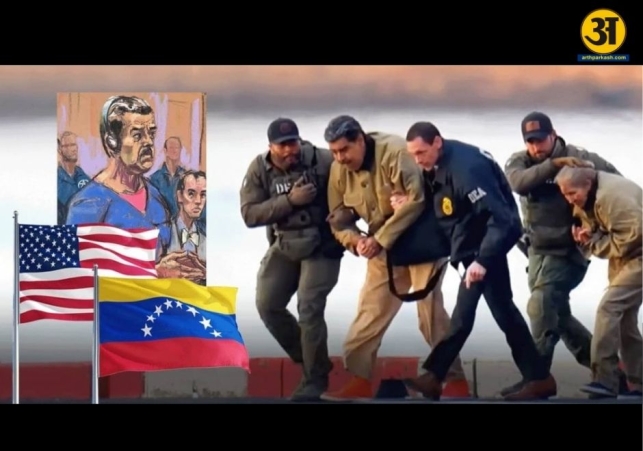
Former Venezuelan President Nicolas Maduro and his wife, Cilia Flores, appeared in a US court for the first time after being captured in Venezuela. They were taken from their home in Caracas during a late-night US operation. The couple faces serious charges related to drug trafficking and weapons possession. Both Maduro and Flores pleaded not guilty to all charges.
During the hearing, Maduro said in court that he is still the president of Venezuela. He called his capture a kidnapping and described himself as a "prisoner of war." The US government, on the other hand, said it was a legal law enforcement operation based on charges filed six years ago. The case has created strong reactions in Venezuela and around the world, as it involves a former head of state being held in US custody.
Their next court hearing is scheduled for March 17. Experts say this legal process could last for many years, and in some cases, it could lead to life imprisonment. Bail is possible, but experts believe it is very unlikely because the charges are serious and both are considered flight risks. Maduro is accused of narco-terrorism, while both face charges for conspiring to import cocaine into the United States and possessing machine guns. Historically, in similar cases, former leaders like Manuel Noriega of Panama and Juan Orlando Hernandez of Honduras were denied bail.
Both Maduro and Flores reported needing medical attention. Flores appeared in court with bandages on her forehead and around her eye. Her lawyer said she had serious injuries during the arrest and required X-rays. Maduro also has some health issues, according to his lawyer, though details were not given. The judge asked the lawyers and prosecutors to ensure that both defendants receive proper medical care at the detention center where they are held.
Legal challenges and next steps
Maduro and Flores are entitled to consular access as foreign nationals in US custody. However, this could be complicated because Maduro had closed Venezuela’s embassy and consulates in the US in 2019. There are also restrictions on how legal fees can be paid due to US sanctions. Despite this, the judge instructed the defense and prosecution to make sure the legal teams can fully represent the defendants. Maduro has added a constitutional expert, Bruce Fein, to his legal team to strengthen his case.
ALSO READ: India’s airport expansion is reshaping the country’s real estate landscape
The defense plans to challenge the indictment in several ways. They may argue that Maduro, as a former head of state, has legal privileges and immunity. They also question whether the US had the right to capture him in Venezuela. However, the US does not recognize Maduro as the legitimate president of Venezuela. A similar argument failed for Manuel Noriega in 1989 because he was never formally recognized as Panama’s president by the US. The legal debate over sovereign immunity and the capture may lead to long court battles and could reach higher courts if necessary.
During the trial, prosecutors are expected to argue that Maduro and Flores are serious flight risks and should remain in custody. Bail is considered very unlikely. The couple faces a lengthy legal process that could take years before reaching any final outcome. If convicted, they could face life sentences due to the severity of the charges.
The capture and trial of a former president are unusual and raise questions about international law and diplomacy. Maduro’s supporters in Venezuela may see him as a victim of foreign intervention, while others may view this as an effort by the US to fight drug trafficking. The situation is also complicated because Maduro’s elections in Venezuela are disputed, and the US does not recognize his government. This adds another layer to the legal discussions about his immunity as a former leader.
Experts say the case will be closely watched around the world because it involves a former head of state, serious criminal charges, and US actions abroad. How the US legal system handles this case could set precedents for similar situations in the future. Maduro’s defense team will likely file multiple legal challenges, while prosecutors will push for a strong and strict application of the law.
In the meantime, Maduro and Flores will remain in custody in New York City, under the care of the detention center. They will have medical attention as needed, but the trial and hearings are expected to be long and complex. The next scheduled hearing on March 17 will decide the next steps in this high-profile legal case.
This case highlights the tension between international law, US domestic law, and questions about recognition of foreign governments. It also shows the difficulties of holding former leaders accountable when serious criminal charges are involved. Observers expect the legal process to take years and possibly involve appeals to higher courts before reaching a conclusion.
Related News