India rejects terrorism as ‘new normal’ at UNSC
India condemns Pakistan at UNSC, rejects terrorism as ‘new normal’
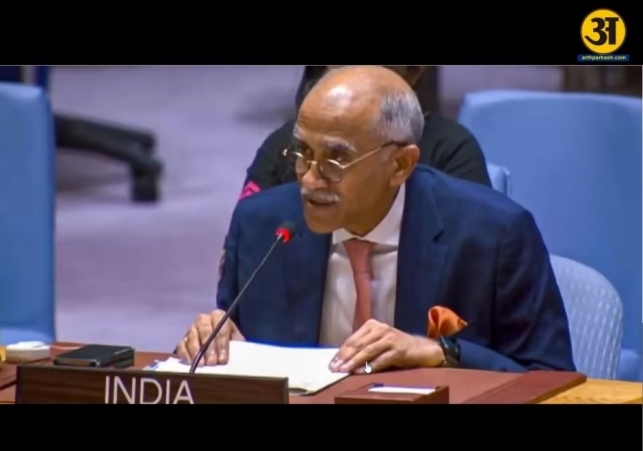
India strongly criticised Pakistan at the United Nations Security Council (UNSC), saying that Islamabad is trying to normalise terrorism. India’s Permanent Representative to the UN, Ambassador Parvathaneni Harish, delivered a firm response after Pakistan’s envoy Asim Iftikhar Ahmad spoke about Operation Sindoor, Jammu and Kashmir, and the Indus Waters Treaty.
Harish said Pakistan’s version of Operation Sindoor was “false and self-serving.” He explained that the operation was a direct response to the April 2025 Pahalgam terror attack, in which 26 civilians were killed. The UNSC had called for the attackers, organisers, financiers, and supporters to be brought to justice. India acted according to this call.
He added, “Terrorism can never be normalised as Pakistan wants,” and emphasised that it is unacceptable to tolerate Pakistan’s continued use of terrorism as a state tool. India will take all necessary measures to protect its citizens.
Operation Sindoor and other issues
The Indian envoy said Operation Sindoor was a carefully planned and non-escalatory mission aimed at dismantling terror networks in Pakistan and Pakistan-occupied Kashmir (PoK). He noted that Pakistan’s military contacted Indian forces to halt hostilities after the operation began. Images of damaged airbases, destroyed runways, and burnt hangars in Pakistan are publicly available, he added.
On Jammu and Kashmir, Harish stated that Pakistan has no right to comment on India’s internal matters. He affirmed that the Union Territory of Jammu and Kashmir is an integral part of India.
ALSO READ: Maduro’s US custody case begins as he faces drug and narco‑terrorism charges
ALSO READ: India’s airport expansion is reshaping the country’s real estate landscape
Regarding the Indus Waters Treaty, Harish said India joined the treaty 65 years ago with goodwill. However, Pakistan repeatedly violated the agreement by supporting wars and terrorist attacks. After the Pahalgam attack, India announced that the treaty will remain suspended until Pakistan ends cross-border terrorism in a credible and irreversible way.
India also criticised Pakistan’s internal governance, pointing to what it called a military-driven constitutional coup under the 27th Amendment, which gives lifelong immunity to Pakistan’s Chief of Defence Forces.
India’s intervention at the UNSC shows its firm stance on terrorism, national security, and territorial integrity. The country underlined that Pakistan cannot justify violence, interfere in internal matters, or expect its actions to be accepted as normal.
Related News