CM fellows to get benefits in UP exams
UP cabinet approves age relaxation and marks weightage for CM fellows in recruitment exams
- By Gurmehar --
- Friday, 30 Jan, 2026
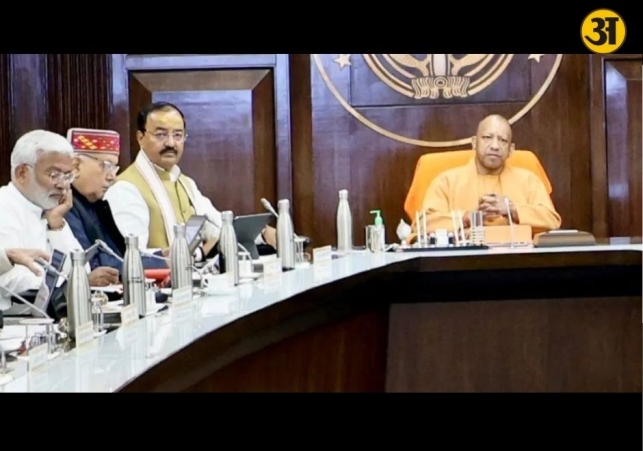
The Uttar Pradesh cabinet has approved new rules to give age relaxation and marks weightage to participants of the Chief Minister’s Fellowship Programme in all recruitment exams conducted by the UP Public Service Commission (UPPSC) and the UP Subordinate Services Selection Commission (UPSSSC). The decision was taken during the cabinet meeting on Thursday, which approved a total of 30 proposals covering governance, infrastructure, and public services.
Under the new rules, those who have worked as CM Fellows will receive age relaxation depending on the duration of their fellowship. A one-year tenure will provide one-year age relaxation, two-year tenure will give two years, and three-year tenure will give three years. Similarly, marks weightage will also be given in exams based on the length of fellowship. For exams carrying a maximum of 100 marks, fellows will get one, two, or three marks; for exams of 500 marks, they will get two, four, or six marks; and for exams with 1,000 marks, they will get 2.5, 5, or 7.5 marks. This move aims to recognise the experience and contribution of CM Fellows in public service and governance.
Infrastructure and industrial development approvals
The cabinet also approved several proposals to strengthen infrastructure and industry in the state. One major decision was to increase the crushing capacity of the Ganga Kisan Sahkari Chini Mill in Morna, Muzaffarnagar. The mill’s capacity will be increased from 2,500 tonnes of cane per day (TCD) to 3,500 TCD and later to 5,000 TCD. The mill will also be modernised with new machinery to improve operational efficiency.
Officials said the mill was outdated and its production capacity was limited. By upgrading the technology, sugarcane farmers are expected to benefit through timely payments and higher income. The improved efficiency will also support the state’s sugar industry and strengthen the local economy.
The cabinet also approved digitisation of old registration documents at sub-registrar offices across Uttar Pradesh. The project, initially approved in 2022 at ₹95 crore, has now been extended for six more months to complete scanning and indexing of documents registered from 2002 to 2017. So far, 99.11 percent of indexing and 98.37 percent of scanning have been completed. Work is ongoing in districts including Etah, Varanasi, Moradabad, Mainpuri, Lucknow, Aligarh, Hathras, Agra, Saharanpur, and Prayagraj. No additional budget is required to complete the remaining work.
ALSO READ: Trump warns Iran next attack will be far worse if no nuclear deal is reached
ALSO READ: Netanyahu’s taped phone camera sparks online debate over digital safety
Other key cabinet approvals
The cabinet also cleared proposals for land acquisition for stage-2 phase-1 to 3 of the Noida International Airport at Jewar in Gautam Buddha Nagar. This will support the airport’s expansion and improve connectivity for the region.
In addition, a project worth ₹4.58 crore was approved to supply industrial water from the Gomti River to the proposed Lucknow-Hardoi PM Mitra Textile Park. This initiative is aimed at supporting industrial growth and ensuring adequate water supply for businesses in the park.
The cabinet also approved a ₹266.49 crore project to lay sewer lines in 18 wards of the Varanasi Nagar Nigam. This will improve sanitation and urban infrastructure in the city. Rules to regulate hoardings and advertisements in municipal corporation areas were also finalised to maintain city aesthetics and public safety.
These decisions reflect the state government’s focus on recognising public service contributions, modernising industrial infrastructure, and improving urban services. The measures for CM Fellows are expected to encourage young professionals to participate in the fellowship programme and gain experience in governance, while infrastructure and industrial upgrades aim to boost economic growth and improve public services in the state.
Overall, the UP cabinet’s approvals cover a wide range of areas, from civil service incentives to industrial modernisation, urban development, and governance reforms. By supporting CM Fellows, upgrading sugar mills, digitising records, and developing infrastructure, the government aims to create a more efficient, transparent, and growth-oriented administrative and industrial environment in the state.
Related News