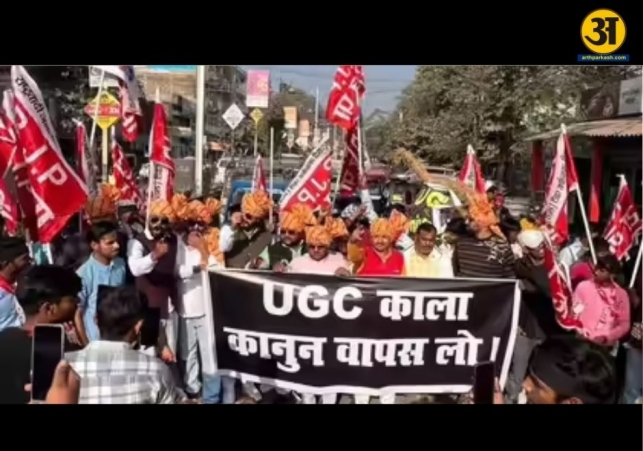
Student protests grow over new UGC rules
Govt seeks legal advice amid rising student protests over new UGC rules
New rules by the University Grants Commission (UGC) have sparked protests across India. The UGC introduced the Promotion of Equity in Higher Education Institutions Regulations, 2026 to stop caste-based discrimination in colleges and universities. The rules ask institutions to set up special committees, helplines, and monitoring teams to handle complaints, mainly from SC, ST, and OBC students.
However, many students from upper-caste communities are unhappy with the rules. They say the regulations could create confusion on campuses and lead to discrimination against them. Students gathered outside the UGC headquarters in Delhi to protest, asking for unity and urging everyone to say “No to UGC discrimination.”
The new regulations define caste-based discrimination as applying only to SC, ST, and OBC students. Critics argue this excludes general category students and faculty from protection. Vineet Jindal filed a plea in the Supreme Court claiming the rules are “non-inclusionary” and unfair.
Government response and reactions
The central government has consulted legal experts, including Attorney General R Venkataramani and Solicitor General Tushar Mehta, to understand the legal aspects of the new rules. Meanwhile, political and student reactions have been strong.
Noted poet Kumar Vishwas criticized the UGC rules, posting a poem on social media and using the hashtag #UGC_RollBack to support protests. On the other hand, left-wing student group AISA welcomed the guidelines, calling it a victory in promoting equity in higher education.
ALSO READ: Maduro’s US custody case begins as he faces drug and narco‑terrorism charges
ALSO READ: India’s airport expansion is reshaping the country’s real estate landscape
The protests have also led to serious allegations by some leaders. Alankar Agnihotri, suspended Bareilly City Magistrate, claimed caste-based harassment by local officials and called for President’s rule to restore order.
Even political leaders have reacted. Shyam Sundar Tripathi, Vice President of BJP Kisan Morcha in Rae Bareli, resigned over dissatisfaction with the UGC rules. He called the regulations “dangerous and divisive” and said they go against his ideology and self-respect.
The protests show growing unrest among upper-caste students and others who feel excluded by the new rules. The government’s legal review and Supreme Court plea will play a key role in deciding how these regulations are implemented in universities.
Related News