Rohingya numbers rise in India, highlighting statelessness challenge
India sees growth in Rohingya population amid global stateless crisis
The Rohingya community, originally from Myanmar, has become the world’s largest stateless population. In India, their presence has been increasing steadily in recent years, raising concerns among authorities about illegal immigration. Along with Rohingyas, refugees and asylum-seekers in India also come from Sri Lanka and China.
According to the United Nations High Commissioner for Refugees (UNHCR), India hosts around 2.5 lakh refugees and asylum-seekers in 2025. Of these, 36% (89,863 people) are from Sri Lanka, 33% (83,737) are from Myanmar, and 25% (63,169) are from China. The number of Rohingyas from Myanmar has risen sharply since 2019, reflecting ongoing persecution in their home country.
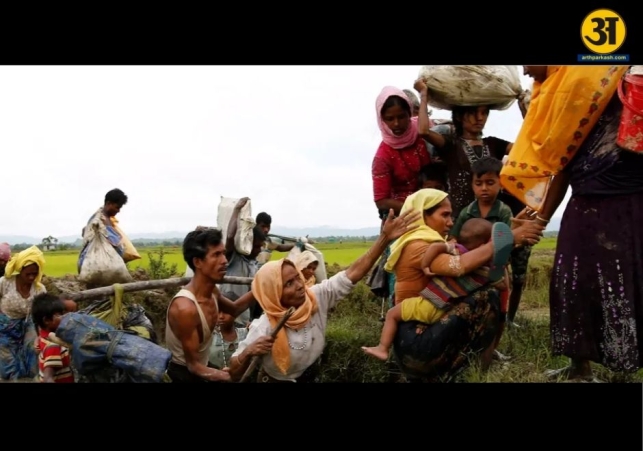
The Indian government has been aware of the Rohingya issue for years. In 2017, an estimate suggested that over 40,000 Rohingya refugees were living in India, mainly in Jammu & Kashmir, Telangana, Punjab, Haryana, Uttar Pradesh, Delhi, and Rajasthan. These people arrived in India to escape violence, persecution, and discrimination in Myanmar, especially in the Rakhine State.
Rohingyas face severe difficulties in Myanmar. They are a Muslim minority in a mostly Buddhist country, and since 1982, they have been denied citizenship. This lack of recognition has left them stateless and vulnerable to violence and human rights abuses. Decades of oppression, forced displacement, and limited access to basic rights have forced successive waves of migration out of Myanmar.
Global Rohingya migration and India’s role
While India has seen an increase in Rohingya refugees, it is not the largest destination for this community. Bangladesh hosts the majority, with over 11.43 lakh refugees this year alone. Malaysia follows with around 1.81 lakh, and India has around 83,737. The largest migration wave began in August 2017, when violence in Rakhine State caused a massive exodus. In Bangladesh, the number of refugees jumped from 2.76 lakh in 2016 to 9.32 lakh in 2017. India saw its own surge in 2019, highlighting the continuing displacement crisis.
The Indian government has addressed the Rohingya issue with Myanmar. Officials have discussed repatriation and agreed that long-term solutions require the development of Rakhine State. However, many Rohingyas remain in India because of security, humanitarian, and legal challenges, making it a complex problem for both countries.
The situation also underscores the global nature of refugee crises. While India hosts a smaller proportion of Rohingyas compared to Bangladesh or Malaysia, it faces similar challenges, including providing temporary shelter, monitoring illegal immigration, and balancing humanitarian obligations with national security concerns.
ALSO READ: Dharmendra’s political journey reveals his surprising wish for absolute control
ALSO READ: When heart trouble hides: Why major artery blockages often show no symptoms
Refugees from Sri Lanka and China also contribute to India’s refugee population. Sri Lankan refugees, largely Tamil Hindus fleeing civil war and persecution, form the largest group in India. Chinese refugees, though fewer in number, often arrive for political asylum or economic reasons. Together, these communities reflect the diverse pressures that drive migration to India.
The Rohingya case highlights the difficulties faced by stateless populations worldwide. Denied citizenship and basic rights, these communities rely on other nations for safety and sustenance. In India, legal, social, and political debates continue over how best to address the presence of Rohingyas while ensuring the security and welfare of Indian citizens.
As the numbers continue to rise, India faces the dual challenge of upholding humanitarian values and managing the practical aspects of refugee management. The UNHCR emphasizes that protecting stateless populations is a global responsibility. India’s experience with Rohingyas demonstrates the need for coordinated international cooperation to address displacement, citizenship rights, and long-term resettlement solutions.
In summary, the Rohingya population in India is part of a larger migration pattern caused by decades of persecution in Myanmar. Alongside refugees from Sri Lanka and China, Rohingyas have created a growing challenge for India. While the country has taken steps to address the issue diplomatically and administratively, the situation requires careful handling to balance humanitarian concerns with national interests. The ongoing rise of this stateless population reminds the world of the human cost of ethnic persecution and the importance of collective action to provide safe refuge.
Related News