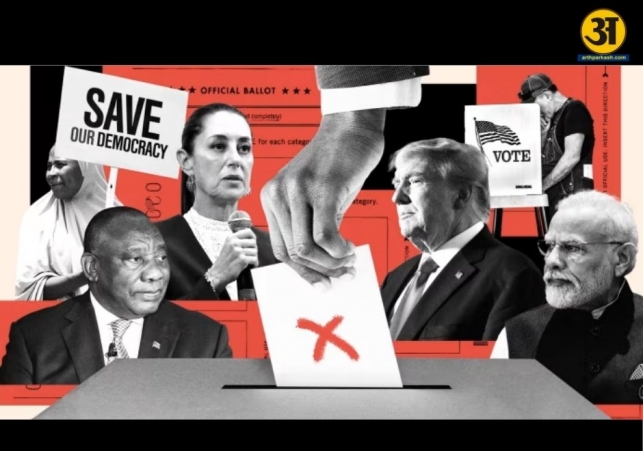
Inflation puts elections and democracy at risk
Rising inflation threatens elections and raises concerns for democracy
Democracy is far from perfect, but it remains the best system of government we know. It allows people to participate in choosing their leaders and shaping their future. However, democracy comes with a price. Just as nothing else in life comes for free, elections and political campaigns require money. And in India, this cost has been rising sharply, raising concerns about fairness and sustainability.
Corruption is often called the “oxygen” of democracy because elections depend on money. Candidates need cash to buy their way onto ballots and then secure votes to win. Over time, these costs have soared, especially in states like Bihar. Ticket prices for political parties have reached unprecedented levels. Today, the ability to contest elections is less about public service or hard work and more about having enough wealth to afford a symbol or pay for a party ticket.
Voters, too, are being wooed with money and gifts rather than promises of better governance. From cash notes and pressure cookers to pilgrimage packages and even cocks, politicians are distributing everything to secure votes. In rural areas, where government services are scarce, such tactics often overshadow development promises. But these “voter incentives” have also become expensive, making elections even more costly for candidates.
How high costs affect elections
India is a low-income country, and Bihar is one of its poorest regions. Yet, the cost of running for elections has no clear limits. Candidates often spend huge sums just to get a ticket, leaving less money for campaigning and public works. This raises the overall cost of democracy, which ordinary citizens indirectly pay for.
High election costs create multiple problems:
-
Excessive influence of wealth – Only rich candidates can afford to contest, reducing the chances for capable but less wealthy individuals.
-
Less money for development – Candidates spend their personal funds or party resources to win, diverting funds away from public services.
-
Increased corruption – Politicians rely on bureaucrats and local officials to collect money and manage resources, creating a cycle where corruption is shared across the system.
While inflation naturally raises prices in society, the rising cost of elections is disproportionately high. Without regulation, democracy risks becoming a system where only the wealthy or well-connected can compete. This undermines the very principles of fairness and equality that democracy is meant to uphold.
Corruption and democracy
Corruption in India has become deeply embedded. Politicians have perfected the art of raising money for campaigns, sometimes turning governance into a system of wealth redistribution from ordinary citizens to candidates. Bureaucrats, too, often participate in these transactions, either willingly or under pressure. Shared power in this context leads to shared corruption.
While political parties may claim to serve the public, the reality is that elections and campaigns are increasingly expensive ventures that benefit the wealthy. Ordinary citizens bear the cost through indirect means, such as taxes, diverted public funds, and promises that remain unfulfilled.
ALSO READ: India’s poverty rate falls dramatically since Independence
ALSO READ: Taliban-linked TTP leader Noor Wali Mehsud fuels border tensions
Experts argue that reasonable limits on election costs are necessary. By controlling ticket prices and regulating campaign spending, democracy can remain affordable without losing its competitive spirit. This would allow more capable individuals, not just the wealthy, to participate in governance.
Some proposals include:
-
Fixing maximum prices for election tickets.
-
Monitoring campaign expenses to prevent excessive spending.
-
Ensuring political promises are realistic and aligned with development goals rather than short-term incentives.
Implementing these measures could reduce corruption and strengthen public trust in the democratic process. It would help ensure that elections are not a financial arms race but a contest of ideas and governance priorities.
The way forward
Democracy requires resources, but these must be balanced with accountability and fairness. Politicians and bureaucrats should work together to prevent excessive exploitation of voters and candidates. A consensus on election reforms could make the system more affordable, reduce corruption, and ensure that democracy serves the people rather than the wealthy elite.
Rising costs of elections are a warning signal. If left unchecked, India risks turning its democratic process into a form of kleptocracy, where wealth dominates over ability and governance suffers. Citizens and policymakers must act to protect democracy while keeping it accessible, transparent, and fair.
In the end, democracy is meant to be by the people, for the people, and importantly, with the people actively involved. If its costs spiral out of control, only the powerful will benefit, and ordinary citizens—the true owners of democracy—will lose out. By setting reasonable limits, India can preserve its democratic ideals and prevent elections from becoming an unaffordable spectacle.
Related News