Why India’s passport success hides a big global mobility gap
Indian passport hits highest rank in a decade but freedom to travel still limited
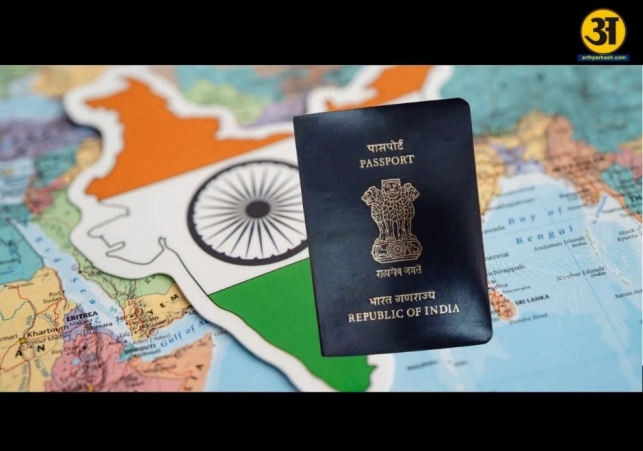
The Indian passport has reached its highest global ranking in over a decade, yet the reality of international travel for Indian citizens still paints a mixed picture. While India’s steady climb in the Henley Passport Index reflects economic strength and growing diplomatic influence, the persistent mobility gap compared to top-ranking nations underlines the challenges that remain.
A decade of fluctuating rankings
According to the latest Henley Passport Index, India has climbed three spots to 77th position globally — its best performance since 2014, when it ranked 76th. This upward movement is a notable achievement, particularly given the lows of the past decade. In 2021, at the height of the Covid-19 pandemic, India’s passport fell to its lowest rank of 90th, largely due to global travel restrictions and reduced visa agreements. Since then, the nation’s ranking has steadily improved, from 84th in 2023 to 80th in 2024, and now 77th in 2025.
However, while the ranking shows improvement, the actual travel freedom for Indian passport holders remains limited. Citizens can currently access 59 countries either visa-free or with a visa-on-arrival. This is a modest improvement compared to previous years but far behind leading nations such as Singapore, whose passport grants access to over 190 destinations. The gap highlights a sobering truth: while India’s global standing may be improving, its citizens do not yet enjoy the same freedom of movement as those from smaller yet diplomatically powerful nations.
Visa-free access has seen its own ups and downs over the last decade. In 2016, Indian passport holders could visit 52 destinations without prior visas, a number that dipped to 49 in 2017 but surged to 60 in 2018. Since then, the number has hovered between 58 and 62, showing little significant improvement. In 2024, visa-free access peaked at 62 countries before slipping to 59 in 2025, even as the overall ranking improved. This reflects how the ranking is not solely dependent on the number of accessible destinations but also on the relative mobility of other nations.
Regional position and global comparisons
In South Asia, India holds the second-highest passport ranking, trailing only the Maldives. Citizens of the Maldives enjoy visa-free or visa-on-arrival access to 93 destinations, a stark contrast to India’s 59. Other South Asian nations rank lower: Bhutan at 84th, Sri Lanka at 91st, Bangladesh at 94th, Nepal at 95th, and Pakistan at 96th. Afghanistan continues to remain at the bottom of the global index, with access to just 28 countries.
Outside South Asia, the story is even more striking. Singapore retains its position at the top of the global ranking, followed closely by Japan and South Korea. The United Arab Emirates also stands out, holding a strong 8th place. Even countries like China, Turkey, and Thailand rank higher than India, despite India’s status as a major global economy.
Meanwhile, once-dominant nations such as the United States and the United Kingdom have seen a gradual decline in their rankings. The U.S., which occupied the top spot in 2014, now sits at 10th place, while the U.K. has dropped to sixth. These shifts highlight how international mobility is influenced by changing geopolitical dynamics and evolving visa policies.
ALSO READ: Is voter roll cleanup fair or targeting eastern Bihar?
ALSO READ: Stuck in a thought spiral? Here’s how you can break free from the loop
What the ranking means for Indians
The Henley Passport Index does more than rank travel freedom — it reflects diplomatic relations, economic ties, and global trust. For Indian citizens, gaining visa-free access to more destinations would not only simplify leisure travel but also make international business and education more accessible. Students and professionals could benefit from quicker mobility for interviews, conferences, and academic programs without facing cumbersome visa procedures.
However, India’s limited travel freedom underscores a broader challenge. Despite being the world’s fifth-largest economy, the nation’s passport strength does not yet match its economic and geopolitical stature. The reasons range from complex bilateral agreements to security concerns, which often dictate visa policies between nations.
To bridge this gap, India must focus on strengthening diplomatic relations, negotiating reciprocal visa arrangements, and leveraging its growing influence in international forums. More robust agreements with countries in Europe, North America, and Southeast Asia could significantly enhance mobility for Indian citizens.
The road ahead
India’s steady climb in the passport rankings is certainly encouraging, but it is only a step toward greater global mobility. The wide gap between India and countries like Singapore shows that significant work remains to be done. As global travel rebounds after the pandemic, and as geopolitical alliances shift, India has the opportunity to push for stronger travel agreements and improve its citizens' freedom of movement.
The Indian passport’s current standing — 77th globally — is a milestone, but it should also serve as a reminder that true global mobility is still out of reach for most Indians. For now, while the rise in ranking is worth celebrating, bridging the mobility gap must remain a priority.
Related News