HC criticises failure to remove Patiala SSP amid audio-clip controversy
HC says Patiala SSP should have been removed from poll duty over audio-clip row
- By Gurmehar --
- Friday, 12 Dec, 2025
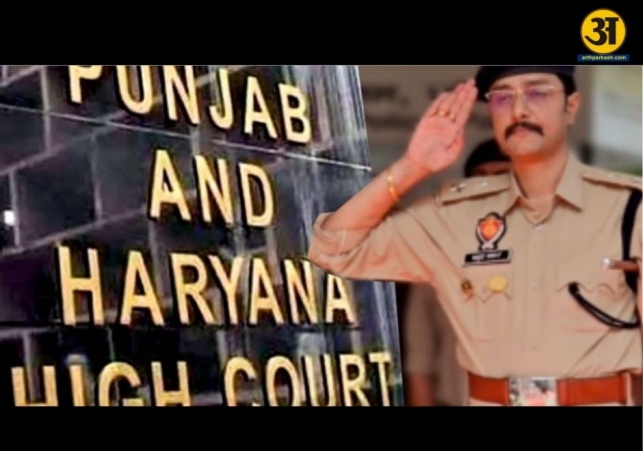
The Punjab and Haryana High Court has criticised the State Election Commission (SEC), Punjab, over its handling of the zila parishad and block samiti elections scheduled on December 14, 2025. The court said that Patiala Senior Superintendent of Police (SSP) Varun Sharma should have been removed from election duty while an inquiry is conducted into the controversial audio clip allegedly featuring him.
The clip reportedly has the SSP instructing his subordinates to prevent opposition candidates from filing their nomination papers. The court said such behaviour, if true, undermines free and fair elections. The bench, led by Chief Justice Sheel Nagu and Justice Sanjiv Berry, observed that the SEC should have taken immediate steps to verify the audio clip through an independent agency instead of relying solely on state-controlled investigations.
The court also emphasised that the SEC is entrusted under Article 243-K of the Constitution to conduct panchayat elections in an impartial manner. Its actions must not only be unbiased but also appear impartial to maintain public confidence. The court criticised the SEC for failing to ensure neutrality in the election process.
Role of SEC and police in the controversy
The case came to light after complaints by Congress leader Partap Singh Bajwa and Shiromani Akali Dal leader Daljit Singh Cheema. They demanded an independent investigation into the audio clip controversy, claiming opposition candidates were prevented from filing nominations to favour ruling AAP candidates.
The SEC informed the court that the SAD leaders who shared the clip, including Sukhbir Singh Badal, were repeatedly called to join the investigation. However, most did not appear, except Arshdeep Singh Kler. The SEC said the original devices are needed for the probe, and the clip submitted by Kler has been sent to a government forensic laboratory in Mohali.
ALSO READ: The Thinking Game shows Silicon Valley is not thinking deeply about AI
The petitioners’ lawyers argued that instead of investigating the officers involved, the authorities were questioning those who exposed wrongdoing. They also raised doubts about the state’s laboratory and requested that the audio clip be examined by the Central Forensic Sciences Laboratory (CFSL) in Chandigarh. The lawyers demanded that all officers receiving instructions from the SSP be removed from election duties to maintain fairness.
The court noted that oral directions had been given during a previous hearing to send the audio clip for forensic testing, but this was not included in the final order. The High Court stressed that all election officers and police personnel must act in a neutral manner and avoid any activity that could compromise the integrity of the elections.
The elections for 22 zila parishads and 153 block samitis are set for December 14, with counting scheduled for December 17. The last date for filing nominations was December 4, during which complaints surfaced about the alleged snatching of nomination papers in Patiala and nearby areas.
The High Court’s order is significant because it underlines the importance of a neutral and transparent election process. The court made it clear that the conduct of senior officers must not create even a perception of bias. It also instructed the SEC to issue clear directions to all station house officers (SHOs) and other police personnel involved in election duty to maintain impartiality and follow proper procedures.
The investigation is ongoing, with the authorities trying to verify the authenticity of the audio and video recordings submitted by the complainants. The HC’s comments are expected to influence the SEC’s approach in handling election-related complaints and ensuring that officers accused of partiality are kept away from poll duties.
The controversy has attracted widespread attention and raised concerns about the transparency of the electoral process in Punjab. Political leaders, activists, and citizens are closely following the case to ensure that the elections remain free and fair.
The High Court’s strong remarks reinforce the principle that election officials, including senior police officers, must act impartially at all times. It also signals that any attempt to interfere with candidate nominations or manipulate the electoral process will be taken seriously.
As the elections approach, the focus remains on maintaining law and order, impartial supervision, and ensuring that all candidates have a fair chance to participate. The ongoing investigation and the court’s order aim to restore public confidence in the electoral system and prevent misuse of official authority in the conduct of elections.
Related News