Delhi schools shift to online classes for Class 1-5 amid pollution
Delhi suspends offline classes for Class 1-5, makes online classes mandatory due to air pollution
- By Gurmehar --
- Monday, 15 Dec, 2025
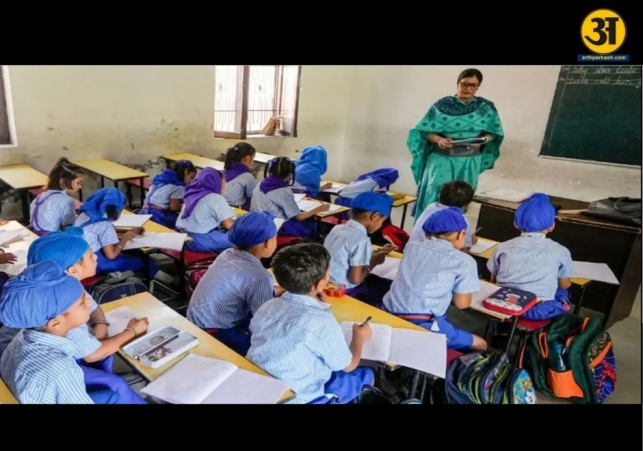
The Delhi government has announced that offline classes for students from nursery to Class 5 are suspended due to the rising Air Quality Index (AQI) in the city. Until further notice, students in these grades must attend online classes only. The decision affects all government, government-aided, and private recognised schools in Delhi. Classes for students in Class 6 and above will continue according to earlier instructions. Schools have been directed to immediately inform parents about the change and ensure compliance.
This step has been taken to protect young children from the harmful effects of Delhi’s severe air pollution. Experts say that children are particularly vulnerable to poor air quality, which can cause breathing problems, eye irritation, and long-term health issues if exposure continues.
Air quality reaches severe levels across Delhi
Delhi’s air quality has reached extremely dangerous levels. On Monday, the AQI in the city was recorded at 427, putting it in the ‘severe’ category. On Sunday, the AQI had touched 461, which was the second-highest recorded AQI for December in Delhi. The Central Pollution Control Board (CPCB) reported that air quality was ‘severe’ at 27 monitoring stations, while 12 stations recorded ‘very poor’ air quality.
Among all areas, Wazirpur recorded the worst air quality at 475. Jahangirpuri recorded the highest AQI of 498, marking the most polluted location in the city. In some areas, the AQI even reached 500, which is the maximum value the CPCB records. Weak winds and low temperatures have trapped pollutants close to the ground, worsening the pollution.
According to the CPCB, AQI levels are classified as follows: 0–50 is good, 51–100 satisfactory, 101–200 moderate, 201–300 poor, 301–400 very poor, and 401–500 severe. Currently, much of Delhi falls in the severe category, posing serious health risks, especially for children, older adults, and people with respiratory conditions.
Following the rise in pollution levels, the Directorate of Education issued a circular confirming that all physical classes for nursery to Class 5 students are suspended until further notice. Schools have been asked to conduct online classes only. Students in higher grades may attend classes in hybrid mode, which allows a combination of in-person and online learning.
ALSO READ: Is sugar-free cola actually healthier than regular cola? Experts explain
ALSO READ: No shampoo can make your hair grow; here’s what they actually do
The Delhi government has emphasised that schools must comply strictly with these orders. Parents are also advised to ensure that their children attend online classes and avoid going outdoors unnecessarily. This measure is expected to reduce exposure to harmful pollutants, particularly among younger children who are more sensitive to air pollution.
Health risks and precautions
Health experts warn that Delhi’s high pollution levels can trigger respiratory issues such as asthma, bronchitis, and other lung problems. Eye irritation, throat pain, and headaches are also common during periods of severe air pollution. Children, older adults, and people with pre-existing health conditions are especially at risk.
Authorities recommend that people avoid outdoor activities, use masks designed to filter out fine particles, and keep windows closed at home. Air purifiers may also help reduce indoor pollution levels. The Delhi government has been monitoring air quality closely and is likely to issue further instructions depending on the AQI trends.
The suspension of offline classes has disrupted the routine for many students and parents, but it is necessary to protect children’s health. Online classes for younger students will continue until air quality improves. Schools are coordinating with teachers and parents to ensure minimal disruption to learning.
Meanwhile, older students attending hybrid classes may experience minor schedule changes as schools adjust to safety protocols and the current air quality situation. Parents are also advised to take precautions when traveling outside for essential work or errands.
The government continues to monitor air quality at 40 monitoring stations across the city. Many areas remain in the ‘severe’ category, while a few report ‘very poor’ levels. Authorities are also taking measures to reduce pollution sources, including traffic management and industrial checks.
Delhi’s air pollution has reached dangerous levels, and authorities are taking strict measures to protect children’s health. By moving offline classes for nursery to Class 5 students to online mode, the government aims to limit exposure to harmful air pollutants. Parents, schools, and citizens are urged to follow guidelines, reduce outdoor activities, and take precautions until the air quality improves.
Related News