Abdul Basit’s comments raise concerns over regional security
Ex-Pak envoy Abdul Basit sparks controversy with remarks on targeting India amid global tensions
- By Gurmehar --
- Sunday, 22 Mar, 2026
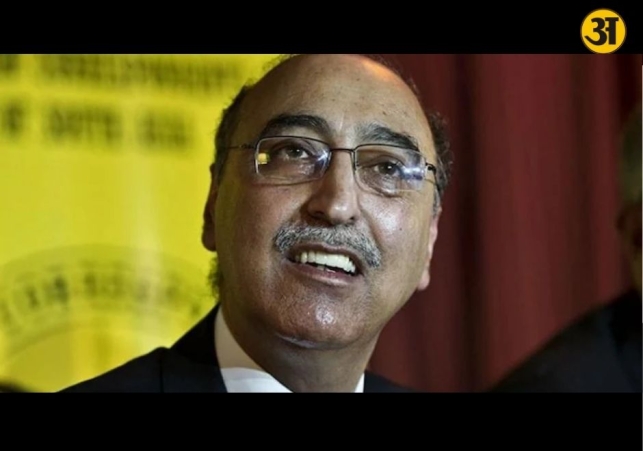
A recent statement by former Pakistan High Commissioner to India Abdul Basit has triggered strong reactions and raised concerns about regional security. During a discussion on a possible conflict scenario, Basit suggested that Pakistan could consider targeting Indian cities if it faces an attack from the United States.
His remarks came at a time when tensions in the Middle East and global politics are already high. Although Basit described the situation as hypothetical, his comments have drawn attention because of their serious nature and the sensitive relations between countries in the region.
Basit, who served as Pakistan’s envoy to India from 2014 to 2017, spoke about a “worst-case scenario” where Pakistan might be attacked by the United States. He suggested that if Pakistan is unable to strike American targets or its allies, it might look towards India as an alternative target.
These statements have been widely criticised and are being seen as irresponsible by many observers. Experts believe that such remarks, even if made in a hypothetical context, can increase tensions and create unnecessary fear.
Remarks and reactions
In his statement, Abdul Basit said that if the United States were to attack Pakistan, the country might have no choice but to respond, even if India was not directly involved. He mentioned cities like Mumbai and Delhi while explaining his argument.
He also made controversial remarks about public sentiment in Pakistan, claiming that people across different backgrounds would support such actions. These comments have added to the seriousness of the issue.
Many analysts have pointed out that such statements do not reflect official government policy. Instead, they are being seen as personal opinions expressed in a discussion setting. However, because Basit is a former senior diplomat, his words carry weight and can influence public perception.
The comments have come at a time when global tensions are already high due to conflicts involving the United States, Iran, and Israel. In such a situation, statements suggesting the expansion of conflict to other countries are being viewed with concern.
So far, there has been no official response from the governments of India or Pakistan regarding Basit’s remarks. However, experts believe that such statements are unlikely to impact official diplomatic relations directly.
ALSO READ: Netanyahu pauses Iran gas field strikes after Trump request amid rising Middle East tensions
ALSO READ: Afghanistan and Pakistan agree to temporary ceasefire ahead of Eid amid rising tensions
US report and security concerns
The timing of Basit’s comments is also significant because they come shortly after a report by the Office of the Director of National Intelligence. The report identified Pakistan as a significant nuclear concern for the United States.
The assessment was presented by US intelligence chief Tulsi Gabbard as part of the 2026 Annual Threat Assessment. It highlighted concerns about Pakistan’s military capabilities, including the development of advanced missile systems.
According to the report, Pakistan is working on long-range ballistic missiles that could potentially evolve into intercontinental ballistic missiles. These developments have raised concerns about regional and global security.
The report also mentioned the risk of instability in the region and the ongoing threat of terrorism. Such findings add to the complexity of the situation and explain why statements like Basit’s are being taken seriously.
Experts believe that nuclear-armed countries need to act responsibly and avoid rhetoric that could escalate tensions. Even hypothetical discussions about military actions can have real-world consequences if they are misunderstood or taken out of context.
At the same time, analysts emphasise that official policies of countries are determined by governments, not by former officials or individual opinions. Therefore, Basit’s remarks should not be seen as a reflection of Pakistan’s official stance.
The comments made by Abdul Basit have sparked debate and concern, especially given the sensitive nature of relations in South Asia. While his remarks were presented as a hypothetical scenario, they have drawn attention due to their serious implications.
Coming alongside a US intelligence report highlighting Pakistan’s nuclear capabilities, the situation has added to discussions around regional security and global stability.
However, experts stress that such statements should be viewed cautiously and not be confused with official policy. In a time of global uncertainty, responsible communication and diplomatic efforts remain essential to prevent misunderstandings and maintain peace.
Related News