Xi’s parade signals power and intent
Xi’s military parade sends multiple messages to the world
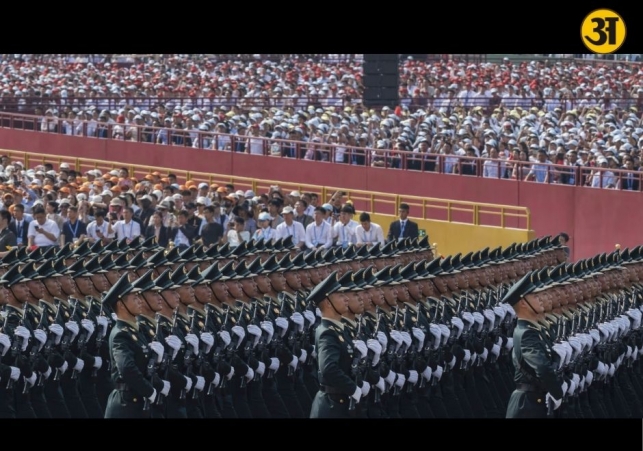
China recently held its largest-ever military parade to mark the 80th anniversary of Japan’s defeat in World War II. The grand event, organised in Beijing’s Tiananmen Square, was led by President Xi Jinping. More than 12,000 soldiers, hundreds of aircraft, and a wide range of advanced weapons were displayed, many of which were shown in public for the first time. The message from Beijing was loud and clear: China wants the world to see that it has arrived as a global power, both militarily and politically.
The parade was more than just a show of discipline and pageantry. It was a calculated move to display China’s progress in weapons technology, military organisation, and strategic alliances. From nuclear deterrence to naval strength, Xi’s government sent out multiple signals, not just to rivals like the United States but also to friends and potential allies across the globe.
Nuclear weapons show deterrence
For years, the balance of nuclear power heavily favoured the United States, which has over 5,000 nuclear warheads compared to China’s estimated 600. The US could theoretically overpower China in any nuclear exchange. However, China is now closing this gap. The parade displayed intercontinental ballistic missiles (ICBMs) such as the DF-61, which can travel over 15,000 kilometres and carry multiple nuclear warheads. Submarine-launched ballistic missiles and air-launched nuclear systems were also highlighted, confirming that China has developed a full nuclear triad.
This means Beijing can retaliate from land, sea, and air if attacked, a capability once held only by the US and Russia. The message to Washington is clear: any first strike by the US could invite devastating retaliation from China. In essence, China is moving toward a balance of Mutually Assured Destruction (MAD), a strategic reality that shaped the Cold War between the US and USSR. This shift will force American policymakers to think twice before considering aggressive military options against Beijing.
China wants to show friends and rivals its strength
Apart from weapons, Xi also emphasised diplomacy through symbolism. Leaders from 25 countries attended the parade, including Vladimir Putin of Russia and Kim Jong Un of North Korea, alongside some European leaders like Slovakia’s Prime Minister Robert Fico and Serbia’s President Aleksandar Vucic. By showcasing this lineup, China projected an image of global acceptance, signalling that it is not isolated despite tensions with the West.
This was also a direct jab at the US. In recent years, America’s unpredictable foreign policy and trade disputes under Donald Trump weakened its ties with traditional allies such as Canada, the UK, and the European Union. In contrast, Xi used the parade to show that China has both old and new friends willing to stand by its side. Whether these relationships are built on trust or convenience is another question, but the optics worked in China’s favour.
Equally important was the emphasis on self-reliance in military technology. Every weapon displayed was said to be indigenously designed and built. The painted English type numbers on the weapons were not accidental—they were meant for global audiences and potential buyers. China is already among the top arms exporters in the world, and such displays strengthen its chances of expanding into markets beyond Pakistan and a few traditional partners. Beijing clearly intends to compete with Western arms manufacturers in regions like Southeast Asia and Africa.
A modern force for multi-domain warfare
Another strong message from the parade was that China has modernised its military for coordinated warfighting. Xi’s reforms have introduced new theatre commands and strategic services such as cyber, space, and information forces. These were put on display alongside futuristic systems like combat drones, laser weapons, and satellite-killer missiles. The emphasis was on jointness—an ability to fight across land, sea, air, cyber, and space as one integrated force.
The naval showcase was also significant. For centuries, China ignored maritime power and paid the price by being invaded by sea-based powers like Japan and European nations. Today, China has built the world’s largest navy in terms of warship numbers. The parade highlighted naval aviation capabilities, such as carrier-borne fighters and advanced surveillance aircraft, some of which rival US models. With its new aircraft carriers like the Fujian, China is no longer dependent on outdated launch methods and is moving closer to matching US naval power.
Opinion: Xi’s message to the world is about survival and dominance
Xi Jinping’s military parade was not just for domestic audiences. It was a carefully staged performance to tell the world that China is no longer a rising power but a power that has already risen. To Washington, the signal was one of deterrence: any attempt to contain China militarily will come at a heavy cost. To allies and partners, the signal was one of reassurance: China is strong, independent, and ready to lead.
History, however, offers warnings. Japan in the early 20th century rose as a military challenger but was crushed after provoking the United States. The Soviet Union became a superpower but collapsed because its economy could not sustain its military ambitions. Xi wants to avoid both fates. His plan is to create a military-economic superpower that is modern, self-reliant, and deeply integrated into global systems of trade and influence.
ALSO READ: How to get your protein intake right for better health and energy
ALSO READ: WHO says over one billion people lived with mental health conditions in 2021
In the end, the parade was more than just soldiers marching or missiles rolling down Tiananmen Square. It was China’s declaration that it seeks a new place in world order—one where it can deter its rivals, attract allies, and ensure that no global issue can be decided without its consent. The question is whether the world, especially the United States, will treat this show of power with caution or confrontation.
Related News