Islamic State praises Bondi Beach attack, avoids claiming responsibility
Islamic State calls Bondi Beach shooting a matter of pride, stops short of claiming responsibility
The Islamic State group has described the recent mass shooting at Bondi Beach in Sydney as “a matter of pride,” but it has not formally claimed responsibility for the attack. The shooting shocked Australia and the world, as 15 people lost their lives during a public celebration.
According to a Reuters report, the comments were made in an article published on the Islamic State’s Telegram channel. The group referred to the attack that took place during a Hanukkah celebration but stopped short of saying that it directly planned or carried out the shooting.
What happened at Bondi Beach
Australian authorities said the attack at Bondi Beach was carried out by a father and son. The accused were identified as Sajid Akram, 50, and his son Naveed Akram, 24. Investigators believe the attack was inspired by Islamic State ideology, though direct links are still being examined.
During the incident, Sajid Akram was killed in an exchange of gunfire with the police. His son Naveed was seriously injured and taken to hospital, where he was kept under police guard. Naveed was initially in a coma but later regained consciousness.
After he recovered enough to be questioned, Naveed was charged with 59 offences. These include murder and terrorism-related charges. According to Reuters, a court confirmed on Thursday that his case has been adjourned until April 2026. Police are continuing their investigation, including looking into possible Islamic State networks operating in Australia.
Authorities said that the Islamic State’s statement praising the attack was deeply concerning, even though the group did not officially take responsibility. Security agencies are treating the case as a serious act of terrorism inspired by extremist ideology.
The attack has raised fears about lone actors or small groups being influenced by online extremist content. Officials said this kind of indirect encouragement can still lead to deadly violence, even without direct instructions from terror groups.
Investigation and government response
Further details about the accused have also come to light. Sajid Akram was originally from Hyderabad in India and held an Indian passport. Telangana police said that he migrated to Australia in 1998 and had very limited contact with his relatives in Hyderabad over the past 27 years.
Police also said that Sajid did not travel to India even when his father passed away. Investigators are now examining his background, movements, and online activity to understand how he may have been radicalised.
Meanwhile, the Australian government has announced strong steps to deal with hate speech and extremist violence following the attack. Prime Minister Anthony Albanese said the incident showed the urgent need to tighten laws against those who promote hatred and violence.
After attending the funeral of the youngest victim on Thursday, Albanese said his government is planning new laws to make it easier to charge people who encourage hate speech or violent extremism. He said penalties for such offences would be increased.
ALSO READ: Extra kilos, not years, could be the real reason your knees hurt
ALSO READ: Is sugar-free cola actually healthier than regular cola? Experts explain
The Prime Minister also said the government is considering making it easier to cancel or refuse visas for individuals found to be promoting hate or violence. In addition, authorities plan to maintain a list of organisations whose leaders are involved in spreading hate speech.
Albanese stressed that freedom of speech does not mean freedom to promote violence or terror. He said the government has a responsibility to protect citizens and ensure public safety.
Australian police and intelligence agencies are continuing to work together to identify any support networks or individuals who may have helped or influenced the attackers. Officials said online platforms are also being monitored closely for extremist content.
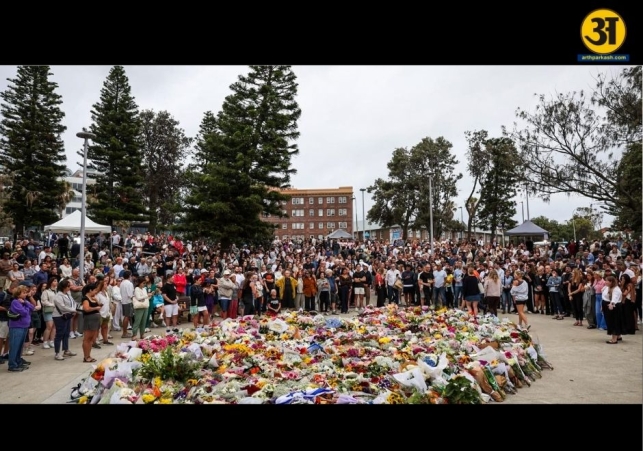
The Bondi Beach attack has deeply affected communities across Australia. Many people gathered to remember the victims and to show solidarity with those impacted by the violence. Religious and community leaders have called for unity and calm during this difficult time.
Authorities have urged the public not to spread misinformation or hateful messages following the attack. They said such incidents should not be used to target any community, as the actions of extremists do not represent entire groups.
The case has once again highlighted the global challenge of dealing with extremist ideology spread through digital platforms. Security experts say that while direct attacks by organised terror groups have reduced in some regions, the influence of online propaganda remains a serious threat.
As the investigation continues, Australian officials say their focus remains on justice for the victims, accountability for those responsible, and preventing similar attacks in the future.
Related News