Why Maoist ideology is losing ground in India
Maoist influence declines as surrenders rise and development reaches remote areas
India’s fight against Left Wing Extremism has reached an important stage, with clear signs that Maoist influence is weakening across many regions. This change has not happened suddenly. It is the result of years of planning, coordination and continuous effort by both the central and state governments.
By the end of March 2026, the scale and reach of Maoist activity had reduced significantly. Areas that were once known for violence and fear are now slowly moving towards peace and development. One of the most important signs of this change is the growing number of Maoist cadres surrendering and choosing to return to normal life.
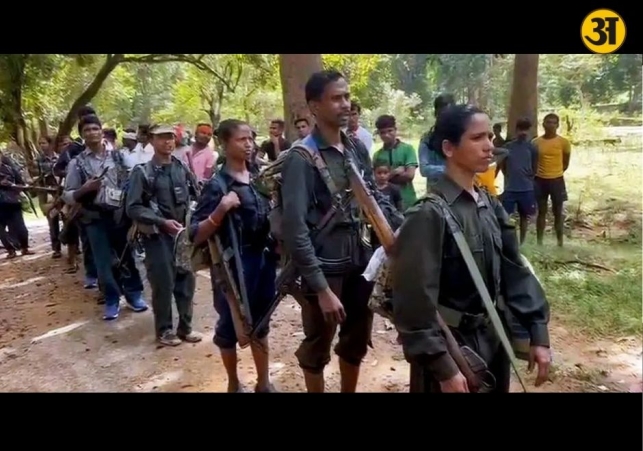
The recent surrender of a senior Maoist commander, Paparao alias Mangu, in the Bastar region is a strong example of this shift. He had been active for more than two decades and was part of a network that once posed a major challenge to the state. His decision to lay down arms shows that even top leaders are losing confidence in the movement.
For many years, Maoist insurgency was one of India’s biggest internal security challenges. Large forested areas across states like Chhattisgarh, Jharkhand, Odisha and parts of Maharashtra were affected. These regions were often called the “Red Corridor,” where government presence was weak and Maoists had strong control.
However, over the past decade, the situation has changed a lot. Government forces have increased their presence, and development projects have reached many remote areas. This has reduced the space and support that Maoists once had.
Rising surrenders and weakening network
One of the clearest signs of the decline in Maoist influence is the steady increase in surrenders. According to official data, thousands of Maoist cadres have surrendered in recent years. Between 2019 and early 2026, nearly 5,880 cadres laid down their arms.
The trend has become even stronger recently. In 2025 alone, more than 2,300 Maoists surrendered. In just the first three months of 2026, over 600 surrenders were recorded. These numbers show that many members of the organisation are losing faith in the movement.
This shift is not just about numbers. It reflects deeper problems within the Maoist network. Many cadres are facing low morale, lack of resources and constant pressure from security forces. Their ability to operate freely has been reduced, and their influence over local communities is declining.
Security forces have played a key role in this change. Continuous operations by the CRPF, CoBRA units and state police have weakened Maoist groups. These operations are not limited to big encounters. They also include regular patrols, intelligence-based actions and efforts to control key areas.
As a result, places that were once strongholds of Maoists are now more accessible to the government. This has disrupted their movement, supply chains and communication networks.
ALSO READ: Trump signals possible Iran deal while warning of strong military action
ALSO READ: Iran launches manhunt for missing US pilot after fighter jet shot down
Development and trust driving change
While security operations are important, they are only one part of the strategy. The government has also focused on development and welfare to address the root causes of extremism.
In many affected regions, roads, schools, hospitals and communication networks have been improved. Villages that were once cut off are now better connected. People have access to banking services, mobile networks and government schemes.
This development has changed how local communities see the state. Earlier, many people felt neglected and disconnected. Now, they are beginning to see the benefits of being part of the system. This has reduced the support that Maoists once received from local populations.
Another important factor is the Surrender-cum-Rehabilitation Scheme. This programme offers Maoist cadres a chance to return to normal life. They are given financial assistance, skill training and support to start a new life.
Under this scheme, senior cadres can receive financial aid, while others are also provided incentives and monthly support during their transition period. Many former Maoists are now working as farmers, labourers or small business owners.
This approach sends a clear message: those who give up violence will be supported and given a second chance. It has encouraged many to leave the movement.
The impact of these combined efforts is visible in the data. The number of districts affected by Maoist violence has reduced sharply. Incidents of violence and related deaths have also declined over the years.
For example, the number of violent incidents has dropped significantly compared to a decade ago. Similarly, the number of deaths among civilians and security personnel has also gone down.
Bastar, once considered the heart of Maoist activity, is now showing signs of transformation. The surrender of leaders like Paparao indicates that the balance of power has shifted. The movement is no longer as strong or influential as it once was.
India’s experience shows that fighting extremism requires more than just force. It needs a balanced approach that includes security, development and trust-building. People must feel that they have better opportunities and a secure future within the system.
The decline of Maoist influence is not just a security success. It is also a sign of social and economic progress. As more areas move towards peace and development, the appeal of armed rebellion continues to fade.
This shift marks the end of an era when Maoist groups dominated large regions. Today, a new story is emerging—one of surrender, growth and hope for a better future.
Related News