Trump mixes deal hopes with threats
Trump signals possible Iran deal while warning of strong military action
- By Gurmehar --
- Monday, 06 Apr, 2026
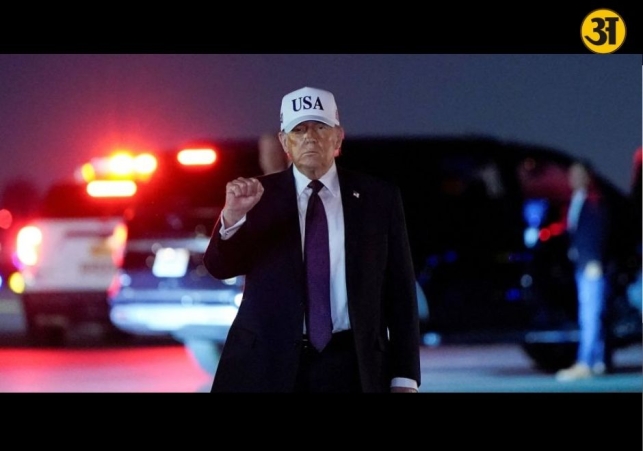
Donald Trump has said there is a strong chance that the United States and Iran could reach a peace deal soon. At the same time, he has warned of serious military action if the talks fail. His statements show a mix of hope for agreement and pressure through threats.
Speaking to a news channel, Trump said that discussions between the two countries were ongoing and could lead to a deal as early as Monday. He sounded optimistic but also made it clear that he expects quick results. According to him, if no agreement is reached soon, the United States may take strong steps against Iran.
He said that if Iran does not cooperate, he is considering attacking important infrastructure such as power plants and bridges. He also mentioned the possibility of taking control of oil resources. These strong words highlight the tension between the two countries and the high stakes involved in the ongoing conflict.
Rising tension over the Strait of Hormuz
One of the main issues in the conflict is the Strait of Hormuz. This narrow sea route is extremely important because a large share of the world’s oil passes through it. Since the conflict began, Iran has blocked or restricted movement through this route, which has affected global trade.
The disruption has caused concern among many countries that depend on oil imports. When oil supply is affected, prices can rise quickly, leading to economic problems in different parts of the world. Because of this, reopening the Strait has become a key demand from the United States.
Trump has given Iran a deadline to allow normal movement through the Strait. He warned that if Iran does not open it, the US will respond with strong action. His earlier comments about targeting infrastructure were linked to this demand.
The situation shows how important geography is in this conflict. Iran’s control over this waterway gives it significant influence, even against a stronger military power. This is why the Strait of Hormuz remains at the centre of negotiations and tensions.
ALSO READ: Iran launches manhunt for missing US pilot after fighter jet shot down
ALSO READ: Iran names key Gulf bridges as potential targets after strike on its major bridge
Rescue mission and ongoing military developments
Amid these developments, Trump also shared news about a successful rescue operation carried out by US forces. A crew member from an American fighter jet had been stranded in Iranian territory after a mission. The aircraft involved was an F-15E Strike Eagle.
According to Trump, the officer, who holds a senior rank, was injured and hiding in a mountainous area. He was at risk of being captured, as search efforts by Iranian forces were reportedly underway. The US military conducted a rescue mission and managed to bring him back safely.
Trump described the operation as one of the most daring rescue missions in recent times. He said that the officer was monitored closely throughout the operation and that the military worked continuously to ensure his safety. The successful rescue has been presented as a positive development for the US amid a difficult conflict.
However, the overall situation between the US and Iran remains tense. While negotiations are taking place, military actions and threats continue on both sides. This creates uncertainty about what will happen next.
Trump’s approach combines pressure and negotiation. On one hand, he is pushing for a quick agreement. On the other, he is warning of serious consequences if his demands are not met. This strategy is aimed at forcing a faster decision from Iran.
Experts believe that such situations are complex and cannot always be resolved quickly. A peace deal requires agreement on several issues, including security, trade, and regional influence. Both sides need to find common ground, which can take time.
There is also concern about the impact of the conflict on the global economy. Disruptions in oil supply, rising prices, and uncertainty can affect businesses and everyday life in many countries. This adds pressure on leaders to find a solution.
At the same time, strong statements and threats can increase tensions and make negotiations more difficult. Finding the right balance between pressure and dialogue is a major challenge in such conflicts.
For now, all eyes are on the ongoing talks. Trump’s statement about a possible deal has created hope, but his warnings also show that the situation could change quickly.
If an agreement is reached, it could reduce tensions and stabilise the region. If not, the conflict may continue, with serious consequences for both the region and the world.
The coming days will be crucial in deciding the next step in this high-stakes situation.
Related News