US weighs shifting weapons from Ukraine to West Asia conflict
US may divert Ukraine-bound weapons to Iran war, raising global security concerns
The ongoing conflict involving the United States, Iran, and Israel is creating new challenges for global security. Reports suggest that the US is considering diverting weapons originally meant for Ukraine in its war against Russia to the West Asia conflict. This possible move has raised serious concerns among military experts and political leaders.
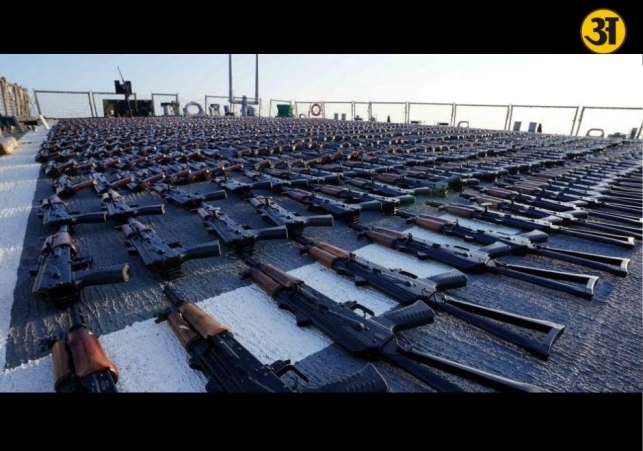
The war against Iran has already consumed large amounts of advanced weapons and ammunition. These include air defence systems like Patriot missiles and THAAD interceptors, which are among the most important tools in the US military arsenal. Due to the heavy use of these systems, the Pentagon is now facing pressure to manage its limited stock.
Reports indicate that the US has spent billions of dollars in just a few weeks of conflict. The cost of operations, combined with the rapid use of expensive missiles, has created both financial and supply challenges. Experts say the US may now have to make difficult choices about where to send its military resources.
Strain on weapons supply
One of the biggest concerns is the shortage of key defence systems. Patriot and THAAD missiles are not produced in large numbers, and increasing their production takes time. Even before the Iran conflict, there were concerns that supply was not enough to meet global demand.
Now, with the ongoing war, the situation has become more serious. Reports suggest that hundreds of interceptor missiles have been used in a short period. This level of consumption is much higher than expected and is putting pressure on existing stockpiles.
The US government has also informed lawmakers that it may use funds originally meant for supplying Ukraine to instead refill its own military inventory. This could directly impact Ukraine’s ability to defend itself against Russian attacks.
Ukraine has been heavily dependent on US and NATO support, especially for air defence systems. These systems are crucial in protecting cities and infrastructure from missile and drone attacks. If the supply slows down, Ukraine may find it more difficult to handle ongoing strikes.
At the same time, production challenges add to the problem. Manufacturing advanced missiles requires time, resources, and specialised technology. Even if production increases, it may take months or even years to meet the current demand.
Impact on global conflicts
The possible diversion of weapons could have wider effects beyond Ukraine. It may change the balance in ongoing conflicts and affect security in different regions.
For Ukraine, reduced support could weaken its defence against Russia. The country is already facing intense attacks, and any delay in military supplies can increase risks on the battlefield. This situation could give Russia an advantage.
In West Asia, the increased use of US weapons may help in the short term but also raises the risk of further escalation. The conflict involving Iran is already complex, with multiple countries involved directly or indirectly. More military action could make the situation worse.
The impact is not limited to these regions. Reports suggest that the US has also moved some defence systems from other areas, including parts of Asia. This could affect preparedness in regions facing threats, such as tensions involving North Korea.
Another important factor is the economic impact. Military operations are expensive, and continuous spending at this level can affect national budgets. The US has already requested additional funds to support the war and replenish its weapons.
Global markets are also reacting to the situation. Rising tensions in West Asia have affected oil prices and trade routes. The uncertainty is creating pressure on economies around the world.
There is also a growing concern about how long the conflict will continue. Diplomatic efforts are being discussed, with countries like Pakistan and Turkey being considered as possible venues for talks. However, there is no clear agreement yet.
Iran has maintained that it will continue to defend its interests, while the US has called for certain conditions to reduce tensions. The lack of agreement means that the situation remains uncertain.
In conclusion, the possibility of the US diverting weapons from Ukraine to the Iran conflict highlights the growing pressure on military resources. It shows how one conflict can affect another, creating a chain reaction across regions.
For Ukraine, this could mean reduced support at a critical time. For the US, it means balancing multiple global responsibilities with limited resources. For the world, it adds another layer of uncertainty in an already tense environment.
As the situation develops, decisions taken now will have long-term effects on global security. Careful planning, strong diplomacy, and balanced resource management will be essential to avoid further escalation and maintain stability.
Related News