Trump shifts stance on Pakistan
Why Trump is easing pressure on Pakistan amid global politics
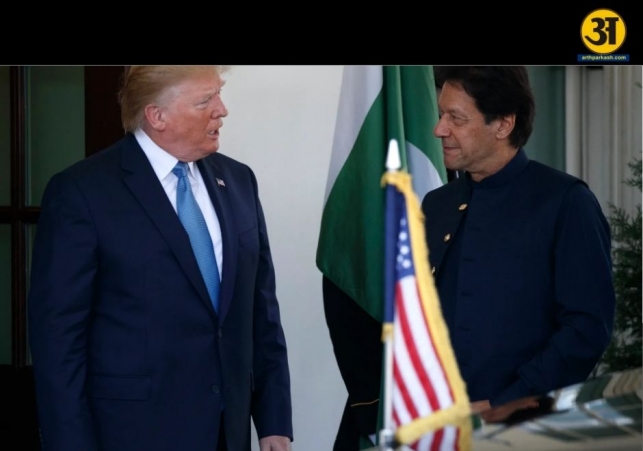
Pakistan Prime Minister Shehbaz Sharif is scheduled to meet former US President Donald Trump at the White House on Friday, during his visit to the United States for the United Nations General Assembly (UNGA) in New York. This will be the first meeting between a US President and a Pakistani Prime Minister at the White House since 2019, when former Pakistan Prime Minister Imran Khan met Trump.
The meeting marks a significant shift in US-Pakistan relations. Under Trump’s earlier administration, Washington showed renewed interest in strengthening ties with Islamabad, while Pakistan’s engagement with the United States had largely been ignored during Joe Biden’s presidency. Experts believe this renewed focus reflects both strategic and economic calculations.
US-Pakistan relations under Trump and Biden
During Joe Biden’s presidency, the United States largely avoided engaging with Pakistan. Biden’s administration never held a telephonic conversation with any Pakistani Prime Minister, signaling a period of minimal diplomatic contact. In contrast, Trump actively pursued closer ties with Islamabad, including announcing a trade deal between the two countries.
Earlier this year, Trump hosted Pakistan’s army chief, Field Marshal Asim Munir, at the White House. Notably, this was the first time a sitting US President met a top Pakistani military official without any civilian officials present. The move drew attention in the region, particularly in India, as it was unusual for a US President to engage directly with Pakistan’s military leadership.
The July 31 trade deal between the US and Pakistan further strengthened the relationship. While the US has yet to announce a similar trade agreement with India, Trump has imposed tariffs on India, citing trade imbalances and New Delhi’s purchase of Russian crude. Trump’s administration maintained that its engagement with Pakistan is independent and not tied to India, though these actions have raised concerns in New Delhi.
Analysts suggest that Trump’s focus on Pakistan is partly strategic. The United States requires Islamabad’s support to monitor regional rivals, particularly in Afghanistan. Trump has also expressed a desire to reclaim the Bagram airbase in Afghanistan, which was vacated during the 2021 US withdrawal. Cooperation with Pakistan is seen as key to maintaining influence in the region and advancing counterterrorism and economic interests.
Economic and strategic interests driving the engagement
Economic interests also appear to play a role in Trump’s engagement with Pakistan. In April, shortly after the Pahalgam terror attack in India, a cryptocurrency deal was signed in Pakistan involving the Trump family. The deal, between Pakistan’s Crypto Council and World Liberty Financial (WLF)—a company including Trump’s sons Eric and Donald Trump Jr. and his son-in-law Jared Kushner—aimed to explore digital asset opportunities and blockchain-based financial initiatives in Pakistan. Analysts believe this economic angle may be another reason for Trump’s renewed attention toward Islamabad.
While US-Pakistan relations are improving under Trump’s approach, India-US ties have faced challenges. The tariffs imposed on India and the trade focus on Pakistan initially caused tensions. However, Prime Minister Narendra Modi and his government have maintained a firm stance to protect India’s national interests. In response, Trump has recently praised Modi and emphasised the positive global strategic partnership between India and the United States. Modi welcomed Trump’s remarks, describing the India-US relationship as “very positive and forward-looking.”
ALSO READ: Germany and Italy take diverging stances as allies rally for Palestine
ALSO READ: Routine blood tests can sometimes indicate risk of blood cancer, doctor explains
The developments show a complex interplay of strategic and economic considerations. For the United States, Pakistan is important for regional influence and counterterrorism cooperation. For Pakistan, stronger ties with the US could provide economic benefits, security support, and greater diplomatic visibility. At the same time, India remains a critical partner for the US, and both Washington and New Delhi are navigating this triangular relationship carefully.
Despite the challenges, the meeting between Sharif and Trump reflects the US’s broader intention to balance geopolitical priorities with economic interests. Analysts believe that while strategic cooperation in Afghanistan and regional security is key, trade and investment initiatives—such as the cryptocurrency deal—also shape diplomatic engagement. These moves illustrate that Trump’s approach to Pakistan is influenced by both geo-strategic calculations and potential profit opportunities.
In conclusion, the Trump-Sharif meeting is a significant milestone in US-Pakistan relations. It highlights a departure from the limited engagement seen under the Biden administration and underscores a renewed focus on both strategic and economic cooperation. While India remains a crucial US partner, the enhanced US-Pakistan relationship indicates Washington’s attempt to secure influence in South Asia, maintain regional security, and explore new economic opportunities. The coming months will reveal how this evolving relationship impacts regional diplomacy and trade dynamics, particularly amid ongoing challenges in Afghanistan and the broader Middle East.
Related News