Trump’s peace claims under scrutiny
Donald Trump’s claims of stopping wars face questions as conflicts continue
Donald Trump has often described himself as a leader who can stop wars quickly. He has said many times that he helped end several conflicts around the world. However, these claims are now being questioned, especially as some of those conflicts either never fully stopped or started again soon after.
Trump has repeatedly said that he helped stop seven wars. In speeches and public appearances, he has listed different regions where he claims to have brought peace. These include tensions between India and Pakistan, disputes between Cambodia and Thailand, and conflicts involving countries like Congo, Rwanda, Armenia and Azerbaijan. He has even spoken about situations like Kosovo and Serbia, and Egypt and Ethiopia.
But when these claims are looked at closely, the reality appears more complicated.
Claims of stopping wars and what really happened
One of the most talked-about examples is the situation between India and Pakistan. Trump claimed that he helped prevent a major conflict between the two nuclear-armed countries. However, India has clearly stated that any ceasefire or de-escalation was handled directly between the two nations, without outside mediation. This creates a clear difference between Trump’s claim and the official position of one of the countries involved.
In Southeast Asia, Trump said he helped stop tensions between Cambodia and Thailand. While there were moments of reduced conflict, reports suggested that fighting resumed more than once. This means the peace was not stable or long-lasting.
Similarly, Trump hosted leaders from Congo and Rwanda for peace talks in Washington. The meeting was presented as a major success. However, violence reportedly continued soon after, raising doubts about how effective the agreement really was.
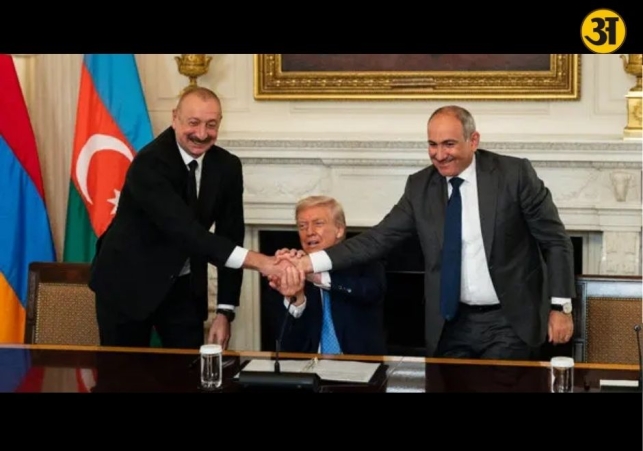
There is one case where Trump is given some credit. The long-running tensions between Armenia and Azerbaijan saw some diplomatic progress during his time. However, even here, the agreement has not been fully accepted by both sides, and many issues remain unresolved.
In other situations, such as Kosovo and Serbia or Egypt and Ethiopia, there was no full-scale war taking place. These were more like ongoing tensions or disputes. Calling them “wars” has been criticised by experts, as it may exaggerate the role played in resolving them.
Overall, while Trump may have been involved in discussions or diplomatic efforts, many of the conflicts he mentions were either not wars in the strict sense or did not truly end.
ALSO READ: Iran names key Gulf bridges as potential targets after strike on its major bridge
ALSO READ: Oil prices rise as Donald Trump signals US will not depend on Strait of Hormuz supply
Ongoing conflicts raise bigger questions
The biggest challenge to Trump’s claims comes from the conflicts that are still ongoing. For example, the war involving Iran, where the United States has been directly involved, has not been resolved. Despite strong statements and threats, the situation continues without a clear end.
Trump had also promised to resolve other major global conflicts quickly. At one point, he suggested that he could end wars in places like Ukraine or the Middle East within a short time. However, these conflicts have continued, with serious consequences for people living in those regions.
Critics say that this shows a gap between promises and reality. While it is common for leaders to use strong language, ending a war is a complex process. It requires long-term negotiations, trust-building, and cooperation between multiple countries. It cannot usually be achieved through quick decisions or public announcements alone.
Another point raised by observers is that some of the conflicts Trump claims to have ended were influenced by many different factors. Local governments, regional politics, and international pressure all play a role. This makes it difficult to give credit to any single leader.
Supporters of Trump argue that he brought attention to important global issues and was willing to take bold steps. They believe his approach to diplomacy was different and sometimes more direct than traditional methods.
However, critics say that strong claims without lasting results can reduce trust. They point out that announcing peace is not the same as achieving it. True peace is measured by stability over time, not just short-term agreements.
In the end, Trump’s image as a “peace president” remains debated. While he has clearly tried to position himself as someone who can stop wars, the evidence shows mixed results. Some efforts may have helped reduce tensions, but many conflicts either continued or returned.
As global challenges remain, the focus for any leader will not just be on making claims, but on delivering lasting solutions. Peace is not just about stopping a fight for a moment. It is about creating conditions where conflict does not return.
This is where the real test lies.
Related News