Tensions rise as Iran warns of possible retaliation
Iran names key Gulf bridges as potential targets after strike on its major bridge
- By Gurmehar --
- Friday, 03 Apr, 2026
Rising tensions in the Middle East have taken a serious turn after Iran released a list of important bridges in the region that it may target in response to recent military strikes. The move has increased concerns about further conflict and possible damage to key infrastructure across several countries.
The situation began after a major bridge in Iran, known as the B1 bridge near Karaj, was partially destroyed in a strike reportedly linked to the United States and Israel. The attack caused casualties and significant damage, leading to strong reactions from Iranian authorities.
According to reports, eight people were killed and around 95 others were injured in the strike. The bridge, which was still under construction, was considered an important project aimed at improving connectivity between Tehran and nearby regions.
Soon after the incident, Iran responded by releasing what has been described as a “hit list” of eight major bridges across the Gulf region and Jordan. These bridges are considered important for transportation, trade, and economic activity.
Key bridges named as potential targets
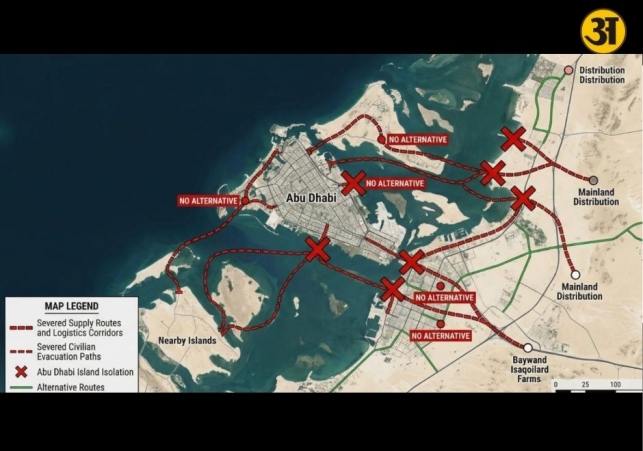
The list shared by Iranian sources includes some of the most important bridges in the Middle East. These include the Sheikh Jaber Al-Ahmad Al-Sabah Sea Bridge in Kuwait, the Sheikh Zayed Bridge, Al Maqta Bridge, and Sheikh Khalifa Bridge in the United Arab Emirates, as well as the King Fahd Causeway connecting Saudi Arabia and Bahrain.
In addition, three bridges in Jordan have also been named: the King Hussein Bridge, Damia Bridge, and Abdoun Bridge. These structures play a key role in connecting cities and supporting trade and daily travel.
By naming these locations, Iran appears to be sending a strong message that it could target major infrastructure in response to the damage caused within its own territory. Such a move, if carried out, could have serious consequences not just for the countries involved but also for the wider region.
Bridges are critical for movement of people and goods. Any disruption to these routes could affect trade, tourism, and daily life. It could also increase economic pressure on countries that depend on smooth transport connections.
Experts say that targeting infrastructure is often seen as a way to create pressure without directly attacking military bases. However, it can still have wide-ranging effects on civilians and economies.
ALSO READ: Oil prices rise as Donald Trump signals US will not depend on Strait of Hormuz supply
ALSO READ: Russian AN-26 military plane crashes in Crimea, all 29 people on board killed
Strike on Iran’s bridge sparks retaliation fears
The B1 bridge in Iran, which was targeted in the strike, is believed to be the tallest bridge in the country, standing at around 136 metres. Although it was not yet completed, it was expected to play an important role in improving transport links in the region.
Videos shared online showed parts of the bridge collapsing after the attack, with smoke rising from the site. The visuals quickly spread on social media, drawing attention from around the world.
Following the strike, strong statements were made by both sides. Former US President Donald Trump shared footage of the incident and warned that more actions could follow if Iran did not agree to negotiations. His remarks added to the already tense situation.
On the other hand, Iranian officials strongly condemned the attack. Abbas Araghchi criticised the strike, calling it an attack on civilian infrastructure. He stated that such actions would not force Iran to back down but instead show weakness on the part of its opponents.
The involvement of the Islamic Revolutionary Guard Corps (IRGC) has also been suggested in discussions about possible retaliation. While no direct action has taken place yet, the situation remains highly sensitive.
The release of the bridge list has raised concerns among governments and security agencies across the region. Many fear that any further escalation could lead to a wider conflict, affecting multiple countries.
The Middle East is already a region with complex political and military tensions. Any new conflict or retaliation could increase instability and impact global markets, especially oil and trade routes.
Analysts believe that the current situation reflects a pattern of “tit-for-tat” actions, where one side responds to an attack with a similar move. While this may be intended to show strength, it also increases the risk of a larger confrontation.
For now, no immediate attacks have been reported on the listed bridges. However, authorities in the affected countries are likely to increase security around key infrastructure to prevent any possible incidents.
In conclusion, the destruction of Iran’s B1 bridge has triggered a serious reaction, with Iran warning of potential retaliation by naming major bridges across the Gulf and Jordan. This development has added to growing tensions in the region and raised fears of further escalation.
The situation remains uncertain, and much will depend on how both sides respond in the coming days. Diplomatic efforts may play an important role in preventing the conflict from worsening. Until then, the region remains on high alert as the world watches closely.
Related News