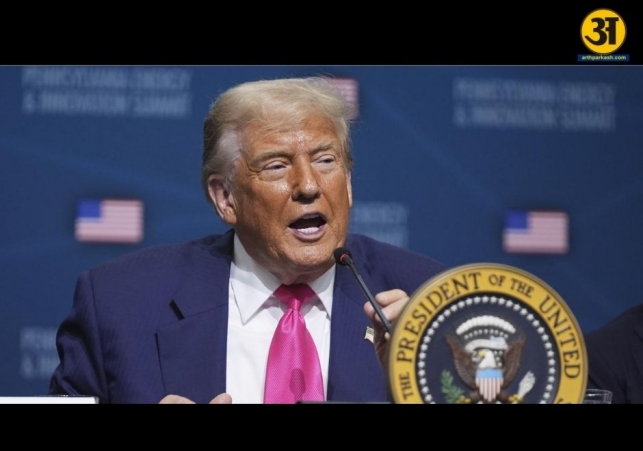
Trump plans 10% to 15% tariffs worldwide
Trump considering global tariffs of up to 15% on imports
Former US President Donald Trump said he plans to send letters to more than 150 countries telling them the United States may soon apply new import tariffs of 10% or 15%. He said the same rate would apply across that group of countries, most of which he described as “not big countries” with relatively small trade volumes with the US.
One rate for a large group of nations
Speaking to reporters at the White House on Wednesday, Trump explained that his team will “send a notice of payment” spelling out the tariff rate. He indicated that all countries in this group would receive the same treatment to create a uniform structure rather than negotiating separate small deals.
Still deciding between 10% and 15%
In a later interview with Real America’s Voice, Trump said a final decision had not been made: the tariff “will be probably 10 or 15%, we haven’t decided yet.” The statement suggests internal discussions are ongoing and that the letters may list a rate range or a final number once settled.
The letters are part of a broader tariff campaign Trump has launched in recent days. He has been notifying trade partners that new duties will take effect on August 1 unless they reach improved trade terms with the United States before then. This approach extends an earlier July 9 deadline, giving countries roughly three extra weeks to respond, negotiate, or seek exemptions.
Because the tariff notices cover so many countries at once, they have created uncertainty in financial markets. Some governments were surprised—reports say even major partners like the European Union had hoped to wrap up tentative trade understandings but instead received tariff warning letters. Trump suggested in his interview that simply sending the letter to Europe could itself be viewed as a “deal,” signaling he is less focused on long negotiations.
ALSO READ: Malaysia tightens rules on movement of U.S.-made AI chips
Mixed signals on further talks
Trump has alternated between saying he is indifferent to lengthy talks and hinting that nations could still negotiate better outcomes. He told reporters that letters would go out first, but he has also left the door open to future agreements that might lower tariff rates for countries willing to make concessions.
While many smaller nations could fall under the 10%–15% tariff band, Trump said that Canada is facing a 35% tariff on some goods beginning in August. When asked what might eventually happen with Canada, he replied that it was “too soon to say,” indicating that discussions—or further escalation—remain possible.
Alicia Garcia Herrero, chief Asia Pacific economist at Natixis, said that if the rate is capped at 10% or 15%, many smaller countries—especially across Asia, which has faced some of the highest tariff threats—might view that as a relatively positive outcome. She added that the move suggests Trump recognizes that very high tariffs can be disruptive to trade flows and supply chains.
Trump also said the US is “very close” to a tariff-related deal with India. He did not provide details, but his comment signals that separate bilateral talks may continue even while broad tariff letters are issued to many other countries.
Tariff strategy echoes earlier threat
Earlier in the year, Trump floated sweeping tariff increases but paused after market volatility. The rates now being discussed—10% or 15% for many countries, and higher for some like Canada—are broadly in line with those earlier threats, though the rollout by formal letter has renewed global concern.
Countries receiving the notices will have limited time before the August 1 implementation date to press for exemptions, reduced rates, or broader trade understandings. Businesses that rely on imports may face price uncertainty until rates are finalized. Governments and industry groups are expected to lobby Washington in the coming days.
Related News