TMC faces challenges beyond Bengal Assembly split
TMC split raises bigger concerns for Mamata Banerjee as unrest grows within party ranks
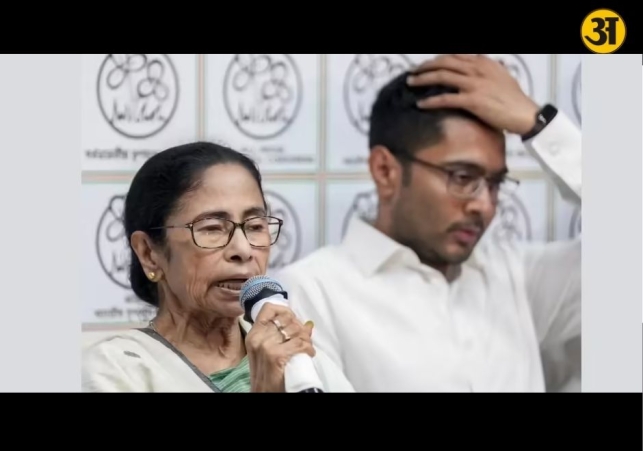
The Trinamool Congress (TMC), led by West Bengal chief minister Mamata Banerjee, is facing one of the biggest political crises in its history. The situation became serious after a large group of rebel MLAs broke away from the party and formed a separate bloc in the West Bengal Assembly.
The rebellion was led by former TMC leader Ritabrata Banerjee. According to reports, 58 MLAs supported the split, which was enough to meet the legal requirement under the anti-defection law. The group was later recognised as a separate legislative bloc, giving it control over the opposition position in the Assembly.
This development came only a few weeks after the TMC suffered a major defeat in the West Bengal Assembly elections. Political observers believe the split is a sign of growing dissatisfaction within the party and could create bigger problems in the future.
The party leadership reacted quickly by dissolving several organisational committees and wings across the state. The move was seen as an attempt to regain control and prevent further divisions.
However, many political analysts believe that the challenge facing the TMC is not limited to the state Assembly. There are increasing signs that dissatisfaction is also growing among some Members of Parliament (MPs), which could create further difficulties for the party at the national level.
Growing dissatisfaction among party leaders
The current crisis did not appear suddenly. Over the past several months, several senior TMC leaders and MPs publicly expressed concerns about the party's functioning and decision-making process.
One of the most notable developments was the resignation of senior MP Kakoli Ghosh Dastidar from important organisational positions within the party. Dastidar, a four-time Lok Sabha MP and long-time supporter of Mamata Banerjee, openly expressed disappointment with the party leadership.
Her differences with the party became more visible when she attended an administrative meeting chaired by a political rival despite objections from TMC leaders. This move fuelled speculation about internal disagreements within the party.
Dastidar also raised concerns in Parliament. She reportedly sought permission from the Lok Sabha Speaker to file a complaint against fellow TMC MP Kalyan Banerjee, accusing him of inappropriate behaviour and verbal abuse. The incident highlighted tensions within the party's parliamentary wing.
Another senior leader, Rajya Sabha MP Sukhendu Sekhar Roy, openly criticised the party's internal functioning. Roy questioned the level of internal democracy within the organisation and raised concerns about corruption and decision-making processes.
His comments attracted significant attention because he has been associated with Mamata Banerjee for many years. Roy warned that the party could face serious difficulties if it failed to honestly analyse the reasons behind its electoral setbacks and make necessary changes.
Former minister and Rajya Sabha MP Shantanu Sen also stepped down from his role as the party's national spokesperson. He stated that the decision was made in response to the verdict given by voters. His resignation was seen as another sign of dissatisfaction among senior leaders.
Even younger leaders within the party have appeared less active in public after the election defeat. Political observers have noted that several leaders have maintained a low profile and avoided publicly defending organisational decisions.
Actor-turned-politician Deepak Adhikari, popularly known as Dev, also attracted attention after making comments that some interpreted as reflecting changing political sentiments within the party. Although he did not indicate any intention to leave the TMC, his remarks added to speculation about internal divisions.
Reports suggest that many dissatisfied leaders still respect Mamata Banerjee personally. However, some are reportedly unhappy with what they see as the growing influence of her nephew, Abhishek Banerjee, and the concentration of decision-making power within a small group of leaders.
ALSO READ: Canada’s economy slows as immigration falls, says Prime Minister Mark Carney
ALSO READ: Trump says he will headline America’s 250th Independence Day event after artists pull out
Impact on Parliament and national politics
While the immediate impact of the split is being felt in West Bengal, its consequences could extend far beyond the state.
The TMC currently has an important presence in Parliament, with several MPs in both the Lok Sabha and Rajya Sabha. If dissatisfaction continues to grow, there are concerns that more leaders could resign, defect to other parties, or become less active within the organisation.
Such developments could weaken the opposition bloc at the national level and provide an advantage to the ruling National Democratic Alliance (NDA).
Political experts point out that opposition unity has played a major role in Parliament during important legislative debates. The TMC has often worked alongside other opposition parties such as the Congress, DMK, Samajwadi Party, Aam Aadmi Party, Left parties and Rashtriya Janata Dal.
One example was the debate over the proposed Delimitation Bill, which aimed to redraw parliamentary constituencies and increase the size of the Lok Sabha. During voting on the issue, opposition parties united to challenge the proposal.
The TMC's parliamentary strength played an important role in boosting the opposition's numbers. Any reduction in the party's influence could affect future parliamentary battles and make it easier for the NDA to secure support for major legislation.
The situation remains uncertain. While the party leadership is trying to contain the crisis, the rebellion in West Bengal has highlighted deeper issues within the organisation.
For Mamata Banerjee, the challenge is no longer limited to managing a split in the state Assembly. The bigger task may be preventing dissatisfaction from spreading further within the party and maintaining unity among both state leaders and Members of Parliament.
The coming months are likely to be crucial in determining whether the TMC can overcome its internal problems or whether the current split becomes the beginning of a larger political challenge for one of India's most important regional parties.
Related News