Small religious movements influence faith and freedom
How small religious movements are shaping faith and freedom today
- By Gurmehar --
- Sunday, 26 Oct, 2025
The recent hijab controversy in Kochi has once again brought Kerala’s long-standing balance between faith and freedom into sharp focus. The issue began when a Muslim schoolgirl was reportedly asked to remove her headscarf at a Christian-run school. What seemed at first to be an isolated incident soon sparked larger debates about individual liberty, religious identity, and the true meaning of secularism in a modern, pluralistic state. Kerala, often celebrated as one of India’s most progressive and educated regions, is now facing quiet yet noticeable signs of what some call “micro revivalism” — small, organised efforts to reintroduce religious visibility in public life.
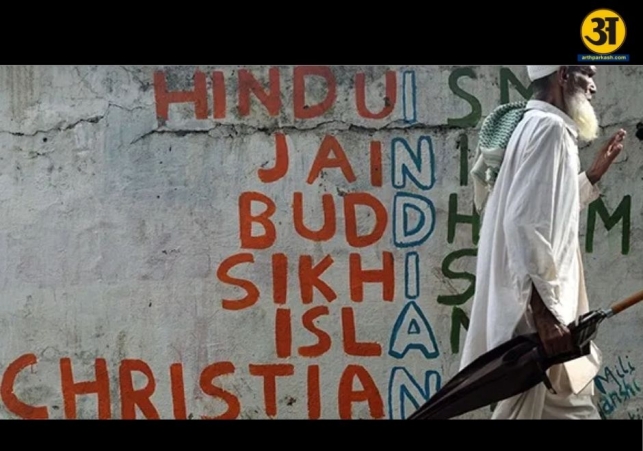
As a society, Kerala has prided itself on peaceful coexistence among different faiths and communities. Yet, the hijab dispute revealed how even minor incidents can trigger deep emotional and ideological divides. The question is no longer about one girl’s right to wear a headscarf but about the growing number of faith-based assertions that test the limits of secular institutions. These acts are not overtly aggressive but subtle, often framed as personal choices or modesty concerns. Over time, however, such actions can collectively influence how society perceives freedom and identity.
The author, who identifies as both a Muslim and a libertarian, expressed sympathy for the student but also concern about how these incidents are reshaping Kerala’s pluralistic identity. He explains that “micro revivalism” is not about dramatic religious uprisings but small, continuous demands that normalise faith-based visibility in secular spaces. It is an incremental process, designed to avoid confrontation while slowly changing social expectations.
For example, when faced with resistance, activists or religious groups often retreat, framing themselves as victims of discrimination. This strategy helps them avoid ideological clashes while maintaining their moral high ground. Over time, each small “victory” adds up — quietly redrawing the boundaries of what is considered acceptable in a secular society. This pattern, the author argues, is not limited to Muslims or Kerala alone; religious revivalism in micro forms has been seen across faiths and regions, often justified as protecting cultural identity or moral health.
The pattern of micro revivalism in Kerala
In Kerala, this form of revivalism has become visible in various public debates. The hijab controversy is only the latest example. Earlier, Muslim organisations had opposed Zumba dance classes introduced in some schools, claiming that the dance violated religious modesty. However, they later withdrew after parents and students showed little concern. Similarly, protests erupted against the introduction of gender-neutral uniforms — where all students, regardless of gender, wore long trousers — with critics calling them “woke” ideas that challenged traditional cultural values.
Another major incident occurred when a group of medical students in Thiruvananthapuram requested permission to wear hijabs and long-sleeved scrubs in operating theatres. They cited religious modesty as their reason, even though such clothing conflicted with global sterilisation and hygiene standards. These cases, when viewed separately, may appear as isolated expressions of faith. But together, they show a recurring pattern — faith-based assertions that test secular boundaries, withdraw when resisted, and resurface elsewhere under new contexts.
ALSO READ: Breathless on Diwali: Banning crackers protects health, not religion
ALSO READ: Experts raise alarm over increasing breast cancer in young women
This is what the author describes as “micro revivalism.” It works by gradually stretching the limits of public tolerance and reshaping what is seen as normal behaviour in shared spaces like schools, hospitals, or workplaces. Each small debate — whether about dress codes, dance, or uniforms — serves as a step in this slow transformation. The goal is not necessarily religious domination but the reassertion of identity in subtle, socially acceptable ways.
At a deeper level, such actions may have political or institutional motives. Kerala’s Muslim community, like many others, is represented by a range of organisations — from moderate to conservative. These groups often compete for leadership and influence within the community. By taking strong positions on issues of religious freedom, they can portray themselves as defenders of faith, contrasting themselves with secular or liberal voices.
Some observers believe that recurring controversies might also be linked to competition among educational institutions. Over the past two decades, Muslim organisations have opened many new schools and colleges. However, many parents still prefer Christian-run schools for their discipline and academic standards. Controversies like the hijab row could be used, intentionally or not, to create mistrust toward such institutions and promote Muslim-run schools as safer spaces for preserving cultural identity.
Balancing liberty and pluralism
The rise of micro revivalism poses a quiet but serious challenge to Kerala’s secular framework. The state’s rich history of reform, education, and social justice — often described as the “Kerala Model” — was built on values of equality and coexistence. Movements led by reformers like Narayana Guru and Chattambi Swamikal championed social unity beyond caste or religion. However, these values now face subtle erosion as identity-based politics gains ground.
The author warns that if such trends go unchecked, Kerala’s hard-won social harmony could weaken. Civil society, community leaders, and especially Muslim intellectuals need to recognise that revivalist forces, even when small or well-intentioned, can gradually pull society backward. Many liberals unintentionally enable these shifts by refusing to confront religious conservatism for fear of being labelled intolerant.
The real challenge for Kerala lies not in banning religious expression but in preserving the delicate balance between individual liberty and collective secularism. Faith and freedom must coexist — but one should not quietly consume the other. Every demand rooted in faith must be weighed against the rights of others to live, study, and work in an environment that respects diversity without imposing conformity.
Kerala’s identity has always been shaped by its openness — its embrace of education, reform, and pluralism. The current moment calls for reaffirming these principles rather than retreating into narrow interpretations of culture or religion. Whether this is just a temporary phase or a deeper ideological shift will depend on how Kerala’s people, institutions, and leaders respond now.
In the end, the hijab controversy is less about a single student and more about the future of Kerala’s social contract. Will the state continue to champion pluralism and liberty, or will quiet revivalism gradually reshape its identity? The answer will define not only Kerala’s politics but also its moral and cultural direction in the years ahead.
Related News