SC questions Uttarakhand on missing hill protection policy
Supreme Court seeks Uttarakhand response on absence of policy to protect hills
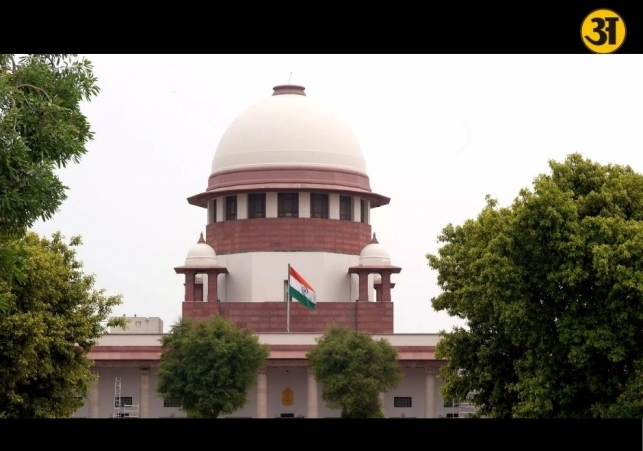
The Supreme Court of India has once again expressed concern about the growing environmental crisis in the Himalayan states. On Monday, the court asked the Uttarakhand government to explain why there is no clear policy or law to regulate hill cutting and uncontrolled tree felling in the state. The court said that the issue of protecting fragile mountain ecosystems cannot be ignored anymore, as disasters like landslides, flash floods, and cloudbursts are becoming more frequent.
The case was heard by a bench led by Chief Justice of India (CJI) Bhushan R. Gavai, along with Justices K. Vinod Chandran and A.S. Chandurkar. The matter came up through an application filed by Uttarakhand resident Aanchal Raturi, who raised the problems faced by people living in the hilly state. She pointed out how reckless cutting of trees and unplanned construction has been causing immense ecological damage.
The petition was argued by advocate Vaibhav Niti as part of the long-standing T.N. Godavarman case, under which the court has been monitoring issues related to forest and wildlife protection in the country.
Concerns raised by the court and lawyers
During the hearing, the Chief Justice said the matter is serious and connected it with similar concerns raised earlier in Himachal Pradesh. “We recently highlighted how logs of wood were found floating in rivers in Himachal after heavy rains. This shows how unchecked tree cutting and deforestation are damaging the environment. We will issue notice to Uttarakhand on this application and hear it along with the Himachal case after two weeks,” the bench said.
Solicitor General Tushar Mehta, appearing for the Centre, informed the court that the Union environment secretary had already taken up the matter with the chief secretaries of both Himachal Pradesh and Uttarakhand. This was done after the Supreme Court’s earlier notice about large amounts of wood floating in the river Ravi.
Senior advocate A.N.S. Nadkarni, representing the applicant, highlighted how blasting of hills, indiscriminate cutting of hilltops, and removal of green cover are being done in an unscientific and unregulated manner. He said that without a comprehensive policy for hilly areas, both the environment and people’s lives are at risk. He also pointed out the problem of illegal construction along municipal and village roads, which often makes landslides worse.
The court-appointed amicus curiae (friend of the court), senior advocate K. Parmeshwar, also raised a strong objection to a proposed amendment to the Uttar Pradesh Protection of Trees Act. The amendment would allow people to cut trees and vegetation on private hilly land without any permission from authorities. Parmeshwar warned that such a change would lead to large-scale destruction of old trees, including deodar, oak, teak, and khair, which have been standing for over a century.
Supreme Court to hear Himalayan issues together
The amicus curiae further explained that the Uttar Pradesh law initially protected 55 species of trees. But over time, the number was reduced to just 15 species, resulting in the destruction of several important and indigenous varieties. This, according to him, has worsened the ecological damage in Uttarakhand.
He also reminded the court that on August 1, a different bench of the Supreme Court had taken suo motu (on its own) cognizance of the large-scale environmental destruction happening in Himachal Pradesh due to construction and deforestation. Parmeshwar suggested that both the Himachal and Uttarakhand cases, along with other similar petitions, should be heard together because they all deal with the fragile ecology of Himalayan states.
The bench agreed with this suggestion. It said that all petitions concerning the Himalayan ecosystem, including the latest application against Uttarakhand, would be combined and taken up together on September 17.
ALSO READ: EnteroMix cancer vaccine: Russia claims full effectiveness
ALSO READ: Next-generation GST reforms aim to bring relief, says Modi government
The court has made it clear that the situation in Uttarakhand and other hilly states is alarming. Frequent natural disasters are a warning that ecological balance in the Himalayas is under severe threat. Cutting trees without regulation, building roads and houses in unsafe areas, and blasting hills for projects are not just harming the environment but also putting people’s lives at risk.
The Supreme Court’s latest move puts pressure on the Uttarakhand government to act. If the state fails to create a proper policy for regulating construction and protecting the green cover, the situation could become worse in the coming years. For now, all eyes are on the next hearing when the court will review the responses from both Himachal Pradesh and Uttarakhand.
Related News