October 7 Shaped Middle East Conflict
October 7 Attack Changed the Middle East Conflict Landscape
Two years ago, on October 7, 2023, over 3,000 Hamas and Islamic Jihad fighters launched a sudden, coordinated attack on Israel. The assault included attacks by land, sea, and air, resulting in the deaths of more than 1,200 Israeli civilians, thousands wounded, and 251 people taken hostage. It was the deadliest attack on Israeli civilians since the Holocaust. In response, Israel launched a large-scale military campaign, which killed tens of thousands of Palestinians and Hamas fighters and left Gaza devastated.
The October 7 attack marked a turning point in the Middle East, comparable to how the September 11 attacks reshaped the United States. At the time, the scale and planning of the assault were unprecedented. Analysts quickly realized it would undo decades of peace efforts and destabilize the region. Predictions made immediately after the attack included a massive Israeli ground assault on Gaza, a halt to the Israel-Saudi peace deal, and strikes against Hezbollah and other Iranian-backed groups. Two years later, nearly all these predictions have come true, except for direct evidence of Iran’s involvement.
Military dominance and regional shifts
Israel’s military response has reshaped the region. The Israeli Air Force has struck targets in Lebanon, Syria, Iran, Qatar, and Yemen, weakening Iran’s network of allied groups. Hezbollah in Lebanon has been significantly weakened, and the Houthis in Yemen have been hit multiple times. Syria’s military and infrastructure have collapsed, with Israel taking control of key areas, including Mount Hermon. Israel and the US also conducted strikes on Iranian nuclear facilities, effectively limiting Tehran’s nuclear capabilities.
This campaign has broken the so-called Shia arc of influence, a corridor of countries from the Mediterranean to the Arabian Sea under Iranian sway. The conflict has also affected the Indian subcontinent, as disruptions in the Red Sea increased shipping costs by 30 to 50 percent. In response, India approved a Rs 69,725 crore plan to boost domestic shipbuilding. The war has prompted Saudi Arabia to consider seeking Pakistan’s nuclear protection after Israel struck Qatar in September 2025.
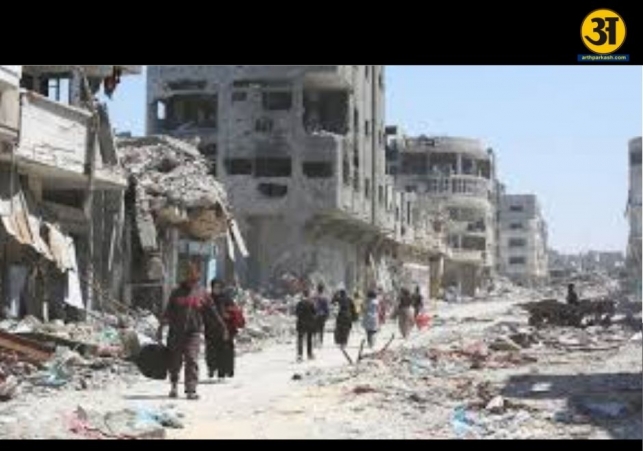
Despite Israel’s military success, the Middle East remains unstable. Gaza has been reduced to rubble, with 92 percent of its buildings destroyed and over 53,000 Palestinians killed. Yahya Sinwar, the Hamas leader behind the October 7 attacks, was killed by Israeli forces in October 2024 after a year-long manhunt. However, the destruction and ongoing occupation could inspire future generations to continue violence as a means to achieve Palestinian statehood.
The path ahead: Peace or continued conflict?
Globally, the attacks increased anti-Israeli sentiment, but paradoxically, they also accelerated international recognition of Palestinian statehood. Countries such as the UK, Australia, Canada, and Portugal have recognized Palestine as an independent nation. Israel has become militarily dominant in the region, with the ability to strike across West Asia with its air force. Yet on the ground, the defeat of Hamas may not end the conflict. The underlying issues remain unresolved, and the potential for future violence is high.
ALSO READ: AIIMS Delhi performs India’s first robotic kidney transplant on patient with renal failure
ALSO READ: Upcoming fighter jets set to modernize the Indian Air Force by 2035
The October 7 attacks have shown how a single event can shift regional power balances. While Israel strengthened its military position, the human cost was immense, and the political landscape remains fragile. The conflict has left Gaza in ruins and destabilized neighboring countries, while giving new urgency to discussions around Palestinian statehood. The seeds of future conflict may already be present, as the lessons of October 7 demonstrate that violence can leave deep and lasting scars, often planting the roots for further unrest.
As Israel and Palestinian representatives discuss potential peace plans, the region remains at a crossroads. Military victories may not translate to lasting peace. The Middle East, still shaped by decades of historic grievances and geopolitical struggles, faces an uncertain future. October 7 changed everything, proving that even a single day can rewrite the course of history and leave the world grappling with its aftermath.
Related News