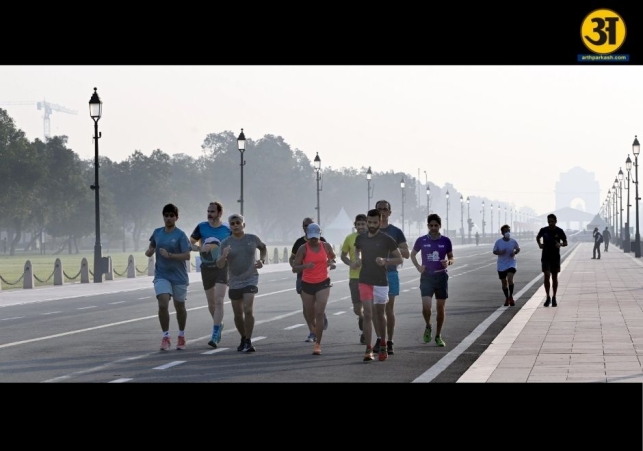
No fully safe time to run in heavy pollution
Experts advise caution: running outdoors is risky during high pollution
In India, air pollution has become a daily challenge, not just for commuters but also for people who enjoy outdoor activities like jogging, running, or evening walks. Cities often face sudden spikes in air quality index (AQI), moving from “moderate” to “poor” or even “severe” levels within hours. For fitness enthusiasts, this makes exercising outdoors risky, especially when the air is full of harmful particles. But is there a safe time to go for a run or walk? Indian pulmonologists say it’s not as simple as picking a time—it’s about understanding how pollution behaves and how your lungs react.
Dr Suleiman Ladhani, Consultant Pulmonologist at Wockhardt Hospitals in Mumbai, explains that exercising increases your breathing rate, which means you inhale more air—and with it, more pollutants. This can irritate your airways, cause coughing, chest tightness, throat irritation, and even wheezing. Even healthy adults can feel the effects when the AQI reaches “unhealthy” levels. This doesn’t mean you should stop exercising altogether, but it does mean you need to adjust the time, place, and intensity of your workouts to protect your lungs.
Safest and riskiest times to work out
According to Dr Ladhani, air pollution in Indian cities tends to follow certain patterns throughout the day:
-
Lowest AQI: Early mornings before traffic starts to build up.
-
Highest AQI: 7–11 am and 5–9 pm, during peak traffic hours.
-
Unpredictable AQI: Late evenings, when pollution can fluctuate.
-
Worst levels: Winter mornings and nights, when temperature inversion traps pollutants near the ground.
So, the safest time for an outdoor workout is generally between 5–7 am, but only on days when the AQI is not in the “poor” or “severe” categories. Dr Ladhani stresses the importance of checking real-time AQI readings instead of assuming that early mornings are always safe.
For people with asthma, COPD, allergic rhinitis, or other chronic lung conditions, even moderate pollution can be harmful. Dr Ladhani advises:
-
Avoid outdoor workouts if AQI is above 150.
-
Switch to indoor exercises on “unhealthy” days.
-
Keep a rescue inhaler nearby.
-
Warm up slowly to prevent sudden narrowing of airways.
-
Stop exercising and move indoors immediately if you experience wheezing, chest tightness, breathlessness, or persistent cough.
Indoor workouts are much safer on days when pollution is high, especially if the space is ventilated or has an air purifier. Good indoor exercise options include yoga, strength training, Pilates, skipping, stationary cycling, or using a treadmill. If the AQI is “very poor,” “severe,” or “hazardous,” everyone should avoid outdoor workouts, not just people with lung problems.
ALSO READ: Global alert issued as 6,000 jets face urgent updates to prevent flight-control failures
Precautions to protect your lungs
Even on moderately polluted days, you can take steps to reduce your exposure and still stay active:
-
Check AQI regularly: Use reliable apps or government sources to monitor pollution levels.
-
Choose the right location: Exercise in parks, open spaces, or areas away from highways and heavy traffic.
-
Adjust intensity: Avoid high-intensity workouts during pollution peaks.
-
Wear a mask: A well-fitted N95 mask can reduce inhalation of harmful particles during outdoor activities or commuting.
-
Hydrate well: Drinking water helps your respiratory system flush out pollutants.
-
Shower and change clothes: After exercising outdoors, remove pollutants that have settled on your skin or clothing.
The key takeaway is that there is no universally “safe” time to exercise outdoors during pollution season. However, by paying attention to AQI patterns and choosing indoor alternatives when pollution is high, you can protect your lungs while maintaining a fitness routine.
Dr Ladhani emphasizes that understanding your own body’s limits and responding to real-time conditions is more important than forcing yourself to exercise outdoors. Adapting your workout to the air quality of the day can prevent long-term damage to your respiratory system and keep you healthy in the long run.
In short, fitness is important, but your lungs matter more. By being smart about when and where you exercise, and by taking precautions on high pollution days, you can continue your workouts safely. The safest approach combines awareness, timing, and indoor alternatives when necessary, ensuring that pollution doesn’t undo the benefits of your exercise routine.
Related News