Mixed record defines Harpreet Kaur Babla’s mayoral tenure
Chandigarh mayor Harpreet Kaur Babla’s term marked by fiscal relief and stalled flagship projects
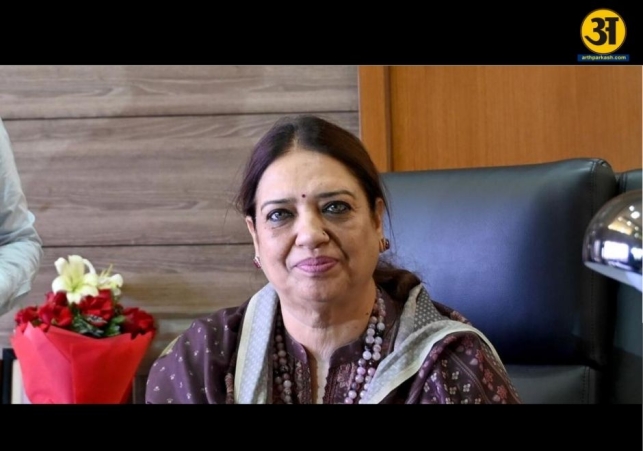
As Harpreet Kaur Babla completes her first one-year term as the Mayor of Chandigarh, her tenure stands out as a mix of clear financial recovery and unresolved civic challenges. A detailed review of her year in office shows a leadership marked by strong control over finances but limited success in solving some of the city’s long-standing infrastructure problems.
Harpreet Kaur Babla, 60, became mayor on January 30, 2025, after a closely fought and dramatic election. Despite the BJP being in a minority in the municipal corporation, she defeated the AAP–Congress joint candidate Prem Lata by just two votes. Her victory was made possible due to cross-voting by three opposition alliance members. From the very beginning, her tenure was shaped by political tension and sharp opposition inside the House.
When Babla took charge, the municipal corporation was facing a serious financial crisis. The civic body was struggling to even pay staff salaries. While she managed to stabilise the finances within a year, several major civic issues remained unresolved, drawing criticism from opposition leaders.
Financial recovery and governance style
Babla is well acquainted with Chandigarh’s political environment. Her political journey began as a homemaker before she became a two-time councillor. Her husband, Devinder Singh Babla, a former Congress leader and now BJP vice-president, played a key role in guiding her political career. The couple joined the BJP in early 2022, shortly after Harpreet won the councillor election on a Congress ticket.
Her leadership style combined firmness with authority. As mayor of a House where her party lacked a majority, she often adopted a strict approach to maintain order. Colleagues described her as someone who used discipline, sharp remarks, and confidence to control heated debates.
ALSO READ: US strikes Venezuela, captures Nicolas Maduro, but is it legal under international law?
One of her biggest achievements was stabilising the municipal corporation’s finances. Through repeated follow-ups with the Union Territory administration and the Centre, she secured ₹125 crore in August 2025. This funding helped the civic body move away from financial collapse.
She also introduced a “zero-expense” model for major city events. The 53rd Rose Festival and the 38th Chrysanthemum Show were organised without spending money from the municipal budget. These events not only covered their costs but also generated revenue for the first time.
Another major decision during her tenure was the revision of property tax and water and garbage charges. Though controversial, the move added nearly ₹41 crore to the municipal corporation’s income.
The mayor also focused on generating revenue through public-private partnerships and advertising projects. These initiatives are expected to bring in around ₹75 crore annually. New monthly parking passes are also projected to generate another ₹25 crore each year.
Babla extended relief to 1,041 street vendors whose licences had earlier been cancelled. She allowed them to clear their pending dues in three instalments. This decision has already added ₹2.53 crore to the civic body’s funds, with more expected in the coming months.
To promote transparency, her administration also began live streaming the monthly House meetings, allowing residents to watch proceedings online.
Unfinished projects and political clashes
Despite financial improvements, Babla’s term faced criticism for delays and failures in major engineering and sanitation projects. The most significant concern was the French-funded 24x7 water supply project. The project’s cost has risen sharply to around ₹1,700 crore. A pilot project in Manimajra failed, turning the scheme into a major financial burden.
The project is now under a performance audit by the Comptroller and Auditor General. Opposition leaders blamed the mayor for not taking strong corrective steps, while supporters argued the problem existed before her tenure.
Another unresolved issue is the Dadumajra garbage dump. Although officials claimed that 95% of the waste had been cleared, the project missed at least five deadlines. Residents living nearby continued to face environmental and health concerns, making it a key failure highlighted by critics.
A major political controversy erupted in August 2025 when Babla decided to transfer the city’s V3 roads to the Union Territory administration for re-carpeting. She defended the move as necessary due to lack of funds and the need for quick repairs. However, the AAP–Congress alliance strongly opposed the decision, calling it a surrender of municipal assets.
The disagreement led to one of the most dramatic House meetings of her tenure. Opposition councillors protested loudly, forcing the mayor to call marshals to remove them from the House. Despite the chaos, the proposal was passed, marking a highly contentious moment.
Babla was known for her sharp remarks during debates. She often used quick responses to silence opposition members, which maintained order but also added drama to House proceedings. While supporters praised her firm control, critics said her approach increased political bitterness.
The opposition’s assessment of her tenure was largely negative. Congress councillor Gurpreet Singh Gabi acknowledged her efforts but said her term was overshadowed by failures in the water project and waste management. AAP councillor Yogesh Dhingra dismissed the year entirely, claiming residents were left with poor roads and stalled development.
Beyond politics, Babla maintained a strong public presence and was known for her elegant appearance at official events. She also spoke openly about promoting women in sports and supporting female athletes in Chandigarh.
In the end, Harpreet Kaur Babla’s first year as mayor presents a mixed picture. While she successfully pulled the municipal corporation back from financial distress, her inability to deliver results on key civic projects leaves her legacy open to debate.
Related News