Khawaja Asif ends talks with Afghanistan over border issues
Pakistan ends dialogue with Afghanistan amid rising border tensions, says Khawaja Asif
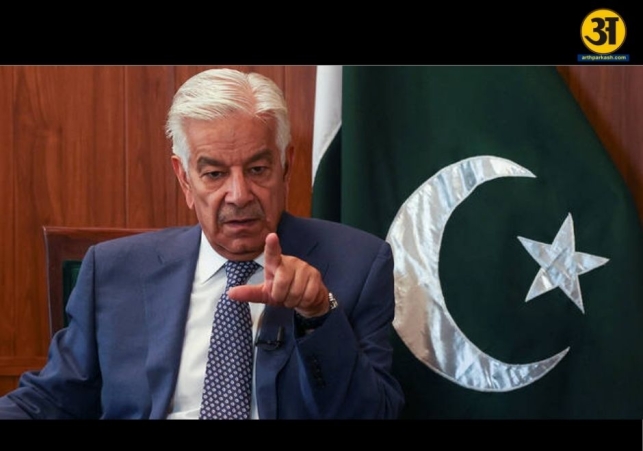
Hopes for peace between Pakistan and Afghanistan have suffered a major setback as talks between the two countries have come to an end. Pakistan’s Defence Minister Khawaja Muhammad Asif declared that discussions with the Afghan government were “over,” warning that the current ceasefire would continue only if Afghanistan avoided further violations.
The peace talks were taking place in Istanbul, Turkey, where both sides had been trying to resolve tensions that escalated after deadly border clashes. However, Pakistan’s Information Minister Attaullah Tarar announced that the negotiations had reached a deadlock. While the Afghan government has not officially responded to this statement, the announcement has raised concerns about renewed violence at the border.
“As we speak, the talks are over,” Khawaja Asif told Pakistan’s Geo News channel, adding that the ceasefire would hold “only until there are no breaches from the Afghan side.” His remarks came just days after an Afghan official alleged that four Afghan civilians had been killed in clashes between forces from both countries.
The breakdown in communication marks a sharp reversal from last week’s developments. On November 1, Turkey had released a statement saying that Pakistan and Afghanistan had agreed to maintain the ceasefire. That agreement had offered hope for stability in the region, with both sides promising to set up a monitoring and verification mechanism to ensure that peace was maintained. However, with the latest statements from Islamabad, those assurances appear to have fallen apart.
The fresh deadlock also highlights the fragile relationship between Pakistan and the Taliban-led government in Kabul, which has been strained by repeated accusations and military tensions over the past few months.
Rising border tensions and failed promises
Relations between Pakistan and Afghanistan have been tense for weeks, especially after a series of violent incidents along their shared border. According to reports, clashes first broke out in October, around the same time when Taliban Foreign Minister Amir Khan Muttaqi was visiting India.
The violence began with explosions in Kabul, which the Taliban blamed on Pakistan. In retaliation, Taliban fighters attacked Pakistani military posts, claiming to have killed 58 soldiers. Pakistan, however, confirmed the deaths of 23 personnel. Following these attacks, both countries announced a ceasefire—but each claimed that the other had requested it first.
Despite the ceasefire, peace did not last long. Reports soon emerged of airstrikes inside Afghan territory that killed at least 10 people. The most recent violation occurred on Thursday night when Pakistani and Afghan forces allegedly exchanged fire along the Chaman border in southwestern Pakistan.
Pakistan’s Defence Minister Khawaja Asif has blamed the Taliban government for failing to live up to its commitments made under the 2021 Doha Peace Accord. The agreement, signed between the Taliban and the United States, had included assurances that Afghanistan would not allow terrorist groups to use its soil to launch attacks against other countries. “Pakistan values peace and stability,” Information Minister Attaullah Tarar said, “but will take all necessary steps to protect its people.”
Tarar added that Pakistan “will not support any actions by the Taliban government that are not in the interest of the Afghan people or neighbouring countries.” This statement reflects Pakistan’s growing frustration with the Taliban administration, which Islamabad believes has not done enough to control militant groups operating near the border.
The situation has also been complicated by differing views on the Durand Line, the border that separates Pakistan and Afghanistan. While Pakistan recognises it as the official boundary, Afghanistan has never formally accepted it, calling it an artificial division that separates families and tribes. The border dispute has remained a source of recurring tension for decades, often sparking skirmishes and political disagreements.
Ceasefire at risk as peace efforts collapse
The failure of talks in Istanbul has once again brought the fragile ceasefire to the edge of collapse. A statement from Turkey last week had said that “all parties agreed to maintain the ceasefire and to impose penalties on any side that violates it.” The plan also included the creation of a joint monitoring mechanism. However, with Pakistan now saying the talks are over, the future of that agreement remains uncertain.
Analysts believe that the breakdown in negotiations could lead to more instability along the border. Pakistan has been struggling to contain attacks by militant groups, including the Tehreek-e-Taliban Pakistan (TTP), which Islamabad claims operates from Afghan soil. Afghanistan, on the other hand, accuses Pakistan of conducting airstrikes inside its territory and violating its sovereignty.
ALSO READ: BJP still needs Nitish Kumar despite differences in Bihar politics
ALSO READ: Why strokes can strike at any age: 8 common myths busted
The tension between the two countries has also affected trade and movement across border checkpoints like Torkham and Chaman. These crossings are vital for the exchange of goods and humanitarian aid, but frequent closures have disrupted supplies and caused economic hardship for people living in border regions.
The international community has expressed concern about the rising hostilities. Regional stability is seen as crucial for both countries, especially after decades of conflict that have already caused widespread suffering and displacement. Diplomats have urged both sides to resume dialogue and avoid further escalation.
Despite these calls, the political mood in Islamabad appears firm. Khawaja Asif’s declaration that “talks are over” suggests that Pakistan is prepared to take a tougher stance if violence continues. Observers say this could include military measures or tightening border controls to prevent further incidents.
Meanwhile, Afghan authorities have yet to issue a detailed response. The Taliban government, which faces growing domestic and international pressure, may find it difficult to balance relations with Pakistan while addressing its own internal security challenges.
As tensions rise, civilians on both sides of the border remain the most affected. Many live in constant fear of renewed fighting, displacement, or loss of life. With talks collapsing and mistrust deepening, the chances of long-term peace between Pakistan and Afghanistan appear dim—at least for now.
Related News