Jaishankar to attend former Bangladesh PM Khaleda Zia’s funeral in Dhaka on Tuesday
Jaishankar to attend former Bangladesh PM Khaleda Zia’s funeral in Dhaka on Tuesday
- By Gurmehar --
- Monday, 29 Dec, 2025
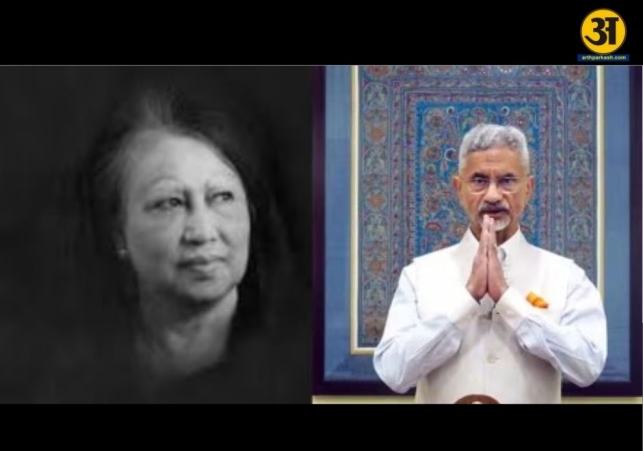
India’s External Affairs Minister Dr S Jaishankar will attend the funeral of former Bangladesh Prime Minister Begum Khaleda Zia in Dhaka on December 31. He will represent the Government and people of India at the final rites, even as relations between the two neighbouring countries remain strained.
The Ministry of External Affairs confirmed Jaishankar’s visit in an official statement. It said the External Affairs Minister will travel to Dhaka on Wednesday to pay respects to the late leader. His presence at the funeral is being seen as an important diplomatic gesture by India towards Bangladesh.
Khaleda Zia, who served as Bangladesh’s prime minister twice and was the chairperson of the Bangladesh Nationalist Party (BNP), passed away on Tuesday morning after a long battle with illness. She was 80 years old.
Jaishankar to represent India in Dhaka
According to the ministry’s statement, Dr S Jaishankar will attend Khaleda Zia’s funeral on behalf of India. The ministry said that he will represent both the Indian government and the Indian people during the visit.
The decision comes at a time when India-Bangladesh relations have seen periods of tension. However, officials say that attending the funeral of a former head of government reflects respect for Bangladesh’s political history and democratic traditions.
Diplomatic observers believe that Jaishankar’s visit sends a message of goodwill and continuity in ties between the two countries. Khaleda Zia played an important role in shaping Bangladesh’s politics and had also engaged with Indian leaders during her time in office.
Khaleda Zia served as the first woman Prime Minister of Bangladesh. She held office twice, first from 1991 to 1996 and again from 2001 to 2006. As leader of the BNP, she remained a key political figure in the country for decades.
Her funeral is expected to be attended by senior leaders from Bangladesh and representatives from several countries. Security arrangements have been tightened in Dhaka ahead of the ceremony.
ALSO READ: Is low ovarian reserve normal in your 20s or 30s? Fertility expert answers
ALSO READ: The new 'high command' is BJP's jodi number one
Khaleda Zia’s illness and legacy
Khaleda Zia passed away at around 6 am on Tuesday while undergoing treatment at Dhaka’s Apollo Hospital, now known as Evercare Hospital. The Bangladesh Nationalist Party confirmed her death in an official statement.
She had been admitted to the hospital on November 23 and remained under medical care for 36 days. Doctors said she was suffering from multiple infections that affected her heart and lungs. Over the years, she had also battled several chronic health conditions.
Her medical issues included liver cirrhosis, diabetes, arthritis, kidney problems, lung disease, heart complications, and eye-related issues. Due to her fragile health, doctors closely monitored her condition round the clock.
A medical team led by cardiologist Shahabuddin Talukder was treating her. The team also included specialists from Bangladesh as well as doctors from the United Kingdom, the United States, China, and Australia. Despite their efforts, her condition continued to worsen.
There were attempts to move her abroad for advanced treatment. However, doctors advised against travel because her health was extremely unstable. Just two days before her death, her personal physician had described her condition as “extremely critical.”
According to a BNP social media post, her health deteriorated sharply late on Monday night. Plans were made to airlift her to London on a special aircraft from Qatar. However, the medical board did not approve the transfer, saying she was not fit to be moved from the hospital to the airport.
Khaleda Zia’s death has been widely mourned across Bangladesh. Supporters, political leaders, and citizens from different backgrounds have paid tribute to her long political career and contributions to the country.
Indian Prime Minister Narendra Modi also expressed his condolences. In a post on social media platform X, Modi said he was deeply saddened by her passing. He extended his sympathies to her family and the people of Bangladesh.
Modi recalled meeting Khaleda Zia in Dhaka in 2015 and described the interaction as warm. He said that as Bangladesh’s first woman prime minister, her contributions to the country’s development would always be remembered.
He also noted her role in shaping India-Bangladesh relations and expressed hope that her vision and legacy would continue to guide cooperation between the two nations. Modi ended his message by wishing peace for her soul and strength for her family during the difficult time.
Khaleda Zia’s passing marks the end of an era in Bangladesh politics. She remained a strong and influential leader for decades, even during periods of political conflict and personal hardship.
Dr S Jaishankar’s visit to Dhaka for her funeral highlights the importance India places on its relationship with Bangladesh and shows respect for a leader who played a major role in the country’s political history. As both nations move forward, such gestures are expected to help maintain dialogue and understanding between the neighbours.
Related News