India calls arbitration court’s decision invalid and refuses to accept ruling
India rejects Hague court ruling on Indus Waters Treaty, says agreement remains in abeyance
- By Gurmehar --
- Sunday, 17 May, 2026
India on Saturday strongly rejected a ruling issued by a Court of Arbitration linked to the Indus Waters Treaty and said the decision was completely invalid. The government stated that the treaty remains “in abeyance” and made it clear that India does not recognise the authority of the court that issued the ruling.
The Ministry of External Affairs (MEA) released an official statement in response to the latest decision issued by what India called an “illegally constituted so-called Court of Arbitration”.
MEA spokesperson Randhir Jaiswal said India has never accepted the formation of this court and would not recognise any order, award or decision issued by it.
According to the statement, the court issued a fresh award on May 15, 2026, related to the interpretation of the Indus Waters Treaty and the issue of maximum pondage linked to hydroelectric projects.
However, India rejected the ruling immediately and called it “null and void”.
The MEA spokesperson said India had already rejected previous decisions made by the same arbitration body and would continue to reject any future rulings as well.
India’s strong reaction comes at a time of increasing tensions with Pakistan over water-sharing issues and security concerns.
The Indus Waters Treaty was signed in 1960 after mediation by the World Bank. The agreement was signed between former Indian Prime Minister Jawaharlal Nehru and then Pakistan President Mohammad Ayub Khan.
Under the treaty, the waters of the eastern rivers — Ravi, Beas and Sutlej — were allocated mainly to India. Meanwhile, the western rivers — Indus, Jhelum and Chenab — were largely allocated to Pakistan, though India retained certain limited rights for irrigation and hydroelectric projects.
For decades, the treaty was considered one of the few agreements that survived repeated tensions between India and Pakistan.
However, relations between the two countries have worsened sharply in recent years because of terrorism, border tensions and political disputes.
The Indian government recently decided to place the treaty in abeyance following the terror attack in Pahalgam in Jammu and Kashmir. India described the move as part of a broader response against terrorism.
Pakistan criticised India’s decision and accused New Delhi of “weaponising” water. However, India rejected those accusations and defended its position strongly.
The government has repeatedly stated that India has the right to reconsider agreements when national security and public interest are involved.
According to Indian officials, the latest ruling from the arbitration court has no legal value because India never accepted the authority of that body in the first place.
The government also argued that the court was formed improperly and therefore its decisions cannot be treated as binding.
India’s position reflects its broader stand that bilateral issues between India and Pakistan should be resolved directly between the two countries and not through external interference.
ALSO READ: Xi warns US over Taiwan issue during Trump meeting in Beijing
ALSO READ: Russia plans to deploy powerful Sarmat nuclear missile by end of 2026
The issue of hydroelectric projects on western rivers has been a long-running point of disagreement between India and Pakistan.
Pakistan has frequently objected to Indian hydroelectric projects built on rivers such as the Chenab and Jhelum, arguing that they could affect water flow into Pakistan.
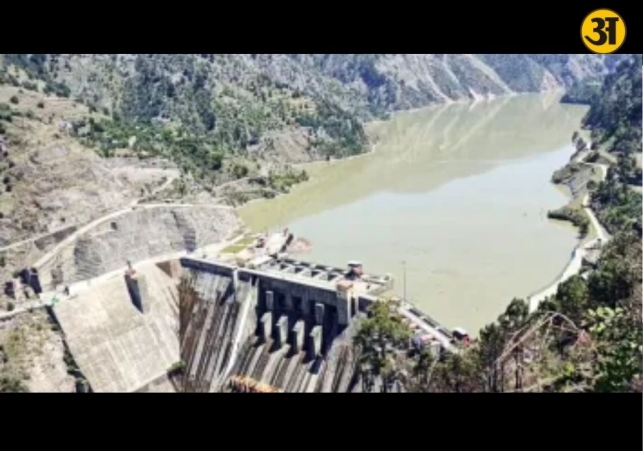
India, however, has maintained that its projects fully comply with the treaty and are mainly run-of-the-river hydroelectric systems that do not violate the agreement.
One such project is the Baglihar Hydroelectric Power Project on the Chenab River, which has often been at the centre of disputes between the two countries.
India says these projects are necessary for electricity generation and development in Jammu and Kashmir.
The Indian government has also argued that earlier arrangements under the treaty unfairly limited India’s rights over rivers flowing through its own territory.
Prime Minister Narendra Modi has publicly stated that India and its farmers have the sole right over India’s water resources.
He described the original treaty as “unjust” and “one-sided” and said correcting historical imbalances was important for national interest.
The Centre has also linked water management with agricultural development, energy production and economic growth.
Government officials believe that reviewing earlier restrictions may help improve irrigation, electricity generation and infrastructure projects in northern India.
Jammu and Kashmir projects may restart
The decision to keep the treaty in abeyance has also received support from the Jammu and Kashmir government.
Chief Minister Omar Abdullah welcomed the Centre’s move and said several development projects in the Union Territory that had remained stalled for years could now move forward with the support of the central government.
According to the Jammu and Kashmir administration, many hydroelectric and infrastructure projects had faced delays because of restrictions and disputes linked to the treaty.
Officials believe restarting such projects may help improve electricity production, employment opportunities and economic growth in the region.
The government has also highlighted the importance of hydropower for Jammu and Kashmir, where rivers provide major energy potential.
Experts say hydroelectric projects could help reduce electricity shortages and improve industrial and agricultural development in the region.
Meanwhile, Pakistan continues to oppose India’s decisions related to the treaty and has repeatedly raised objections through international forums.
However, India has maintained that external bodies cannot interfere in matters where India does not recognise their jurisdiction.
The latest disagreement has once again highlighted the fragile relationship between India and Pakistan and the growing tensions surrounding water-sharing arrangements in South Asia.
The Indus river system remains extremely important for both countries because millions of people depend on these rivers for farming, drinking water and electricity.
Water experts say any major dispute over river-sharing agreements can have serious economic and political consequences for the region.
At present, India has made its position very clear. The government says the Indus Waters Treaty remains in abeyance, the arbitration court’s ruling has no legal value, and India will continue to protect what it sees as its national interests and rights over its water resources.
Related News