How UN funding works and top contributing countries
Explained: How UN funding works and which countries contribute the most
- By Gurmehar --
- Friday, 24 Oct, 2025
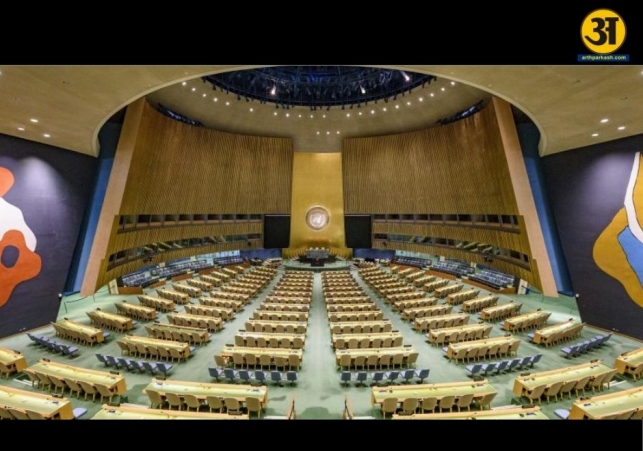
The United Nations (UN) is the world’s leading international organization, established in 1945 after the Second World War to promote peace, security, and cooperation among nations. Every year, October 24 is observed as UN Day, marking the anniversary of the UN’s founding and the coming into effect of the UN Charter. The organization has grown significantly over the decades, and today, 193 countries are its official members, with South Sudan being the latest to join in 2011.
While the UN works on many global issues, including human rights, climate change, humanitarian aid, and international security, one common question is: how is the UN funded? The UN is largely funded by member countries, both directly and indirectly, and also receives some funding from non-governmental sources. Understanding its funding structure helps explain how this global organization operates and delivers programs worldwide.
How the UN is funded
According to the UN’s official information, the organization’s majority of revenue comes from direct contributions by member governments. In 2019, for example, about 72 percent of its total revenue came from direct government contributions. These contributions are calculated based on a formula that considers each country’s economic size and capacity to pay. Wealthier nations are expected to contribute more, while poorer countries contribute less, ensuring a fair system that supports the UN’s global activities.
Besides direct government funding, the UN also receives money from multilateral channels. In 2019, about 15 percent of revenue came from multilateral sources, which include funds from international financial institutions, European Union bodies, and other intergovernmental arrangements. These channels often involve indirect government contributions but are coordinated collectively to support specific programs, such as peacekeeping missions or humanitarian aid.
Non-state actors, including private donors, foundations, and some businesses, also contribute to UN activities, but these contributions are relatively smaller. For instance, in 2019, funding from non-state actors amounted to around USD 2.9 billion. While this is a fraction of the UN’s overall revenue, private contributions often support special initiatives in areas like health, education, and disaster relief.
The UN uses this funding to run programs globally, including peacekeeping missions, development projects, humanitarian aid, and policy research. Without these funds, the organization would not be able to maintain its operations or provide critical support to millions of people worldwide.
ALSO READ: Experts raise alarm over increasing breast cancer in young women
ALSO READ: India faces rising concerns over adulterated eggs alongside fake paneer
Countries contributing the most
The United States (US) has historically been the largest contributor to the UN, and in 2024-25, it provided 26.95 percent of the total UN funding. The US remains a key supporter, helping finance many UN programs, including peacekeeping, development, and humanitarian assistance.
Other top contributors include China and Japan, which provided 18.69 percent and 8.03 percent, respectively, of total funding in 2024-25. Following them are Germany (6.11%), the United Kingdom (5.36%), France (5.29%), Italy (3.19%), Canada (2.63%), South Korea (2.57%), and Russia (2.29%). These countries, along with the US, form the bulk of the UN’s funding and ensure that major operations, including peacekeeping missions and development programs, continue uninterrupted.
India, as a member country, contributed a smaller share, accounting for 0.2088 percent of the total UN funding in 2024-25. While India’s contribution is relatively modest compared to major donors, it continues to actively participate in UN programs, including peacekeeping missions, development projects, and climate initiatives.
The funding system also highlights how international cooperation works. Countries with larger economies pay more to ensure that global programs can function effectively, while smaller nations still contribute based on their capacity. This shared responsibility enables the UN to operate worldwide, addressing conflicts, disasters, and social development challenges.
Importance of UN funding
UN funding is crucial for maintaining the organization’s independence and effectiveness. Peacekeeping missions, for example, require substantial budgets to deploy troops, provide equipment, and maintain logistics in conflict zones. Humanitarian programs, such as providing food, medical aid, and shelter during crises, also depend on steady funding. Development programs, like improving education, public health, and women’s empowerment in developing countries, are funded through contributions from member states.
Without adequate funding, many UN initiatives would face delays or scale-downs, affecting millions of vulnerable people globally. Funding also ensures that the UN can respond quickly to emergencies, including natural disasters, refugee crises, and pandemics, by mobilizing resources from across the world.
In conclusion, the UN relies on financial support from its member countries to carry out its global mission of peace, security, and development. The US, China, and Japan remain the largest contributors, providing significant portions of its budget, while smaller nations contribute proportionally according to their economic capacity. This system of shared responsibility allows the UN to operate efficiently and respond to global challenges, making international cooperation possible and helping millions of people across the world.
Related News