How the Majid missile system brought down US aircraft
How Iran’s Majid missile system is challenging US air power in the Middle East
- By Gurmehar --
- Monday, 06 Apr, 2026
The ongoing conflict in the Middle East has taken a serious turn as Iran has shown that it can effectively challenge the military strength of the United States and Israel. What was initially expected to be a quick and easy operation for the US has become more complicated. One of the key reasons for this shift is Iran’s use of its own air defence system, known as the Majid missile system.
In recent days, the US has faced significant losses. Reports say that at least two American aircraft were brought down during operations in Iranian territory. This includes an F-15E Strike Eagle fighter jet, which crashed during a mission. The aircraft had two crew members—a pilot and a weapon systems officer. One of them has been rescued, but efforts are still ongoing to locate the other.
In addition to this, Iran claimed that it also shot down an A-10 Warthog aircraft over the Persian Gulf. While US officials are still verifying some of these claims, the incidents have raised serious concerns about how Iran is managing to target advanced military aircraft.
What is the Majid Missile System
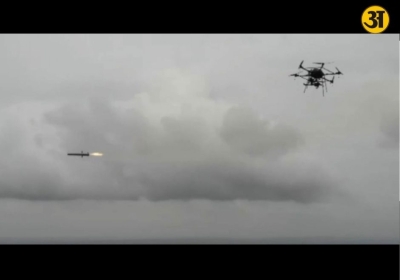
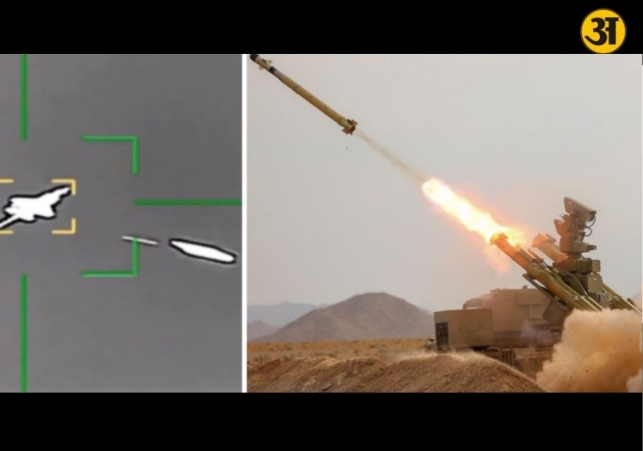
The Majid missile system is a short-range air defence system developed by Iran. It was first introduced in 2021 by Iran’s Defence Industries Organisation. Unlike many traditional systems, the Majid system is designed to detect and attack targets flying at low altitudes, such as fighter jets, helicopters, and drones.
The system is mounted on a mobile vehicle, making it easy to move and deploy in different locations. This flexibility allows Iranian forces to quickly respond to threats and protect key areas.
One of the most important features of the Majid system is its use of passive infrared technology. This means that instead of using radar signals to detect targets, it relies on heat signatures. Aircraft engines produce heat, and the Majid system can track this heat to locate its targets.
Because it does not rely on radar, the system is harder to detect. Many modern aircraft are equipped with systems that can identify radar signals and avoid them. However, since the Majid system stays silent until it launches a missile, it can surprise even advanced jets.
The missiles used in the Majid system are relatively small but effective. Each launcher can carry multiple ready-to-fire missiles. These missiles are designed to explode near the target using a proximity fuse, increasing the chances of a successful hit.
The system has a range of about 8 kilometres and can target aircraft flying up to 6 kilometres high. When combined with other radar systems like the Kashef-99, its tracking range can extend up to 30 kilometres.
ALSO READ: Iran launches manhunt for missing US pilot after fighter jet shot down
ALSO READ: Iran names key Gulf bridges as potential targets after strike on its major bridge
How it is affecting the battlefield
Modern fighter jets like the F-15E Strike Eagle are highly advanced machines. They are fast, agile, and equipped with countermeasures such as flares and decoys to avoid missiles. Despite these advantages, Iran has been able to challenge them using systems like Majid.
Experts believe that the Majid system played a key role in bringing down or damaging US aircraft. Its ability to detect heat instead of relying on radar makes it especially dangerous against low-flying aircraft.
There are also claims that Iran attempted to target even more advanced aircraft, such as the F-35 stealth fighter jet. Iran stated that it managed to hit or damage such a jet, although US officials have said that the aircraft landed safely and that the matter is under investigation.
Apart from fighter jets, Iran also reportedly targeted helicopters involved in rescue missions. Two Black Hawk helicopters were said to have been hit during such operations. This shows that the threat is not limited to combat aircraft but extends to support missions as well.
The use of the Majid system has made Iranian airspace much more dangerous for enemy forces. Analysts describe it as a “killer zone” where aircraft are at constant risk. This has forced the US and its allies to rethink their strategies and take extra precautions.
The situation also highlights the growing capabilities of Iran’s domestic defence industry. Instead of relying only on imported weapons, Iran has developed systems that can compete with advanced technologies used by global powers.
Overall, the Majid missile system has changed the dynamics of the conflict. It has shown that even a short-range system can have a major impact when used effectively. As the war continues, systems like Majid are likely to play a crucial role in shaping the outcome.
The conflict is still ongoing, and both sides are adapting to new challenges. However, one thing is clear: Iran’s air defence capabilities are stronger than many had expected, and they are proving to be a serious obstacle for even the most advanced air forces in the world.
Related News