High court seeks Punjab’s reasons for rejecting parole request
HC questions Punjab on grounds for denying parole sought for attending Parliament of India session
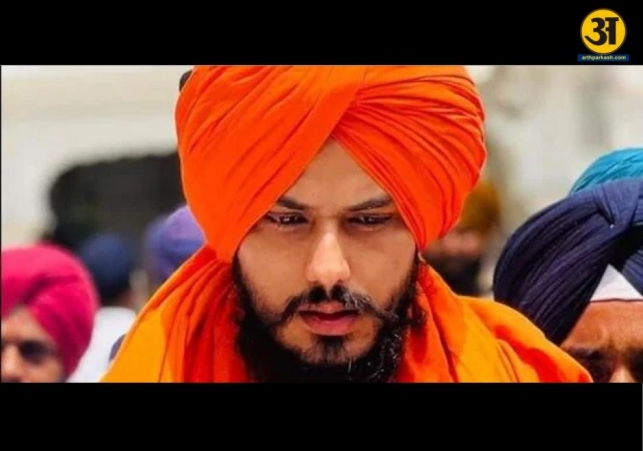
The Punjab and Haryana high court on Monday asked the Punjab government to present the “foundational material” behind its decision to reject the parole plea of Amritpal Singh, the MP from Khadoor Sahib and chief of Waris Punjab De. He had requested parole so he could attend the ongoing winter session of Parliament.
The court said that if the state denied parole on the basis of a police report, it must clearly show what that report contained and how it supported the decision. The state had earlier rejected Amritpal’s representation, reportedly citing possible law-and-order concerns after receiving a report from the district police on November 26.
A division bench led by chief justice Sheel Nagu and justice Sanjiv Berry passed the order while hearing Amritpal’s petition challenging the state’s action. His legal team argued that the government had misused its powers under Section 15 of the National Security Act by issuing a brief and unexplained rejection order. They said the decision did not connect to any specific evidence or threat.
Senior advocate Rajwinder Singh Bains, appearing for Amritpal, said that the MP was not trying to enter Punjab but only wanted to perform his parliamentary duties while remaining in custody. He argued that the parole could include strict conditions if the state had concerns. According to him, the state must justify how allowing an elected MP to attend Parliament could be a threat to national security.
Bains argued that Amritpal wants to raise issues affecting his constituency, including the large-scale damage caused by the Punjab floods in August, which impacted around 800 villages. He said that denying him the opportunity to speak on behalf of the people who elected him was unfair and legally unsound.
When the state opposed the idea of physical presence, Bains even suggested that Amritpal could attend Parliament virtually. He said that both jails and Parliament have the infrastructure for virtual participation. He questioned why the administration could not allow a secure video link when technology made such participation possible. He also challenged the state’s claim that Amritpal’s speech could pose a danger, saying that such an argument must be backed by specific evidence.
Bains further pointed to a recent case where the Delhi high court allowed Baramulla MP Engineer Rashid to attend the same winter session. He argued that this precedent showed that courts were willing to allow such participation when justified. He asked the Punjab government to show material proving that Amritpal’s attendance would harm national security.
State warns of serious security risks
The Punjab government strongly opposed granting parole, whether physical or virtual. Senior advocate Anupam Gupta, representing the state, said that giving Amritpal any platform—national or global—carried “grave risks” because of his background and influence. He argued that even a single speech from him could create serious security problems for Punjab and the entire nation. According to him, the state must act with extreme caution and cannot take risks involving national security.
ALSO READ: Global alert issued as 6,000 jets face urgent updates to prevent flight-control failures
ALSO READ: UIDAI launches new feature allowing Aadhaar mobile update directly through app
Gupta also pointed out that Amritpal had not challenged his fresh detention order under the National Security Act, which began in April this year. He said that the grounds of detention were serious and that all proper procedures under the law were followed. He informed the court that the state had given Amritpal all the documents related to his detention and that the material supporting the detention was substantial. He requested more time from the court to place the material supporting the parole rejection on record before the next hearing on December 5.
The central government also clarified its stand before the court. Additional Solicitor General Satya Pal Jain said that there is no provision in Parliament’s rules to allow MPs to participate virtually. He explained that MPs must be physically present inside the House to speak or take part in proceedings. Without such rules, allowing virtual attendance could set an incorrect precedent and lead to future complications.
Amritpal has been in detention at Dibrugarh jail in Assam since April 2023 after his arrest under the National Security Act. While nine of his associates were brought back to Punjab earlier this year, he continues to remain in the high-security jail. His arrest followed a month-long chase after he evaded a police operation in Jalandhar district by switching vehicles and disguising himself repeatedly.
The Punjab Police began their crackdown after Amritpal and his armed supporters stormed a police station in Ajnala near Amritsar on February 23, 2023, to secure the release of one of his aides. After months of unrest and multiple escape attempts, he was arrested from Rode village in Moga district on April 23, 2023.
In the 2024 Lok Sabha elections, Amritpal contested as an Independent candidate and won the Khadoor Sahib seat with 1.9 lakh votes. He took his oath as MP on July 5, 2024. However, because of his continued detention, he has not attended a single Parliament session since winning the election.
As the case continues, the high court will now review the material that the Punjab government relied on while rejecting the parole plea. The court will examine whether the decision was based on clear, specific grounds or whether it lacked proper justification. The final decision will depend on whether the state can show concrete reasons for claiming that Amritpal’s presence in Parliament could endanger national security.
Related News