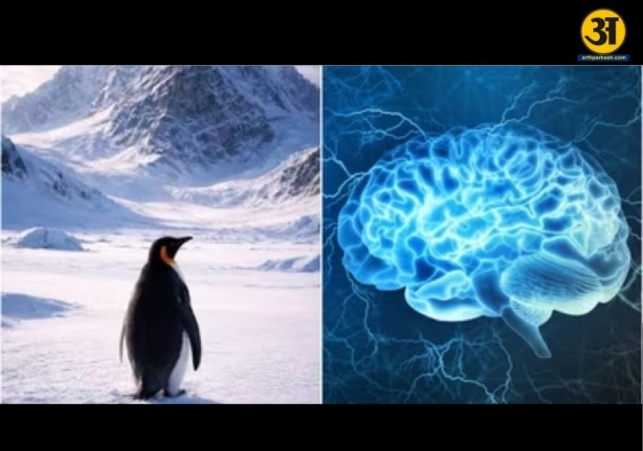
How Alzheimer’s makes familiar places feel unfamiliar
Viral penguin clip explains heartbreaking reality of Alzheimer’s, says neurologist
A short clip from a 2007 Werner Herzog documentary has gone viral, showing an Adelie penguin suddenly leaving its group and walking towards distant mountains, far from the ocean where its companions are headed. While Herzog described this as mysterious and existential, neurologist Dr Rahul Chawla, trained at AIIMS, says the penguin’s behaviour mirrors what happens in people with Alzheimer’s disease.
In Alzheimer’s, a part of the brain that acts like an internal GPS begins to fail. This navigation system, which involves the hippocampus and surrounding areas, helps people know where they are, recognise familiar faces, and find their way home. When this system deteriorates, the brain loses its ability to understand space, location, and familiar surroundings.
“This is called visuo-spatial dysfunction,” explains Dr Chawla. “It’s why people with Alzheimer’s can feel lost, even in their own home.” The breakdown is not about forgetting names or events alone. It’s a deeper problem: the brain no longer recognises places, paths, or the familiar comfort of home.
Wandering is a search for safety, not rebellion
One of the most misunderstood symptoms of Alzheimer’s is wandering. Many families assume patients leave home out of restlessness, depression, or a desire to escape. But Dr Chawla clarifies that the urge to walk away comes from confusion and the loss of familiarity. “They don’t know they are leaving,” he says. “They are trying to reach a memory of safety, something that feels familiar.”
Alzheimer’s patients often rely on faint, old memories to guide them. In their minds, there are fragments of the past they attempt to follow, but logic and conscious direction are impaired. Just like the penguin in Herzog’s clip, the drive isn’t to rebel or escape—it’s to recognise a safe place in a world that no longer feels known.
Dr Chawla suggests a compassionate perspective: “Perhaps the penguin didn’t feel at home with its group anymore. Alzheimer’s patients leave not because they want to, but because familiarity itself disappears.” Understanding this can change how families and caregivers respond. Instead of correction, frustration, or restraint, the approach should be reassurance, patience, and empathy.
ALSO READ: India-EU trade deal set to cut costs for Indian buyers
ALSO READ: Maduro’s US custody case begins as he faces drug and narco‑terrorism charges
Wandering also highlights the neurological challenges of Alzheimer’s. Patients may appear to make choices, but these decisions are driven by impaired brain function rather than conscious thought. The fear, anxiety, and confusion they experience are real, and they are searching for comfort, not trouble.
This viral penguin clip resonates widely because it touches on a fundamental human fear: losing one’s sense of belonging. For Alzheimer’s patients, this fear is not abstract—it is part of how the brain works. Families who understand this neurological truth can respond with compassion, making safety and emotional support a priority.
Alzheimer’s disease gradually erases memory, orientation, and recognition. Early awareness, patience, and thoughtful caregiving can make life safer and more comfortable for patients. Just as the penguin moves toward distant mountains seeking familiarity, people with Alzheimer’s navigate a world that is suddenly unfamiliar, searching for fragments of a home they no longer fully recognise.
By reframing wandering behaviour as a search for safety rather than intentional rebellion, caregivers and society can approach Alzheimer’s with understanding, empathy, and support, offering patients a sense of security in a changing world.
Related News