Hamza Burhan killed by unknown gunmen in Muzaffarabad
Pulwama attack-linked terrorist Hamza Burhan shot dead in Pakistan-occupied Kashmir
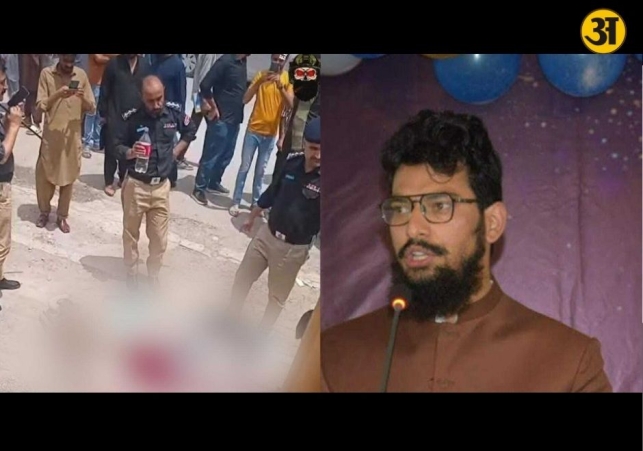
India’s security agencies have received reports that Hamza Burhan, a wanted terrorist linked to the Pulwama terror attack and anti-India activities, was shot dead by unknown gunmen in Muzaffarabad in Pakistan-occupied Kashmir (PoK). The incident reportedly happened on Thursday when unidentified attackers opened fire on him. Officials said he was hit by multiple bullets and later died from his injuries.
According to sources, Hamza Burhan had been under the watch of Indian agencies for several years because of his alleged role in terror activities, militant recruitment and spreading radical ideas among young people in Jammu and Kashmir. However, officials in Pakistan had not released any formal statement at the time of the reports regarding the killing, the attackers or the reason behind the shooting.
The incident happened in Muzaffarabad, an important city in Pakistan-occupied Kashmir, where several reports in the past have pointed to the presence of terror networks and camps linked to anti-India activities. Reports said Hamza Burhan was attacked suddenly by gunmen whose identity remains unknown.
Hamza Burhan’s alleged role in terror activities
Hamza Burhan was reportedly a resident of Ratnipora village in Pulwama district of Jammu and Kashmir. According to intelligence agencies, he travelled to Pakistan nearly seven years ago through legal travel documents and later became associated with the Al-Badr terror organisation.
Officials claimed that after joining the terror outfit, Hamza Burhan became deeply involved in anti-India activities. Over time, he reportedly rose within the organisation and eventually became an operational commander. Intelligence agencies believed he was responsible for helping recruit militants and arranging weapon supplies for operations in Jammu and Kashmir.
Investigators alleged that Hamza Burhan played an important role in encouraging young people to join militancy. Agencies claimed that he used modern digital methods to influence and recruit youth, especially through social media platforms. This model of recruitment, often called digital radicalisation, involved sharing content, propaganda and messages online to influence vulnerable young people.
Officials believed that this online method helped terror groups spread their influence more quietly and quickly. Agencies said Hamza Burhan used digital tools to encourage anger, radical thinking and support for militancy among youth in South Kashmir and nearby areas.
Because of his alleged involvement in terrorism and militant recruitment, the Indian government designated him as a terrorist in 2022. Security officials considered him an important figure connected to militant activities in Jammu and Kashmir.
Intelligence agencies also suspected his involvement in planning or supporting terror operations linked to Pulwama and other districts of South Kashmir. Authorities believed he had influence in recruitment, planning and coordination linked to terror activities.
Even though sources described him as one of the masterminds linked to the Pulwama terror network, officials continued to investigate the exact nature and extent of his involvement over time.
ALSO READ: Vaping, smoking and chewing tobacco are harming more than just the lungs, doctors warn
The Pulwama attack and its impact
The Pulwama terror attack remains one of the deadliest attacks on Indian security forces in Jammu and Kashmir.
The attack happened on February 14, 2019, when a suicide bomber targeted a convoy of the Central Reserve Police Force (CRPF) near Pulwama district. According to reports, the attacker rammed an explosives-filled vehicle into a bus carrying CRPF personnel.
The explosion killed 40 CRPF jawans and injured many others. The attack shocked the entire country and triggered grief, anger and strong reactions across India.
Soon after the incident, Pakistan-based terror group Jaish-e-Mohammed claimed responsibility for the attack. India strongly criticised Pakistan over the presence of terror organisations operating from its soil.
The Pulwama attack sharply increased tensions between India and Pakistan. Following the incident, India launched airstrikes in Balakot targeting what it described as terror camps. Diplomatic relations between the two countries also became more tense.
The attack became a turning point in India’s security and anti-terror strategy. Authorities increased focus on intelligence gathering, digital surveillance, border security and militant recruitment networks operating online.
Over the years, agencies continued operations against people believed to be linked to terror activities in Jammu and Kashmir. Security officials repeatedly warned about the growing use of digital platforms by militant organisations to recruit youth and spread extremist messages.
Hamza Burhan was among those whom agencies accused of helping build such networks through online methods. Officials believed he worked to influence young people and support militant activities through both physical and digital systems.
His reported killing in Muzaffarabad has now raised fresh questions about what exactly happened and who carried out the attack. Since no official confirmation regarding the attackers or motive has yet been released, several details remain unclear.
Authorities are expected to continue monitoring developments related to the case. Security experts believe that any major development involving figures accused of terror activities may influence ongoing intelligence assessments in the region.
For now, the reported death of Hamza Burhan marks another important development connected to the long-running security situation involving Jammu and Kashmir and cross-border militancy.
Related News