Government says southern states will gain seats, but debate over influence continues
Will South India lose Lok Sabha seats after delimitation? Here is what the numbers show
- By Gurmehar --
- Friday, 17 Apr, 2026
New Delhi: The proposed delimitation exercise has started a major political debate across India, especially in southern states. Many leaders in Tamil Nadu, Kerala, Karnataka, Telangana and Andhra Pradesh fear that the South could lose political strength in Parliament after the next redistribution of Lok Sabha seats. However, the Centre has said these concerns are misplaced.
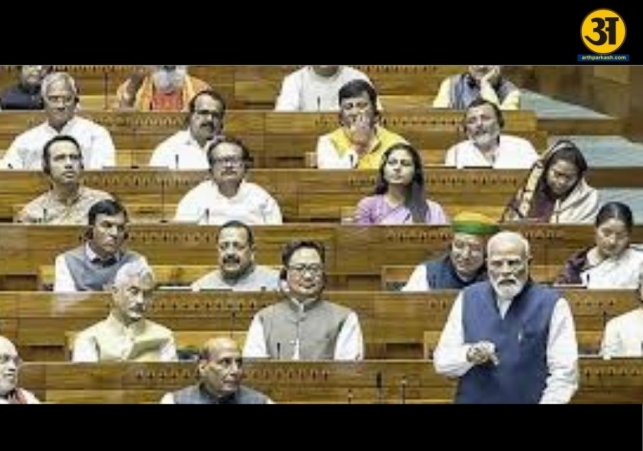
Union Home Minister Amit Shah told the Lok Sabha that southern states will not lose seats. Instead, all states will gain seats under a new expansion model. According to the proposal, the total number of Lok Sabha seats would rise sharply, increasing representation across the country.
Delimitation means redrawing parliamentary constituencies and reallocating seats among states based on population data. It is meant to ensure equal representation as population changes over time.
The government plans to use the 2011 Census as the basis for the next exercise. Under the proposal, the Lok Sabha would expand from the current 543 elected seats to 816 seats.
This larger House would also help implement the proposed 33 percent reservation for women in Parliament.
At present, southern states together hold 129 of the 543 Lok Sabha seats. That is about 23.76 percent of the House.
After the proposed expansion, these five southern states would together hold 195 of the 816 seats. That would be around 23.87 percent.
The government says this proves the South is not losing representation, because its percentage share remains almost the same while the number of seats increases.
What the seat math shows
The government has shared state-wise estimates to support its claim.
Tamil Nadu currently has 39 Lok Sabha seats. Under the proposal, it would rise to 59 seats.
Karnataka currently has 28 seats and would go up to 42.
Andhra Pradesh has 25 seats and is expected to rise to 38.
Telangana would increase from 17 to 26 seats.
Kerala currently has 20 seats and would rise to 30.
Together, these five states would gain 66 additional seats.
According to the Centre, no southern state would see an absolute decline in seats.
Amit Shah said confusion is being spread that southern states will suffer because of delimitation. He argued that every region would gain seats under the expansion model.
The remaining 621 seats in the new House would go to other states, mainly in northern and central India.
Large states like Uttar Pradesh, Bihar, Madhya Pradesh and Rajasthan are expected to receive more seats in total numbers because of their larger populations.
For example, Uttar Pradesh may rise from 80 seats to around 120, making it by far the most powerful state bloc in Parliament.
This is where the political concern begins.
Southern states say that even if their percentage share remains similar, northern states gaining many more seats in absolute numbers could change the balance of power in national politics.
This could affect government formation, policy priorities and distribution of resources over time.
ALSO READ: How Lok Sabha seats may change after the Delimitation Bill
ALSO READ: US seeks 20-year nuclear pause while Iran offers 5 years as talks remain deadlocked
Why southern states remain worried
Many southern leaders argue that they successfully controlled population growth through family planning and better development policies. Because of this, their population grew more slowly than some northern states.
They now fear they may be politically disadvantaged for being more successful in controlling population growth.
Tamil Nadu Chief Minister MK Stalin has been one of the strongest critics of the proposal. He has described it as a possible historic injustice and warned that the South’s voice may weaken in future decision-making.
Opposition parties say that while percentage calculations look stable on paper, real political power depends on numbers, alliances and voting strength.
If northern states receive dozens of new seats, they could have a stronger role in deciding who becomes Prime Minister and which laws are passed.
The Centre, however, insists the process is constitutional, fair and necessary.
The government says delimitation has been delayed for decades and Parliament must now adjust representation according to updated population figures.
India has carried out delimitation exercises only a few times after Independence, based on earlier census data.
The process was frozen for many years to avoid penalising states that controlled population growth.
Now, with the House set to expand, the government says it has found a balanced solution where all states gain seats and no state loses representation.
Another important part of the proposal is women’s reservation.
By increasing the size of the Lok Sabha, the government says it can reserve one-third of seats for women without reducing the number of seats currently held by men.
This is expected to reduce resistance from political parties and sitting MPs.
The Centre has also said the new system will not affect any immediate elections.
According to Amit Shah, the changes would come into force only after approval by Parliament and the President, and would likely apply after the 2029 general elections.
That means current elections in states like Tamil Nadu or West Bengal would continue under the existing constituency structure.
The debate, however, is unlikely to end soon.
For the government, the issue is about updating representation and implementing women’s reservation.
For critics, it is about protecting federal balance and ensuring that states which invested in development are not weakened politically.
In simple terms, South India is not expected to lose Lok Sabha seats in actual numbers. It is set to gain more seats under the proposal.
But the bigger question is whether those gains will be enough to preserve the same level of influence in a much larger Parliament where northern states also gain heavily.
That is why delimitation remains one of the most sensitive political debates in India today.
Related News