Government expands hydrogen fuel trials
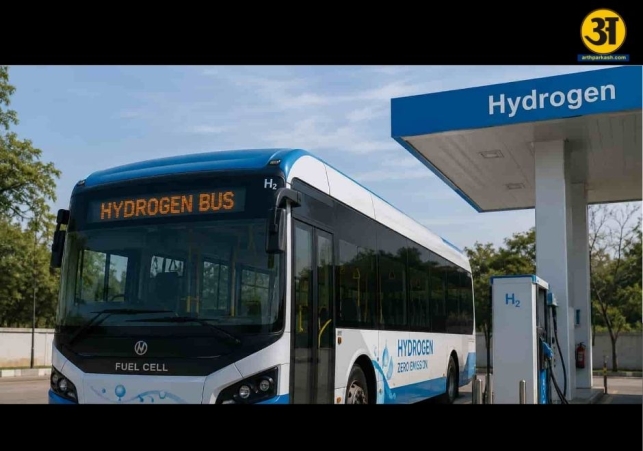
Hydrogen fuel trials begin on 10 routes as government pushes clean transport
- By Gurmehar --
- Friday, 10 Jul, 2026
The Government of India is taking major steps towards promoting cleaner and greener transportation by testing hydrogen fuel on several routes across the country. Union Road Transport and Highways Minister Nitin Gadkari has said that hydrogen has the potential to transform the transport sector and could become one of the most important fuels of the future.
Speaking at the Pravasa 5.0 and Bharat Pravas Awards event in Hyderabad, Gadkari said the Ministry of Road Transport and Highways is currently carrying out hydrogen fuel trials on 10 different routes. These trials are part of a pilot project aimed at understanding how hydrogen-powered vehicles can be used effectively in India.
According to the minister, the government is committed to reducing pollution, lowering dependence on traditional fossil fuels and promoting sustainable transportation solutions. Hydrogen is seen as a promising option because it produces very little pollution and can help create a cleaner environment.
The routes selected for the pilot project cover different parts of the country. They include Greater Noida–Delhi–Agra, Bhubaneswar–Konark–Puri, Ahmedabad–Vadodara–Surat, Sahibabad–Faridabad–Delhi, Pune–Mumbai, Jamshedpur–Kalinga Nagar, Thiruvananthapuram–Kochi, Kochi–Edappally, Jamnagar–Ahmedabad and the NH-16 route between Visakhapatnam and Bayyavaram.
These routes have been chosen to test hydrogen-powered vehicles under different traffic conditions, climates and road networks. The government hopes that the findings from these trials will help shape future policies and encourage wider adoption of hydrogen technology.
Hydrogen seen as fuel of the future
Nitin Gadkari has repeatedly expressed confidence in hydrogen as a future fuel source. During his address, he said he strongly believes hydrogen will play a major role in the transport industry in the coming years.
He explained that the ministry is actively working on projects that support hydrogen technology and is exploring ways to make it more practical and affordable for everyday use. According to him, hydrogen can help India move towards cleaner mobility while also reducing fuel imports and environmental damage.
Hydrogen fuel is considered environmentally friendly because vehicles powered by hydrogen fuel cells produce almost no harmful emissions. Instead of releasing smoke and pollutants, these vehicles mainly emit water vapour. This makes hydrogen an attractive alternative to petrol and diesel.
The minister also highlighted India's rapid progress in the automobile sector. He said that when he took charge, the country's automobile industry was valued at around Rs 14 lakh crore and ranked seventh globally. Today, according to him, the industry has grown to around Rs 22 lakh crore and is now the third largest in the world.
Gadkari believes that innovation and the adoption of cleaner technologies will help India strengthen its position further. He has often encouraged the use of electric vehicles, biofuels and hydrogen-powered transportation as part of the country's long-term development strategy.
The government is also looking at ways to make public transport cleaner and more efficient. This includes efforts to reduce pollution levels in major cities and improve air quality for citizens.
ALSO READ: Wall Street futures fall as AI fears spark global tech sell-off
ALSO READ: US gives temporary relief on Iranian oil sanctions amid fresh talks
Plans for hydrogen buses and trains
One of the most interesting developments shared by Gadkari relates to Delhi's public transport system. He said the government is exploring the possibility of running buses in the national capital using hydrogen produced from municipal waste.
According to the minister, waste generated in the city can be separated and processed using bio-digester technology to produce hydrogen. This hydrogen can then be used as fuel for buses. If successful, the project could help solve two major problems at the same time—waste management and pollution caused by conventional fuels.
Gadkari expressed confidence in the idea and said that such innovations are entirely possible with modern technology. He believes converting waste into clean fuel could become an important part of India's future transportation network.
Apart from hydrogen-powered vehicles on roads, Indian Railways is also preparing to introduce hydrogen technology. The country's first hydrogen-powered train is set to begin commercial operations on July 17, 2026.
Prime Minister Narendra Modi is expected to flag off the train, marking a significant milestone in India's transportation history. The train will operate between Jind and Sonipat in Haryana and will use hydrogen fuel cell technology for propulsion.
The hydrogen train is expected to produce virtually zero pollution, making it one of the most environmentally friendly rail services in the country. The project reflects India's efforts to modernise its railway network while reducing its environmental impact.
The train will also be affordable for passengers. Ticket prices are expected to start from just Rs 5 and go up to Rs 25, ensuring that people from different economic backgrounds can benefit from the service.
Alongside hydrogen initiatives, Gadkari also spoke about electric mobility. He urged electric bus manufacturers to pass on the benefits of falling lithium-ion battery costs to consumers. According to him, reducing costs is important for encouraging greater adoption of electric vehicles.
The minister noted that electricity charges for vehicle charging remain relatively high and said his ministry is working to reduce these costs for buses, trucks and cars. Lower charging costs could make electric transportation more attractive and affordable for both operators and consumers.
India's focus on hydrogen and other clean-energy technologies reflects a broader effort to create a sustainable transportation system. As trials continue across multiple routes and new projects move forward, the country is taking important steps toward a future with cleaner vehicles, lower emissions and improved energy security.
If these initiatives prove successful, hydrogen could become a key part of India's transport network, helping to build a greener and more environmentally friendly future for generations to come.
Related News