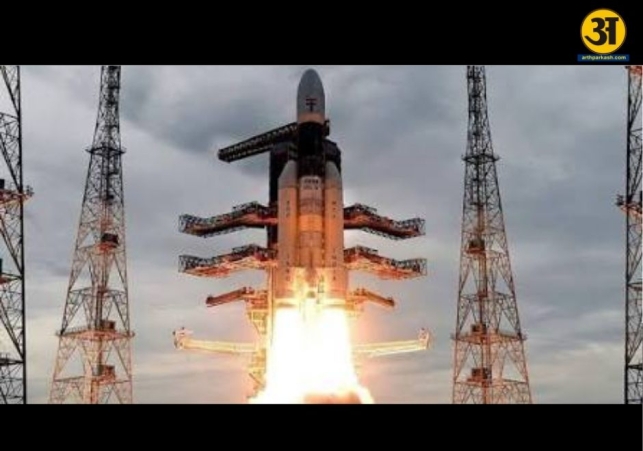
Government acts after departures from major projects
ISRO faces scientist exits as Centre tightens resignation rules for key space missions
- By Gurmehar --
- Friday, 17 Jul, 2026
India's space agency, the Indian Space Research Organisation (ISRO), is facing growing concerns after reports emerged that more than 100 scientists associated with some of the country's most important space programmes have resigned or sought voluntary retirement in recent months. In response, the Department of Space (DoS) has introduced stricter rules for scientists working on critical national missions, including the ambitious Gaganyaan human spaceflight programme.
The move comes amid fears that the departure of experienced scientists could affect the progress of major projects that are central to India's space ambitions. While ISRO officials have acknowledged that resignations have taken place, they have also stressed that the organisation remains capable of handling the situation and ensuring that ongoing missions continue without disruption.
The new measures are aimed at preventing sudden exits from strategically important programmes and ensuring continuity in projects that require specialised expertise and long-term planning.
Centre tightens rules on resignations
On July 14, the Department of Space issued an internal memorandum directing that requests for resignation or voluntary retirement from scientists involved in critical missions should no longer be processed routinely.
According to the memorandum, there has been a noticeable increase in requests from Group 'A' scientific and technical personnel, including individuals working on the Gaganyaan mission and other projects of national importance.
The department expressed concern that the departure of key personnel during important stages of mission development could significantly affect project timelines and execution.
Under the revised rules, directors of ISRO centres have been instructed not to approve resignation or voluntary retirement requests from scientists involved in major missions on their own. Instead, such requests must now be forwarded to the Department of Space along with recommendations from the concerned centre director.
The final decision regarding whether a scientist can leave the organisation will now be taken at the departmental level.
This represents a significant change from the policy introduced in 2020. At that time, ISRO centre directors and heads of units were given the authority to approve resignation and voluntary retirement requests from scientific and technical staff up to the Scientist/Engineer-SG level.
With the latest memorandum, those powers have effectively been withdrawn for personnel associated with critical projects.
The government believes this additional layer of scrutiny is necessary to ensure that nationally important missions are not adversely affected by the sudden departure of experienced scientists and engineers.
The issue has attracted widespread attention because of reports suggesting that a substantial number of scientists have left the organisation in a relatively short period.
Although the Department of Space has not officially released figures, media reports indicate that between 100 and 120 scientists may have resigned in recent months.
These departures have reportedly occurred at some of ISRO's most strategically significant centres, leading to concerns about the potential impact on future missions.
ALSO READ: Trump imposes 25% tariff on some Brazilian imports after trade investigation
ALSO READ: Fahadh Faasil explains why he turned down Alejandro G. Iñárritu's Hollywood project
Key projects affected by departures
According to reports, a large number of resignations have come from the U R Rao Satellite Centre (URSC) and the Vikram Sarabhai Space Centre (VSSC), two of ISRO's most important facilities.
The U R Rao Satellite Centre is responsible for designing and developing many of India's satellites, while the Vikram Sarabhai Space Centre plays a crucial role in launch vehicle development and space mission planning.
Reports suggest that approximately 80 scientists have left URSC, while around 20 departures have occurred at VSSC. Additional resignations are believed to have come from other ISRO facilities, bringing the total number of departures to around 120.
Among those reportedly leaving the organisation are several highly experienced professionals associated with major national missions.
Reports mention the resignation of Victor Joseph, the project director of the LVM-3 launch vehicle programme at VSSC. The LVM-3 rocket is one of India's most powerful launch vehicles and is expected to play a key role in future space missions, including Gaganyaan.
Other reported departures include the project director of the SpaDeX mission from URSC and Aditya Rallapalli, who served as the project manager for simulations during the Chandrayaan-3 mission.
Rallapalli played an important role in validating Chandrayaan-3's lunar landing sequence. His team reportedly conducted more than one lakh simulations and generated nearly 25 terabytes of mission data to ensure the success of India's historic Moon landing.
The departure of such experienced personnel has naturally raised questions about talent retention within the organisation.
However, ISRO Chairman V Narayanan has sought to reassure both the government and the public.
He acknowledged that a number of scientists have left the organisation but emphasised that employee departures are not unusual and occur in institutions around the world.
According to Narayanan, the objective of the new policy is not only to retain employees but also to ensure that important projects do not suffer sudden setbacks.
He stressed that if one scientist leaves, another qualified individual can take responsibility and continue the work. He also stated that ISRO is actively managing the situation and taking steps to minimise any impact on ongoing missions.
It is important to note that while the reported resignations have drawn attention, they represent only a small fraction of ISRO's overall workforce. The organisation currently employs more than 14,600 people across various centres and departments.
At the end of the previous financial year, the U R Rao Satellite Centre had 1,339 employees, while the Vikram Sarabhai Space Centre employed 4,577 people, making it ISRO's largest centre.
Employee attrition is not a new challenge for the organisation. Historical data shows that resignations have occurred periodically over the years. Reports indicate that nearly half of ISRO's new recruits resigned between 2004 and 2007. Official figures also show that around 700 employees left the organisation between 2012 and 2024.
To address workforce requirements, ISRO has already initiated recruitment efforts. According to its 2025-26 annual report, the process of filling approximately 1,050 scientific, technical and administrative positions is at an advanced stage.
The agency has also undertaken a cadre review exercise, which led to the regularisation of 466 project posts and the creation of around 460 higher-level positions.
As India prepares for ambitious future missions, including Gaganyaan, advanced satellite programmes and deep-space exploration projects, retaining skilled scientists remains a key priority. The government's latest measures reflect the importance it places on maintaining stability within the country's premier space agency while ensuring that major national missions continue to move forward without interruption.
Related News