Festive rush boosts commuter traffic on Namo Bharat corridor
Namo Bharat corridor sees sharp jump in commuter traffic during festive season, says NCRTC
The Namo Bharat Regional Rapid Transit System (RRTS) corridor, connecting Delhi, Ghaziabad, and Meerut, has seen a remarkable rise in commuter traffic during the recent festival season, according to data released by the National Capital Region Transport Corporation (NCRTC) on Monday. The corridor, which began operations in October 2023, has recorded more than 1.76 crore cumulative journeys till date.
The NCRTC reported that the average daily ridership on the route currently stands at around 55,000 passengers, while during festivals such as Bhai Dooj, the number crossed 60,000. The corridor also recorded its highest single-day ridership of 81,550 passengers, indicating growing public trust and dependence on the service.
Officials said the surge reflects a clear shift among commuters who are now choosing the high-speed regional rail over traditional road travel, especially during festivals when roads are usually congested. The Namo Bharat service has helped in reducing traffic pressure and offering faster and more comfortable travel across the National Capital Region (NCR).
Festivals drive higher ridership across NCR
The festival season, including Diwali, Bhai Dooj, and Chhath Puja, typically witnesses massive inter-city travel across NCR, leading to traffic jams and delays on major roads. However, the Namo Bharat corridor offered a reliable alternative for passengers looking to avoid long journeys and road congestion.
According to NCRTC, stations such as Muradnagar and Meerut South reported high passenger footfall during Chhath Puja, as these stations offer convenient access to popular ritual sites like Gang Nahar and Gagol Teerth ghats. Many commuters opted for Namo Bharat trains to reach these destinations comfortably and on time.
The Delhi-Ghaziabad-Meerut section of the corridor covers a stretch of 55 kilometres, with 11 operational stations between New Ashok Nagar in Delhi and Meerut South. The route passes through major hubs like Anand Vihar and Ghaziabad, serving as a vital link for both daily commuters and festival travellers.
Each of these hubs acts as a multi-modal transport node, connecting Namo Bharat with other public transport systems such as the Delhi Metro, ISBT bus terminals, and Indian Railways. This integration enables passengers to switch easily between different modes of transport, offering a smooth and convenient journey even during heavy festive traffic.
Clean, fast, and green alternative
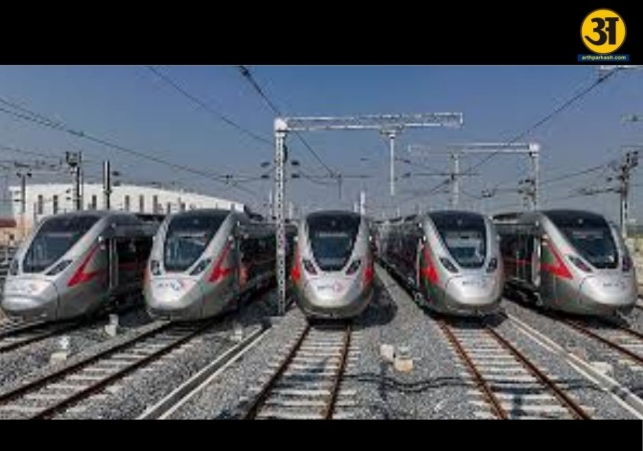
The Namo Bharat trains, which operate every 10 minutes, have become known for their speed and efficiency. Capable of running at speeds up to 160 kilometres per hour, these trains have drastically cut down travel times between cities in the NCR. The high frequency of trains ensures that passengers rarely have to wait long, even during peak hours.
Each train features air-conditioned coaches, comfortable seating, and advanced safety systems. Passengers have praised the service for its smooth, congestion-free rides, which have made it a dependable choice for travelling during festivals and beyond.
The NCRTC emphasised that the corridor is not just about convenience but also about environmental sustainability. With rising air pollution levels across NCR, especially after Diwali, the Namo Bharat corridor offers a clean and green travel option. The system runs on electric power, helping to reduce carbon emissions and promoting eco-friendly transport.
ALSO READ: How data is shaping our future decisions and opportunities
ALSO READ: Breathless on Diwali: Banning crackers protects health, not religion
Officials pointed out that by encouraging more people to use public transport like Namo Bharat, the region can significantly cut down on the number of private vehicles on the road, reducing both pollution and traffic congestion.
Rising popularity and future expansion
Since its launch, the Namo Bharat corridor has become one of the most preferred travel options for daily commuters and inter-city passengers. The consistent increase in ridership, especially during festive times, highlights the system’s growing role in transforming public transport across the NCR.
The NCRTC also said that feedback from passengers has been largely positive, with commuters appreciating the punctuality, cleanliness, and comfort offered by the trains. Many passengers have noted that their overall travel time between Delhi and Meerut has reduced drastically — from over two hours by road to less than an hour by rail.
Plans are already underway to extend the RRTS network to other parts of the National Capital Region. Future corridors connecting Delhi to Alwar and Panipat are in different stages of planning and construction. Once completed, these high-speed links will create a seamless regional transport network covering multiple cities and states in North India.
A glimpse into India’s new-age mobility
The Namo Bharat project represents India’s step toward modern, high-speed regional connectivity, reducing the gap between urban and semi-urban centres. The success of the Delhi-Ghaziabad-Meerut corridor shows that efficient, clean, and comfortable public transport can effectively handle large-scale movement during peak seasons.
As passenger numbers continue to rise, the NCRTC remains confident that Namo Bharat will not only decongest roads but also encourage citizens to embrace public transport as a primary mode of travel. The corridor’s rising popularity during festivals demonstrates that India’s next generation of rapid rail is already making a strong impact on everyday commuting patterns.
With its blend of speed, safety, and sustainability, Namo Bharat is fast becoming a symbol of modern urban transport — connecting cities, reducing pollution, and transforming how people travel across the National Capital Region.
Related News