Facial biometric checks to be introduced in entrance exams from 2026
NTA to roll out facial biometric verification and live photography in entrance exams from 2026
The National Testing Agency (NTA) has announced a major change in the way entrance examinations will be conducted in India. From January 2026, the agency will introduce facial biometric verification during exams and live photography at the application stage. This new system will begin with the JEE (Main) examination and will later be expanded to other major entrance tests conducted by the NTA.
The main aim of this move is to stop impersonation, cheating, and other unfair practices that have affected entrance exams in recent years. By using technology to verify the identity of candidates in real time, the NTA hopes to make the examination process more secure, transparent, and trustworthy.
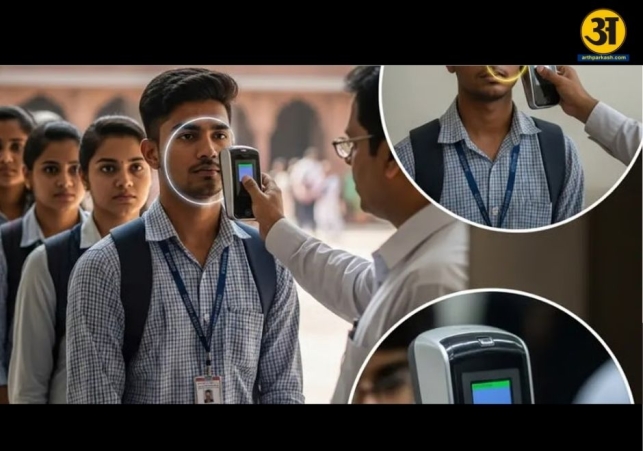
According to officials, facial recognition technology will be used at different stages of the examination process. This will help ensure that the same candidate who applies for the exam is the one who appears at the test centre. Live photographs will also be taken during the application process to prevent misuse of fake or old images.
The announcement was made during a media interaction by Secretary of Higher Education Vineet Joshi. He said that facial recognition will be used during the examination, while live photography will be required while filling out the application form. He also confirmed that the new system will be implemented from January 2026, starting with JEE (Main).
Facial biometric verification works by analysing a person’s facial features, such as the distance between the eyes, nose shape, and other unique details. These features are converted into a digital pattern and matched with stored data to confirm identity. Live photography, on the other hand, captures real-time images through a webcam or mobile phone to make sure the applicant is present during the process.
How the new system will improve exam security
The NTA conducts some of the most important entrance examinations in the country. These include JEE (Main) for engineering courses, NEET-UG for medical admissions, and the Common University Entrance Test (CUET) for undergraduate and postgraduate courses in central universities. Millions of students appear for these exams every year, making exam security a major challenge.
In recent years, there have been several complaints about irregularities, paper leaks, and impersonation, especially during NEET-UG 2024. These concerns raised serious questions about the safety and fairness of the examination system. As a result, the government set up a high-level committee to study the issue and suggest improvements.
The committee was chaired by former ISRO chief R Radhakrishnan and included seven members. After reviewing the problems, the panel recommended major reforms in how entrance exams are conducted. One of its key suggestions was to use technology-based solutions, especially biometric verification, to prevent cheating and impersonation.
Based on these recommendations, the NTA has decided to introduce facial biometric checks and live photography. The idea is to verify the candidate’s identity at multiple stages, including registration, examination entry, and possibly even counselling and admission.
ALSO READ: Smart spending, smart growth: Harnessing public expenditure for India’s future
The committee suggested a two-phase reform plan. The first phase focuses on short-term improvements, such as restructuring the NTA and introducing multi-level biometric verification. This means candidates may be checked using biometric tools not just once, but several times during the exam process.
The second phase includes a long-term plan to build a new digital examination system known as a “Digi-Exam” platform. This system would allow biometric-based digital exams, similar to the DigiYatra system used at airports. Such a platform could reduce human interference and make exams more secure and efficient.
With facial biometric checks, the chances of someone appearing in place of another candidate will be greatly reduced. Live photography during the application process will ensure that candidates cannot upload fake images or use photos of someone else. These steps are expected to make the entire system more reliable.
Officials believe that these changes will restore trust among students, parents, and educational institutions. A secure exam system not only protects honest candidates but also ensures that admissions are based purely on merit.
While the new system may require students to become familiar with additional verification steps, authorities say the process will be simple and user-friendly. Clear instructions will be provided, and support systems will be in place to help candidates.
Overall, the introduction of facial biometric verification and live photography marks an important step towards modernising India’s entrance examination system. By using technology to address long-standing problems, the NTA aims to create a fair, transparent, and tamper-proof examination environment for the future.
Related News