F-35 deal raises Israel’s concerns
Why Israel is concerned about a possible US sale of F-35 fighter jets to Türkiye
- By Gurmehar --
- Friday, 10 Jul, 2026
A possible sale of advanced F-35 fighter jets by the United States to Türkiye has sparked fresh debate in international politics and security circles. The issue has gained attention after US President Donald Trump indicated that his administration may consider selling the fifth-generation fighter aircraft to Türkiye and could also move towards lifting sanctions imposed on the country.
While the remarks were welcomed in Ankara, they have caused concern in Israel. Israeli Prime Minister Benjamin Netanyahu has openly expressed his opposition to the idea and has said he plans to urge the United States not to proceed with such a deal.
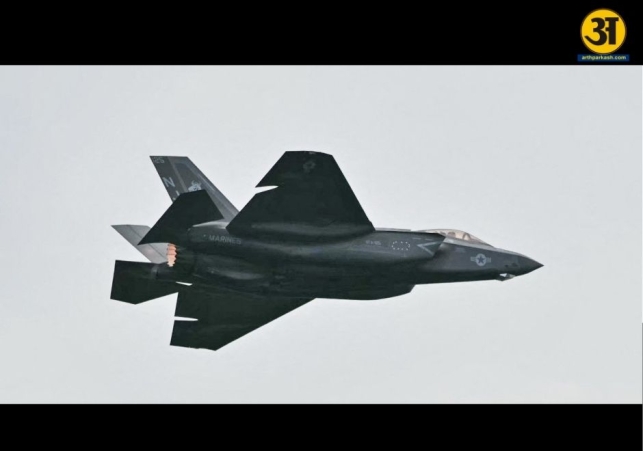
The discussion is important because the F-35 is considered one of the most advanced fighter aircraft in the world. It combines stealth technology, advanced sensors and powerful combat capabilities, making it a key asset for countries that operate it.
Trump's comments came during a visit to Türkiye, where he spoke positively about relations between Washington and Ankara. He said that ties between the two countries were stronger than ever and described Türkiye as a loyal partner in many ways.
The US President also suggested that the sale of F-35 fighter jets could be considered in the future. Although no formal agreement has been announced, his remarks were enough to trigger reactions from allies and lawmakers.
Why Israel is worried
Israel has long considered maintaining a military advantage in the Middle East as a critical part of its national security strategy. The country is currently one of the few nations in the region that operates F-35 fighter jets, giving it a significant technological edge.
For this reason, Israeli leaders are concerned about the possibility of another regional power obtaining the same advanced aircraft.
Prime Minister Benjamin Netanyahu has argued that providing F-35 jets to Türkiye could increase instability rather than promote peace. According to him, Türkiye under President Recep Tayyip Erdogan has often taken positions that are strongly critical of Israel.
Netanyahu believes that Ankara's policies and statements toward Israel raise questions about whether such advanced military technology should be transferred to the country.
He has also pointed to Türkiye's support for causes and groups that Israel views with suspicion. In his view, giving Türkiye access to F-35 aircraft could strengthen a government that frequently disagrees with Israeli security interests.
The Israeli leader has stated that he intends to discuss the matter directly with American officials and encourage them to reconsider any potential sale.
Relations between Israel and Türkiye have experienced many ups and downs over the decades. Interestingly, Türkiye was the first Muslim-majority nation to officially recognise Israel in 1949. For many years, the two countries maintained strong diplomatic, military and economic ties.
During the 1990s, cooperation between them was especially close. They worked together in areas such as defence, intelligence sharing and trade.
However, relations gradually became more strained after Recep Tayyip Erdogan rose to power. His government has consistently supported the Palestinian cause and has often criticised Israeli policies, particularly regarding Gaza.
Over the years, Turkish leaders have accused Israel of using excessive force against Palestinians, while Israeli officials have criticised Türkiye for what they see as hostile rhetoric.
The tensions have intensified further during recent conflicts in the Middle East. Senior officials from both countries have exchanged strong statements, leading to a deeper diplomatic divide.
As a result, trust between the two governments remains limited, which is one reason Israel is reacting strongly to the possibility of an F-35 sale.
Legal challenges remain
Even though President Trump has signalled support for improved relations with Türkiye, several legal and political obstacles still stand in the way of any fighter jet deal.
One of the biggest challenges comes from the United States Congress. Many American lawmakers have opposed the sale of F-35 aircraft to Türkiye for years and are likely to scrutinise any future proposal carefully.
The main issue is Türkiye's purchase of the Russian-made S-400 air defence system. The United States strongly objected to this purchase because it believed the Russian system could potentially compromise sensitive information related to NATO military technology, including the F-35 programme.
As a result, Türkiye was removed from the F-35 programme and faced sanctions under the Countering America's Adversaries Through Sanctions Act (CAATSA) in 2020.
These sanctions continue to create legal barriers to any future transfer of F-35 aircraft. Many US lawmakers argue that Türkiye would need to address concerns related to the S-400 system before any fighter jet sale could move forward.
ALSO READ: Wall Street futures fall as AI fears spark global tech sell-off
ALSO READ: US gives temporary relief on Iranian oil sanctions amid fresh talks
Congress also has the authority to review and challenge major foreign military sales. Even if the US administration approves a deal, lawmakers can introduce measures to delay, modify or block it.
Some members of Congress have already voiced opposition to the idea. Critics argue that concerns extend beyond the S-400 issue and include Türkiye's regional policies, disputes in the eastern Mediterranean and tensions involving Greece and Cyprus.
Because of these concerns, any proposal to sell F-35 jets to Türkiye is likely to face intense debate in Washington.
For Türkiye, acquiring the F-35 would be a major boost to its air force and defence capabilities. The country has long sought access to advanced military technology and has repeatedly expressed interest in rejoining the F-35 programme.
For Israel, however, the issue is closely linked to regional security and maintaining its strategic military advantage.
At this stage, no final decision has been made. Discussions remain at an early stage, and both political and legal challenges continue to exist.
What happens next will depend on negotiations between the United States and Türkiye, the reaction of Congress and the concerns raised by key allies such as Israel. Until then, the possibility of an F-35 sale will remain an important issue in international diplomacy and Middle Eastern security discussions.
Related News