Exports decline as tariffs rise, say GTRI
Trade experts flag steep drop in shipments amid rising import duties in United States
- By Gurmehar --
- Monday, 01 Dec, 2025
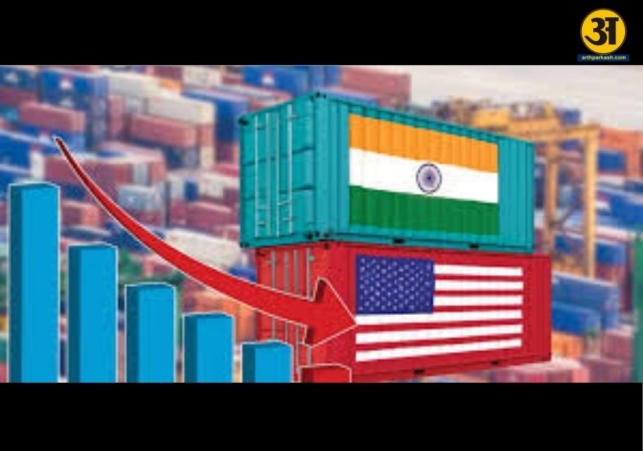
India’s exports to the United States have fallen sharply in the last five months, mainly because Washington increased import duties on several Indian products. According to a new report by the Global Trade Research Initiative, India’s shipments to its largest export market dropped by 28.5 per cent between May and October 2025. During this period, export values slipped from USD 8.83 billion to USD 6.31 billion, showing how strongly tariffs can influence trade flows.
The decline began soon after the US introduced higher duties in stages. On April 2, the tariff rate went up to 10 per cent. On August 7, it jumped to 25 per cent. By the end of August, it reached 50 per cent for several Indian goods. This sudden series of increases made Indian products some of the most heavily taxed among all countries supplying goods to America.
In comparison, China faced tariff levels near 30 per cent, while Japan was taxed at about 15 per cent. These numbers show that Indian goods became far more expensive in the US market compared to products from other major trading partners. Because of these high costs, many US buyers began reducing or delaying their purchases from India, which directly affected export numbers across various sectors.
Tariff-exempt goods such as smartphones, pharmaceuticals and petroleum products also experienced a drop in demand. Even though these products did not face the steep new duties, they still formed part of a market that was slowing down. The report noted that tariff-exempt items made up 40.3 per cent of India’s exports to the US in October. However, exports within this group fell from USD 3.42 billion in May to USD 2.54 billion in October. This amounted to a decline of 25.8 per cent, or USD 881 million.
A smaller portion of India’s exports consisted of items facing uniform global tariffs. These included metals such as iron, steel, aluminium and copper, along with auto parts. These goods formed just 7.6 per cent of total shipments in October. Despite this, exports in this category also shrank significantly, falling by 23.8 per cent between May and October. Their value dropped from USD 629 million to USD 480 million, which represents a contraction of USD 149 million.
Impact on labour-intensive sectors and key product categories
The greatest impact of the higher US duties was seen in labour-intensive industries. These are sectors where large numbers of workers are involved in manufacturing and processing. Unfortunately, many of these sectors faced the full 50 per cent tariff imposed by the US. The report revealed that labour-intensive goods made up 52.1 per cent of India’s exports to America in October. However, their shipments dropped from USD 4.78 billion in May to USD 3.29 billion in October. This represents a massive decline of 31.2 per cent, wiping out around USD 1.5 billion in export earnings in just five months.
Smartphones, which are India’s biggest export category to the US, saw an especially steep decline. According to Ajay Srivastava, smartphone shipments fell from USD 2.29 billion in May to USD 1.50 billion in October. This was a drop of nearly 36 per cent, amounting to a decrease of about USD 790 million. Because smartphones form a large share of India’s export basket, this sharp fall played a significant role in the overall decline.
ALSO READ: UIDAI launches new feature allowing Aadhaar mobile update directly through app
ALSO READ: Skipping your morning meal could silently harm your health, say experts
Monthly export trends showed continuous pressure throughout the five-month period. India exported goods worth about USD 2 billion to the US in June. That number fell to USD 1.52 billion in July. In August, exports dropped further to USD 964.8 million, marking the lowest point in the five-month period. In September, shipments dipped again to USD 884.6 million. Only in October did the situation improve slightly, with exports recovering to about USD 1.5 billion. Even though this recovery was encouraging, it could not make up for the losses accumulated over the previous months.
Pharmaceutical exports, which usually remain stable even during economic changes, experienced only a slight drop. Shipments decreased by 1.6 per cent, moving from USD 745.6 million in May to USD 733.6 million in October. While this fall was relatively small, it still showed that even resilient sectors were feeling the effects of market uncertainty and reduced purchasing activity.
Shipments of petroleum products also declined by 15.5 per cent. Their export value fell from USD 291 million to USD 246 million. Petroleum products generally fluctuate in value due to global price changes, but the higher tariff environment contributed to the slowdown as well.
Some of the worst-affected sectors were those that rely on large amounts of manual work and cater to high-value markets. Gems and jewellery, textiles, garments, chemicals and seafood all saw major declines. These industries are especially sensitive to changes in import duties because higher tariffs make their products significantly more expensive in foreign markets. As buyers look for cheaper alternatives, Indian exporters lose out.
Chemical exports experienced one of the steepest declines among these sectors. They fell from USD 537 million in May to USD 333 million in October, representing a drop of 38 per cent. This reduction showed how price-sensitive the US market has become when it comes to industrial and processed goods.
Overall, the report suggests that the heavy US tariffs were the main cause behind the fall in India’s exports. The sharper the duty increase, the deeper the contraction in shipments. As India continues to monitor the situation, exporters and policy-makers may need to explore new strategies, markets and trade agreements to reduce the impact of such sudden tariff changes in the future.
Related News