Delhi-Dehradun expressway set to sharply reduce journey duration
New boosts for travel as the Delhi-Dehradun Expressway nears completion with major time savings
The Delhi–Dehradun expressway is one of the major road projects aimed at improving travel between the national capital and the Uttarakhand capital. The expressway, spread over about 210 kilometres, has now entered an important stage as the government has started a trial run on its first completed section. This trial stretch connects Delhi to Baghpat in Uttar Pradesh and is expected to ease traffic on the older, congested routes.
The project is designed to cut travel time between Delhi and Dehradun from around six hours to only two and a half hours once all four phases are finished. Although the expressway was earlier planned to open in 2024, it is now expected to be ready by February 2026. The government has said that the delay happened due to several construction and approval issues. Now, with parts of the road ready, commuters can expect smoother, faster journeys in the coming months.
The trial run has started on a 32-kilometre stretch between Delhi and Baghpat. This temporary opening will continue for one month, and no toll will be charged during this period. The aim is to observe traffic flow, identify any issues, and make improvements before the entire project opens officially.
Key features of the project
Four phases, wildlife corridor, EV parking and modern facilities
The expressway begins near the Akshardham Metro station in Delhi. From there, it passes through several districts in Uttar Pradesh—Baghpat, Baraut, Shamli and Saharanpur—before entering Uttarakhand and ending in Dehradun. It is being built as an access-controlled corridor with six to twelve lanes, depending on the stretch.
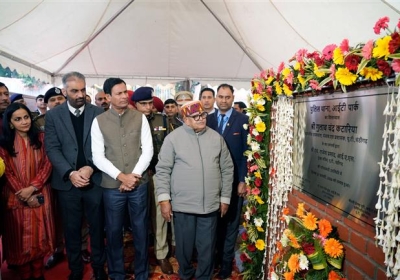
The foundation stone was laid by the prime minister in December 2024. The project cost is estimated at ₹11,868.6 crore. Although plans originally targeted completion in 2024, the timeline has shifted several times. Now, February 2026 is the new expected completion date for full operations.
The project is divided into four phases.
Phase one connects Delhi’s Akshardham area to Baghpat in Uttar Pradesh. This is the section that has now opened for public trials.
Phase two runs from Baghpat to Saharanpur and is reportedly close to completion.
Phase three upgrades the road from the Saharanpur bypass to Ganeshpur.
Phase four takes the route from Ganeshpur to Dehradun and is currently undergoing safety and quality audits.
ALSO READ: Global alert issued as 6,000 jets face urgent updates to prevent flight-control failures
ALSO READ: UIDAI launches new feature allowing Aadhaar mobile update directly through app
One of the most notable features of the expressway is a 12-kilometre elevated wildlife corridor inside the Rajaji National Park. This structure is the longest of its kind in Asia and has been designed to help animals cross safely without coming in contact with vehicles. The corridor includes six animal underpasses to support safe movement for wildlife living in the region.
Another environment-friendly feature is the allocation of 10 percent of the total parking space specifically for electric vehicles. The parking areas will provide charging points and additional support for EV users. The expressway will also include food kiosks, ATMs, air-filling stations, Pollution Under Control (PUC) centres and other necessary services.
Earlier reports had said that the Delhi–Baghpat stretch had been ready for about six months. However, it was not opened because the Prime Minister’s Office wanted the entire expressway inaugurated at once, instead of in parts. With the trial now starting, commuters using the section will be able to travel freely without paying toll for a month. Officials from the National Highways Authority of India (NHAI) have said that the trial period will help them check safety, road quality, and real-time traffic movement.
Traffic relief for Delhi and surrounding cities
The ministry of road transport and highways announced that the first phase is now open for trial runs, giving relief to people who frequently travel towards Noida, Ghaziabad and Uttar Pradesh’s western districts. The 32-kilometre stretch begins at Akshardham Temple and passes through Geeta Colony, Shastri Park and Mandola Vihar in Ghaziabad before ending at Khekra near Baghpat.
Officials believe this new road will reduce pressure on heavily used routes and old national highways, which often remain jam-packed during peak hours. The expressway offers a direct, high-speed route that can divert thousands of vehicles every day, especially those travelling long distances. This separation of local traffic and through-traffic is expected to improve movement across Delhi and make the nearby roads safer and smoother.
New parking and rest facilities along the route
To support the large number of vehicles expected to use the expressway, the NHAI is also developing modern rest facilities, especially along the Delhi stretch from Akshardham to the Uttar Pradesh border. These facilities will include clean restrooms, drinking water units, first-aid rooms, solar-powered lighting and smart electronic parking systems.
Three new rest areas are being planned near the East Delhi district magistrate’s office, the Gandhi Nagar market and Geeta Colony. The Gandhi Nagar site will be the largest, covering 1.4 hectares. The site near the DM office will spread over 0.8 hectares, while the Geeta Colony location will be around 0.78 hectares.
These new facilities are expected to make travel more comfortable for long-distance travellers and reduce unsafe roadside parking. When fully completed, the expressway will offer users not only faster movement but also safer and more convenient travel options.
Related News