CM Sukhu highlights IT-driven governance in Himachal
Himachal using information technology to improve delivery of public services, says CM Sukhu
Himachal Pradesh has become one of the leading states in using information technology to make government services easier, faster, and more transparent, Chief Minister Sukhvinder Singh Sukhu said on Monday. He highlighted that digital tools are now helping citizens access public services even in the most remote and tribal areas of the hill state.
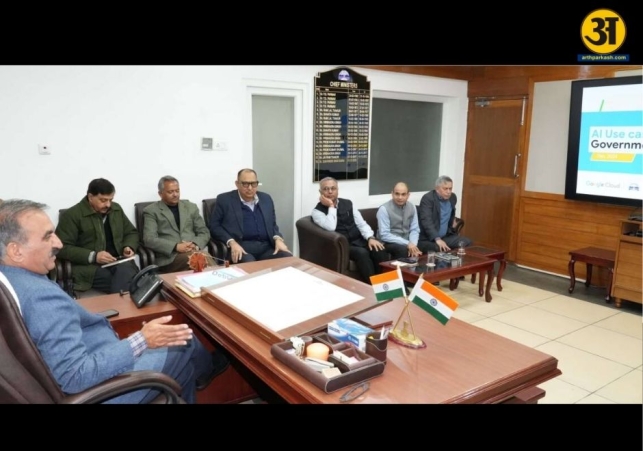
The chief minister was speaking at the general house meeting of the Society for Promotion of IT and e-Governance in Himachal Pradesh, held in Shimla. According to an official statement released on Tuesday, Sukhu said that most government services are now available online and can be accessed with just a few clicks. He described this progress as a major step towards good governance.
Sukhu said the use of technology has reduced delays, improved transparency, and made the system more accountable. Citizens no longer need to visit government offices repeatedly, as many services are now available digitally. This, he said, has saved both time and effort for people and government employees.
During the meeting, the chief minister reviewed several IT-based applications and software developed by the state’s information technology department. He directed officials to further improve these systems so that they are more citizen-friendly, secure, and efficient.
Focus on digital governance tools
One of the key applications reviewed was the ‘Him Upasthiti’ app, which has been developed to monitor the attendance of employees working in various government departments. The app helps ensure discipline, accountability, and transparency in government offices.
Chief Minister Sukhu directed officials to further enhance the efficiency and reliability of the Him Upasthiti application. He said the system should work smoothly and accurately so that it benefits both employees and administrators.
The chief minister also gave clear instructions regarding the ‘Him Access Portal’, another important digital platform used by the state government. He directed that registration on the portal should be made mandatory for all state government employees. According to his instructions, all employees must complete their registration within one month.
Officials said the Him Access Portal is designed to streamline employee-related services and create a unified digital record of government staff. Making registration compulsory will help improve data accuracy and ensure smoother implementation of policies.
Sukhu also launched the Asset Mapping Application during the meeting. He said this new initiative would help the government maintain updated and detailed information about citizens’ properties across the state. The application will support better infrastructure planning, effective policy-making, and improved management of resources.
According to the chief minister, having accurate data on assets will allow the government to plan development projects more efficiently and avoid duplication or misuse of resources.
ALSO READ: US strikes Venezuela, captures Nicolas Maduro, but is it legal under international law?
Use of AI and future roadmap
The chief minister also spoke about the growing use of artificial intelligence (AI) in government services. He said an AI-based document verification system is being integrated into the Him Seva Portal to improve the delivery of revenue-related services.
Currently, many revenue services involve manual checking of documents by government officers. This process places a heavy workload on officials and often leads to delays. Even small errors in documents can result in applications being rejected, forcing citizens to visit offices multiple times.
The new AI-based system will automatically check documents at the time they are uploaded. It will verify whether the documents are clear, properly formatted, and complete. The system will also cross-check personal details entered by applicants and flag any mismatches or missing information.
If there are errors or deficiencies, applicants will receive instant feedback before submitting their applications. This will allow them to correct mistakes immediately, reducing rejections and saving time for both citizens and officials.
The chief minister said this system will significantly reduce unnecessary visits to government offices and speed up the processing of applications. It will also allow officers to focus on more important tasks instead of spending time on basic document checks.
Sukhu further directed that comprehensive data mapping under the Him Parivar Portal should be completed down to the panchayat level. He said the portal should include detailed socio-economic data of families and be linked with all welfare schemes run by the state government.
He added that land-related data would also be integrated into the Him Parivar Portal. This will help ensure that government benefits reach the right people in a transparent and targeted manner.
Looking ahead, the chief minister said the state government is gradually introducing advanced technologies such as artificial intelligence and blockchain into its e-governance systems. These technologies are being adopted keeping future needs in mind.
According to Sukhu, AI-based systems will help improve the quality of services, increase accuracy in decision-making, and speed up grievance redressal. At the same time, blockchain technology will bring major improvements in data security, transparency, and record management.
The chief minister said the government’s goal is to build a digital governance system that is reliable, secure, and centered on citizens’ needs. He added that Himachal Pradesh will continue to use technology as a key tool to strengthen governance and improve the everyday lives of its people.
Related News