China slams Trump’s 10% tariff as coercion
China criticizes Trump’s 10% tariff threat, calls it a coercion tactic amid rising trade tensions
- By Gurmehar --
- Monday, 07 Jul, 2025
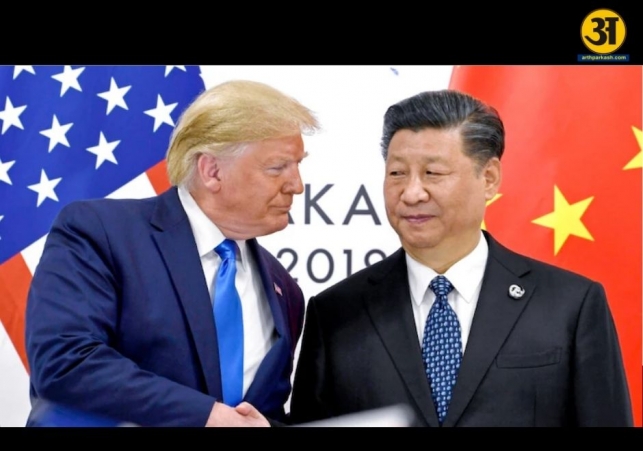
China has strongly opposed the recent tariff threats made by former US President Donald Trump. The Chinese government described these threats as "coercion tactics" and said they would not benefit anyone. The warning came after Trump said he would impose an extra 10% tariff on countries that support the BRICS group—a group of fast-growing economies.
Mao Ning, the spokesperson for the Chinese foreign ministry, spoke about the issue during a regular press briefing on Monday. She said, “Tariffs are not the solution to global problems. They are harmful and only increase tension between countries.”
This new conflict started when Trump posted a strong message on Truth Social, his social media platform. He said that any country supporting BRICS and following what he called “anti-American policies” would face a 10% additional tariff on their trade with the US. He clearly warned that no country would be given special treatment.
Here is Trump’s exact message:
“Any country aligning themselves with the anti-American policies of BRICS will be charged an ADDITIONAL 10% TARIFF. There will be no exceptions to this policy. Thank you for your attention to this matter!”
China sees this as an attempt by Trump to use economic pressure to control other nations' foreign policy. The Chinese government has always opposed such moves and believes that all countries should be free to form partnerships based on mutual respect—not fear or threats.
Trump targets BRICS group as it grows bigger
Trump’s statement came right after BRICS leaders held their 17th summit in Brazil on July 6–7. Although the group did not name Trump directly, they issued a joint statement against rising tariffs and trade restrictions, which many believe was a response to his comments.
Originally, BRICS had five countries: Brazil, Russia, India, China, and South Africa. But in 2024, the group expanded to include Egypt, Ethiopia, Iran, and the United Arab Emirates (UAE). In 2025, Indonesia also joined, making BRICS a larger and more powerful alliance of developing nations.
Trump seems unhappy with this expansion and views BRICS as promoting anti-US policies. His new policy aims to punish countries that become part of BRICS or support its stand against Western trade policies.
In another post on Truth Social, Trump said the US would start sending official letters about tariffs and trade agreements on Monday, July 7. He wrote:
“I am pleased to announce that the United States Tariff Letters, and/or Deals, with various countries from around the world, will be delivered starting 12:00 PM (Eastern), Monday, July 7th. Thank you for your attention to this matter! – DONALD J TRUMP, President of The United States of America.”
Trump’s latest announcement has drawn sharp criticism not only from China but also from many international economists and political leaders, who say such actions can lead to global trade wars. Many experts fear that this kind of policy could hurt global economic growth, increase prices, and create problems for businesses across the world.
ALSO READ: Monsoon 2025 Arrives Early: Climate Change or Natural Shift?
ALSO READ: Water scarcity and its impact on global food security
What this means for global trade
Trump is known for his strong views on trade and for using tariffs as a tool during his earlier presidency. He had earlier imposed heavy tariffs on China during the US-China trade war between 2018 and 2020, which affected the global economy. If Trump wins the 2024 US Presidential elections, there’s a real chance he may bring back tough trade policies.
China, in its response, has said that it will stand firm against any unfair trade practices. The country has also asked other BRICS members and trading partners to work together and avoid being divided by such threats.
The rising tension shows how global alliances like BRICS are becoming more influential, especially as they offer alternative leadership to that of the United States and Western countries. Many countries are now trying to balance their relations with both the US and China, but Trump's tariff threats may force them to take sides.
Trump’s new warning of a 10% extra tariff on countries supporting BRICS has sparked a fresh trade dispute. China has called these threats “coercion tactics” and said they will not help anyone. As the BRICS group continues to grow and push back against Western dominance in trade, tensions with the US may increase. With the 2024 US elections approaching and Trump likely to return to power, the world may see more aggressive trade moves that could impact global markets and international relations.
Related News